Digital economy – key driver for Vietnam’s development

Although science, technology and innovation are key driving forces for socio-economic development, Vietnam’s national innovation system has just been set up and it does not run in a uniform and effective fashion.
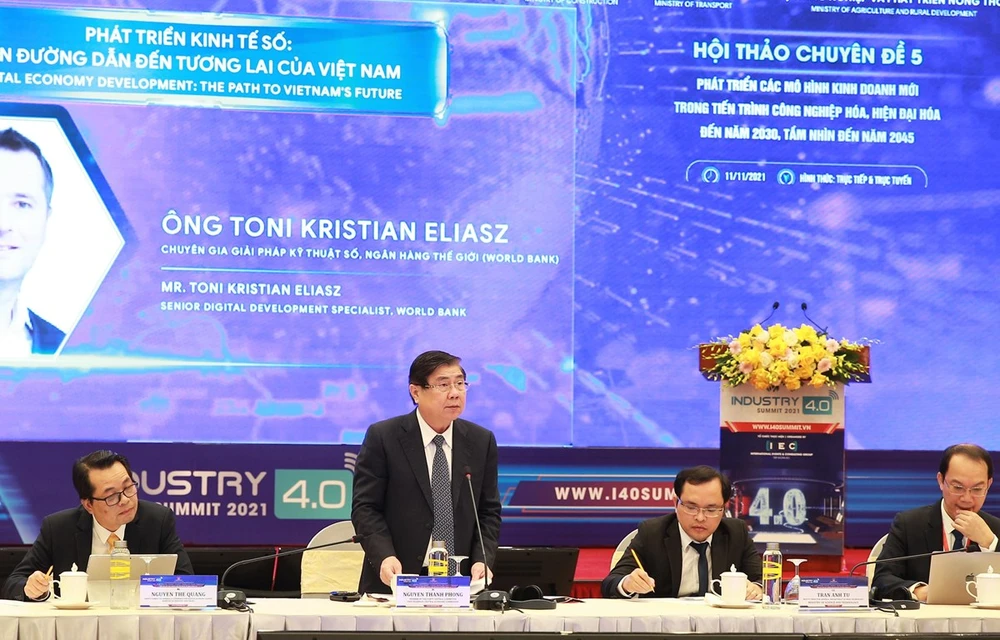
The conference on development of new business models in the industrialisation and modernisation process by 2030 with vision until 2045 held on November 11. (Photo: VietnamPlus)

Hanoi (VNA) – Although science, technology and innovation are key driving forces for socio-economic development, Vietnam’s national innovation system has just been set up and it does not run in a uniform and effective fashion.


The information was heard at the conference on development of new business models in the industrialisation and modernisation process by 2030 with vision until 2045.

On June 3, 2020, Prime Minister Nguyen Xuan Phuc (now President Nguyen Xuan Phuc) signed off on the national digital transformation programme until 2025 with a vision to 2030, which targets at increasing the digital economy’s contribution to 20 percent of Vietnam’s GDP over the course of the next five years.

The programme aims to concurrently develop a digital government, economy, and society while creating digital technology businesses capable of extending their reach to the world.

The digital economy is hoped to account for 20 percent of the country’s GDP by 2025 and at least 10 percent of each sector.

Vietnam also expects to be among the top 50 countries in the ICT Development Index and the Global Competitiveness Index, and one of the 35 leading countries in the Global Innovation Index (GII).

At the conference, Nguyen Thanh Phong, deputy Head of the Party Central Committee’s Economic Commission, said digital economy was formed and developed in a vibrant manner, becoming an important part of the economy, adding that in Vietnam, digital technology has been applied in industry, agriculture, services, as well as new cross-border services and business models.

“New business models have created job opportunities, better income, and improve local livelihoods”, he said.

Development of Vietnam’s digital economy is based on available platforms such as Facebook, Google, Youtube, Grab, Gojek, while the number of made-in-Vietnam platforms is still limited with several names like Tiki, Sendo, Thegioididong, FPTShop.

Phong said Vietnamese platforms are less competitive than those of multi-national groups.

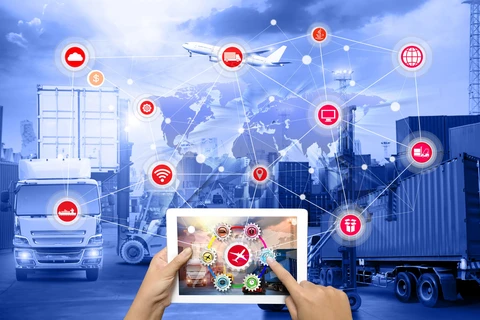
Digital economy – key driver for Vietnam’s development ảnh 1Illustrative photo (Photo: VNA)


He also pointed out that the national digitalisation process remains slow due to irrational policies and mechanisms, low-quality human resources, weak infrastructure for digital transformation, and formidable challenges in fighting cybercrimes, among others.  

According to Vu Kiem Van, Deputy General Secretary of the Vietnam Digital Communications Association, to put forth the digital transformation process, focus should be channeled to organiastion of training for public servants and business owners.

Besides, due attention should be paid to increasing people’s accessibility to essential public services, and ensuring full supply and update of information for all people in different channels, he added.

In recent years, the Government has made efforts to adopt national-level initiatives and policies, creating a premise for facilitating digital transformation, especially in term of human resources in Vietnam. 

Recently, the Government has issued important resolutions and programmes, such as Resolution No 17 dated March 7, 2019 on several key tasks and solutions to develop e-Government in the period of 2019-20 toward to 2025, and Decision No 749 dated June 3, 2020, by the Prime Minister on "National Digital Transformation Programme to 2025, with orientation to 2030.

These policies and programmes have shown the Government's efforts to build a legal corridor, providing solutions and gathering the strength of the whole political system to help Vietnam thrive and go further.

In August 2021, Deputy Prime Minister Vu Duc Dam signed a decision approving a programme on training and retraining skills to meet the requirements of the fourth Industrial Revolution. This shows the government’s awareness about the important role of skill training for labourers in the new context, where competitiveness among countries in the world is increasing rapidly./.

VNA

See more

Prime Minister Le Minh Hung speaks at the meeting (Photo: VNA)

PM orders sharp cuts to business conditions for double-digit growth

Vietnam now maintains 198 conditional business lines and 4,603 business conditions. Under the Party Central Committee conclusion, ministries and agencies must cut at least 30% of existing conditional business lines, or about 60 business lines, while eliminating all redundant conditions.

Booths of Vietnamese cooperatives and enterprises at the Halal Expo 2025 exhibition in Türkiye. (Photo: VNA)

Türkiye seen as promising market for Vietnam’s Halal products

With a large Muslim population, Türkiye serves as both a major consumer market and a well-developed processing hub for such products. Meanwhile, Vietnam is gradually establishing its capacity to supply Halal goods, particularly in processed foods, agricultural produce, beverages, tourism services and logistics.

Delegates at the forum (Photo: VNA)

Vietnam, Slovakia PMs attend business forum to boost bilateral cooperation

Prime Minister Le Minh Hung called on businesses of Vietnam and Slovakia to strengthen partnerships in areas of mutual strength and demand, particularly in manufacturing, high technology, automotive industry, precision engineering, automation, renewable energy, green transition, logistics, supply chain connectivity, digital transformation, and human resource development.

Pomelos of Dong Thap province are exported to the Australian market. (Photo: VNA)

Dong Thap exports first pomelo shipment to Australia

Dong Thap has now secured its first pomelo growing area that meets export requirements for Australia, facilitated by Blue Ocean Import-Export JSC. This milestone is expected to serve as a foundation for expanding market access in the coming period.

Ambassador Pham Vinh Quang (seventh from left) poses for a photo with staff of the Vietnamese Embassy in Canada at the Vietnam booth at the exhibition. (Photo: VNA)

Vietnam promotes tourism at travel expo in Canada

The Vietnamese Embassy in Canada joined the exhibition to promote Vietnam as an attractive travel destination. With support from domestic tourism companies and tour operators, the Vietnam booth attracted attention thanks to its well-designed displays and informative materials.

Sun Group partners with Dragone to jointly establish a new standard for performing arts in Vietnam (Photo: Sun Group)

Phu Quoc set for a global spotlight with Sun Group–Dragone flagship show

The agreement signed on April 10 represents Dragone’s first formal entry into Vietnam through a strategic partnership, underscoring the country’s growing appeal to leading global creative companies. It also reinforces Sun Group’s role as a pioneer in bringing world-class performing arts experiences to Vietnamese audiences.

Prime Minister Le Minh Hung (third, left) and delegates press buttons to start the project (Photo: VNA)

Work starts on Hanoi–Quang Ninh high-speed railway

Prime Minister Le Minh Hung attended a groundbreaking ceremony for the Hanoi - Quang Ninh high-speed railway line, Vietnam's first inter-regional high-speed railway, held in Quang Ninh province on April 12.

VinFast EV sales jump 127% in March 2026. (Photo: Vinfast)

VinFast EV sales jump 127%, cementing market dominance

According to its report, all models in VinFast’s EV lineup recorded strong growth in March. Notably, on March 28 alone, the company completed 3,520 orders, the highest number ever recorded in a single day by an automotive brand in Vietnam.

Illustrative image (Photo: VNA)

Australia announces import conditions for Vietnamese pomelos

Australia’s formal publication provides an important legal basis, marking the completion of the review, assessment and agreement on technical requirements for fresh Vietnamese pomelos. This represents a significant step forward in market access, creating favourable conditions for relevant agencies, localities and businesses to prepare for export activities in the coming time.

Containers of fresh Vietnamese durian for export are subject to a full-chain traceability system. (Photo: VNA)

First “green lane” durian shipment exported to China

​Under the “green lane” process, quality control begins at the cultivation stage, including soil sampling and monitoring, and continues through harvesting and processing, with traceability labels attached to trees and applied to fruit at the time of picking. It also allows plant quarantine procedures and the issuance of certificates of origin (C/O) directly in the localities where the orchards are located.