Mr. Nguyen Quyet Tam, member of Digital Government Development Committee of the Vietnam Software Association, Chairman of Viet ISO Company. (Photo: Mai Mai/Vietnam+)
 Hanoi (VNA) - Tourism digital transformation is becoming more urgent than ever towards the path of recovery and development post Covid-19. According to experts, the digital transformation of tourism in Vietnam is currently running asynchronous. To fix this, a common set of standards for tourism digital transformation is advised by experts.
This is the key to Vietnam's green economy after the pandemic. To get a better understanding of this issue, VietnamPlus had an interview with Mr. Nguyen Quyet Tam, member of the Vietnam Software and IT Services Association (VINASA), and Chairman of Viet ISO Company.
Reporter: - Sir, how much effort should Vietnam tourism make to be able to successfully digitalise in the near future?
Mr. Nguyen Quyet Tam: The digital transformation of tourism in Vietnam is has still been taking place asynchronously. Most localities and businesses are trying to carry out digital transformation in tourism; however, each of them has its view and method as there is no standard system. Therefore, the databases have not been shared to connect and homogenise, making it difficult to manage, control, and report industry data and make judgments on development trends. To successfully digitize tourism, management agencies should soon have guidance on a common set of standards for tourism digital transformation.
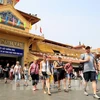
 Digital technology enhances customers’ experience. (Photo: Mai Mai/Vietnam+)
 Reporter: - Some experts believe that the digital transformation of businesses as well as of Vietnam's tourism industry is fragmented and small. So what do you think about these remarks?
Mr. Nguyen Quyet Tam: This fact is very accurate, because as I said above, we currently do not have a standard system. Because there is no standard system, each business has a separate vision and investment.
In the past, businesses invested a lot in digitizing data, but also because there is no standard system, they digitize the way businesses think, not according to any standard system.
- What do you think will be the core solution to this problem?
Mr. Nguyen Quyet Tam: The core solution is that we will definitely have to build a data centre system. For example, the Vietnam National Administration of Tourism should share some of its data or work with businesses to create a common data platform and complete a legal framework and try to implement it before 2025.
- As an expert in the field of digital solutions, do you have any specific recommendations for leaders of the tourism industry?
Mr. Nguyen Quyet Tam: In my opinion, iTourism is currently the solution for the National Administration of Tourism, which is designed to be an IOC Data Centre for tourism activities across the country.
This solution helps to enhance interaction and close connection between Vietnam National Administration of Tourism, Departments of Tourism of cities and provinces and affiliated tourism businesses, improve management quality, and at the same time easily synthesize and report to make recommendations based on digital platforms.
iTourism creates an inter-service, inter-destination connection environment that optimizes the process of accessing and processing data from service providers to tourists through the EA (Engine Agent) System.
- Currently, social networks such as Facebook, Tiktok among others are becoming very good communication channels for tourism. Some social platforms also develop virtual reality technology. What do you think about that trend and what can the tourism industry take advantage of from this resource?
Mr. Nguyen Quyet Tam: We must understand that participating in the virtual reality environment is participating in the data digitization environment. Meanwhile, tourism is a general economic industry, and must continuously create new products. Therefore, the downside of digitizing data in tourism is that having to keep that data for a long time is not good for new product development.
On the one hand, we still rely on social networking sites for communication. But on the other hand, it works to bring better experiences and shortens the purchasing cycle for tourism products.
- Thank you for your sharing!