Domestic exporters urged to restructure to utilise TPP deal

Vietnamese exporters should restructure their production to improve profit and enjoy preferential of the Trans-Pacific Partnership agreement (TPP), Tran Tuan Anh, Deputy Minister of Industry and Trade
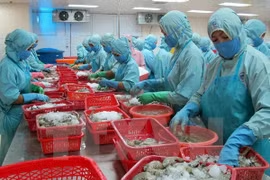
Domestic exporters urged to restructure to utilise TPP deal ảnh 1 The agro-forestry and fishery sector has been one of Vietnam's key export products (Photo: VNA)

Hanoi (VNA) – Vietnamese exporters should restructure their production to improve profit and enjoy preferential of the Trans-Pacific Partnership agreement (TPP), Tran Tuan Anh, Deputy Minister of Industry and Trade said.

Anh said agro-forestry and fishery sector has strengthened and has been one of Vietnam's key export products.

However, the products would lose their strengths in the middle- and long-term if businesses do not restructure production, thus bringing in higher added value, he said.

"This was the reason that Vietnam has issued the export strategy by 2020 with a vision to 2025 to take advantage of international integration," he added.

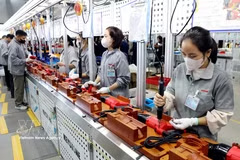
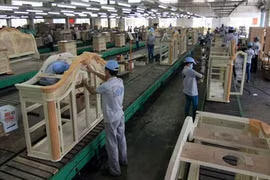
The wood sector has been considered one of the key export staples with an average turnover of 6 billion USD.

However, domestic wood exporters have focussed on products of sawdust, wood plank, ply wood, and fibreboard, in addition to furniture. Apart from furniture, the remaining products have been exported to the Republic of Korea, Malaysia, Taiwan and Japan as input materials for production of paper, medium fibreboard and interior furniture. These input materials will not be given tax reduction in the TPP.

Nguyen Tuan Viet, General Director of Vietgo, one of the companies specialising in import-export consultancy, said the various sectors in the country would have to change their structure as foreign firms with big capital and modern technologies would pour their investment into Vietnam to enjoy tax preferential under the TPP.

"There will be a wave of businesses from China and Sweden, the leading wood exporters in the world, to invest in furniture production in Vietnam," Viet said.

Nguyen Ton Quyen, Chairman of the Timber and Forest Product Association of Vietnam (VIFORES) said several wood producers have to strive to change their technology to produce products with higher quality and added value.

"This is one of the critical solutions needed to take advantage of integration," Quyen said.

In addition, several agricultural products such as coffee, dragon fruit and lychee would be hard to ship in big amounts to the big markets of the US and Japan which have strict food requirements. Vietnam would benefit most from the countries as the TPP comes into effect.

Being one of the key export products, the garment and textile sector has witnessed difficulties as most of the producers have been small- and medium-sized enterprises. With strict regulations on the certificate of origin, garment and textile firms would not enjoy a tax preferential if they still rely on imported materials.

Vietgo's CEO said they received five contracts from China in December to seek cotton and down and feather for jacket production.

"This has been a vital trend as the TPP will take effect soon. If local businesses do not change, they will become employees in their own country," he said.

He recommended that Vietnamese firms should invest in design, and material production to manufacture high quality products that penetrate demanding markets such as the US, Canada and Japan.-VNA
VNA

See more

The central province of Nghe An holds an investment promotion conference in Seoul on October 15. (Photo: VNA)

Nghe An seeks stronger tech, clean energy ties with RoK

A Nghe An official affirmed the province's commitment to providing a fair and favourable investment environment, preparing cleared land in the expanded Southeast Nghe An Economic Zone, streamlining administrative procedures, and ensuring clean energy infrastructure for investment projects.

Illustrative image (Photo: VNA)

Vietnam, US propel economic, trade, investment ties

Vietnam considers the US one of its leading strategic partners and wants to continue advancing the Comprehensive Strategic Partnership in a stable, substantive, and effective way for the benefit of its citizens and enterprises, said Deputy Minister of Foreign Affairs Nguyen Minh Hang.

As of the end of August 2026, bilateral trade between Vietnam and the US reached approximately 137.42 billion USD, up 23.4% year on year. (Photo: VNA)

Vietnam, US look to strengthen business, investment ties

Vietnam and the US should further promote business connections and practical cooperation in trade and investment, Deputy Foreign Minister Nguyen Minh Hang told Pamela Phan, former Deputy Assistant Secretary for Asia at the US Department of Commerce, in Hanoi on October 15.

Shoppers at Winmart (Photo: VNA)

National brand programme drives Vietnamese corporate competitiveness

Vietnam’s national brand value reached 462.28 billion USD in 2026, up 45.14% from 2020 and ranking 32nd among 193 countries, according to Brand Finance. The challenge, however, goes beyond climbing the rankings or scaling up. It is turning those gains into lasting competitiveness and getting Vietnamese firms deeper into global value chains.

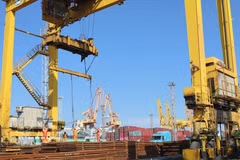
Loading and unloading steel products at Hoang Dieu–Chua Ve Port, Hai Phong city (Photo: VNA)

Hai Phong city seeks to boost inland waterway transport

According to the Hai Phong Maritime Administration, inland waterways carry coal, agricultural products, ores, stone, cement and other bulk cargoes, helping ease pressure on roads, particularly those connecting seaports and industrial parks.

Speakers at the conference (from left): AVPI Advisory Board Chair Dr Le Thu Huong, Australian Ambassador to Vietnam Gillian Bird, and Vietnamese Consul General in Sydney Nguyen Thanh Tung. (Photo: VNA)

Vietnam, Australia turn momentum into practical cooperation

Vietnam and Australia should focus on promoting two-way investment, expanding cooperation linked to APEC 2027 and making better use of people-to-people connections. Vietnam needs capital, skills, technology, infrastructure, and energy transition expertise - areas where Australia could offer valuable support.

The interface of the National E-Procurement System. (Photo: muasamcong.mpi.gov.vn)

Vietnam to move PPP bidding online from 2027

From January 1, 2027, PPP project proposals must be submitted through the National E-Procurement System. From September 1, 2027, investor selection for PPP projects tendered through open bidding will move fully online.

An automated robot-based production line at CAYI Technology Vietnam Co., Ltd. in Yen Phong II-C Industrial Park, Bac Ninh city (Photo: VNA)

EuroCham: Business Confidence Index in Vietnam remains high at 78.3 in Q3

The survey found that 64% of respondents described their current business conditions as good or very good, while 28% maintained a neutral or cautious outlook, reflecting a wait-and-see attitude as international demand remains flat and businesses look for policy momentum to translate into faster procedures and more predictable outcomes.

Workers manufacture handheld power tools at the Keystone Electrical Vietnam factory in Lien Ha Thai Industrial Park, Thai Thuy commune, Hung Yen province (Photo: VNA)

Vietnam seeks to turn FDI inflows into domestic value added

Vietnam is shifting its FDI attraction strategy from expanding investment volumes to prioritising capital inflows that brings technology, knowledge, modern management practices and stronger links with domestic businesses, particularly in semiconductors, artificial intelligence (AI), chips and renewable energy.