Dong Nai records 1.7 billion USD in trade surplus

The southern province of Dong Nai enjoyed a trade surplus of 1.7 million USD in the first nine months of 2017, according to Director of the provincial Department of Industry and Trade Duong Minh Dung.
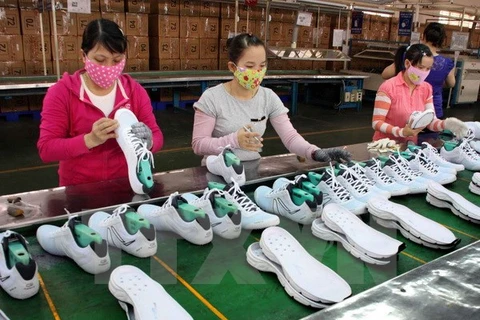
Dong Nai records 1.7 billion USD in trade surplus ảnh 1The southern province of Dong Nai enjoyed a trade surplus of nearly 1.4 billion USD in the first eight months of the year. (Photo: VNA)

Dong Nai (VNA) – The southernprovince of Dong Nai enjoyed a trade surplus of 1.7 million USD in the firstnine months of 2017, according to Director of the provincial Department ofIndustry and Trade Duong Minh Dung.

The export turnover was estimated at 12.5billion USD in January-September, a year-on-year rise of 11 percent, while theimport was 10.8 billion USD in the period.

With the current growth momentum, Dong Nai islikely to earn 17 billion USD from exports and enjoy a trade surplus of over2.2 billion USD this year.

The province’s export products mainly came fromforeign direct investment (FDI) sector with key ones such as garment-textile,footwear, timber products, fibre, electronics and computers.

Currently, Dong Nai is shipping products to over100 countries and territories, focusing on the US, China, Japan, the Republicof Korea, Hong Kong (China), Belgium, and Germany.-VNA
VNA
See more

Customs officers inspect vehicles and imported goods at the Huu Nghi International Border Gate in Lang Son province. (Photo: VNA)

Customs intensify crackdown on counterfeit goods, trade fraud

The customs sector has identified the fight against smuggling, trade fraud, counterfeit goods and intellectual property violations as a key task. Customs units nationwide have stepped up inspections and supervision of import-export activities along major routes and at key checkpoints.

Workers process clams for export at the factory of Thanh Hoa Fishery Import-Export JSC in Thanh Hoa province. (Illustrative photo: VNA)

Vietnam notifies WTO committee of goods origin management reforms

The information presented by Vietnam attracted attention from others WTO members amid global efforts to accelerate the digital transformation of import – export procedures and improve the implementation of rules of origin to enhance supply chain adaptability.

A Petrolimex worker refuels a motorbike. (Photo: VNA)

Energy imports surge in first quarter of 2026

Data from Vietnam Customs shows that the country spent approximately 2.93 billion USD importing nearly 3.37 million tonnes of petroleum products in the first quarter of 2026, an increase of 77.8% in value and over 44% in volume compared to the same period last year.

A perspective of the Quang Ninh 1 Wind Power Plant project (Photo: Quang Ninh provincial Department of Construction)

Quang Ninh gives nod to first offshore wind power plant

The project is expected to have a designed capacity of 50 MW and will be implemented in nearshore waters of the Co To special zone. It will be the first offshore wind power project in the province, playing a pioneering role in tapping Quang Ninh’s abundant renewable energy potential.

Viettel launches the Unitel Logistics brand in Laos. (Photo: VNA)

Vietnamese firms expand global footprint

The Government recently approved the “Go Global” programme for 2026-2030, which identifies the private sector as a key driving force in Vietnam’s international expansion process. It aims to help Vietnamese private enterprises strengthen their overseas presence in a comprehensive, effective and sustainable manner through international investment, business activities and deeper integration into regional and global supply and value chains.

Vietnam and Cambodia are seeking to strengthen supply chain connectivity and promote sustainable border trade at a trade promotion conference in Vietnam's Mekong Delta province of Dong Thap on May 15. (Photo: https://thoibaonganhang.vn/)

Vietnam, Cambodia eye stronger border trade, supply chain connectivity

Vietnam–Cambodia trade ties have grown rapidly in recent years, becoming one of the major pillars of economic cooperation in the Mekong sub-region. The two countries share a 1,137-km border and an increasingly developed network of international and secondary border gates, facilitating cross-border trade, logistics and investment.

Illustrative image. (Photo: VNA)

Three proposals to connect overseas Vietnamese resources with private economy at home

There are currently many Vietnamese IT specialists working in technology corporations, banks, start-ups and innovation ecosystems across Canada. With appropriate mechanisms in place, this workforce could become a technology bridge, helping Vietnamese enterprises access management expertise, technical solutions, international standards and partnership networks in North America.