Doctors at hospitals in HCM City and Hue this week conducted six successful organ transplant operations, saving the lives of four people and restoring the sight of two severely visually-impaired patients.
Associate Prof. Nguyen Truong Son, Director of Cho Ray Hospital in HCM City, said this was the hospital's first case in which organs from one brain-dead patient had been used in four different transplantation operations, including kidney, liver, heart and lung and cornea.
For the liver transplant operation, doctors at Cho Ray Hospital were assisted by a Republic of Korea’s surgery transplant team from the ASAN Medical Centre in Seoul.
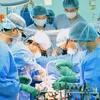
The team on July 20 successfully conducted a liver transplant operation for a patient with liver cancer caused by hepatitis C infection.
Also on July 20, doctors at Cho Ray Hospital conducted operations on two patients with chronic kidney failure, transplanting kidneys from the donor.
Elsewhere, doctors at Hue Central Hospital in Hue on July 20 flew to HCM City to receive the donor's heart and lung and then flew back to Hue to perform the transplant operation for a patient with heart and lung failure.
A team of doctors at Hue Central Hospital conducted the operation.
The doctors, led by Dr Bui Duc Phu, at the Hue hospital are known nationwide for their expertise in heart transplantation.
The brain-dead donor had an AB blood type, doctors said. Donors with AB blood type can only be matched with recipients with the same blood type. Son said the AB blood type was uncommon among Vietnamese.
To expedite the transport of the organs between HCM City and Hue, the hospitals had to ask for assistance from national aviation, customs and import-export management agencies.
The heart must be transplanted within three hours, and the lung, within four hours, Son said.
Apart from the transplant operations at Cho Ray and Hue hospitals, cornea transplantation operations were conducted on July 22 at HCM City's Nguyen Trai Hospital for two poor patients with corneal scars.
Demand for body organs for life-saving transplants in Vietnam is high but supplies are low. According to Health Minister Nguyen Thi Kim Tien, this is because hundreds of people with terminal ailments - or their relatives - refuse to agree to donate vital body parts, such as heart, kidneys or liver.
The Health Minister said at the launch of the Vietnam Society for Encouraging Body Organ Donation and the Vietnam Organ Transplantation Society in June that there were about 6,000 people suffering chronic kidney disease who needed a kidney transplant to stay alive; about 1,500 patients waiting for a liver transplant and about 6,000 waiting to undergo a cornea transplant.
She said organ transplant societies could play a vital role in raising awareness of the need for donations, calling for authorities at all levels, media agencies and civil society groups to participate.
There are 14 health facilities capable of performing organ transplants nationwide. Many of Vietnam's organ transplant skills had been recognised as being on a par with international practices.-VNA
Associate Prof. Nguyen Truong Son, Director of Cho Ray Hospital in HCM City, said this was the hospital's first case in which organs from one brain-dead patient had been used in four different transplantation operations, including kidney, liver, heart and lung and cornea.
For the liver transplant operation, doctors at Cho Ray Hospital were assisted by a Republic of Korea’s surgery transplant team from the ASAN Medical Centre in Seoul.
The team on July 20 successfully conducted a liver transplant operation for a patient with liver cancer caused by hepatitis C infection.
Also on July 20, doctors at Cho Ray Hospital conducted operations on two patients with chronic kidney failure, transplanting kidneys from the donor.
Elsewhere, doctors at Hue Central Hospital in Hue on July 20 flew to HCM City to receive the donor's heart and lung and then flew back to Hue to perform the transplant operation for a patient with heart and lung failure.
A team of doctors at Hue Central Hospital conducted the operation.
The doctors, led by Dr Bui Duc Phu, at the Hue hospital are known nationwide for their expertise in heart transplantation.
The brain-dead donor had an AB blood type, doctors said. Donors with AB blood type can only be matched with recipients with the same blood type. Son said the AB blood type was uncommon among Vietnamese.
To expedite the transport of the organs between HCM City and Hue, the hospitals had to ask for assistance from national aviation, customs and import-export management agencies.
The heart must be transplanted within three hours, and the lung, within four hours, Son said.
Apart from the transplant operations at Cho Ray and Hue hospitals, cornea transplantation operations were conducted on July 22 at HCM City's Nguyen Trai Hospital for two poor patients with corneal scars.
Demand for body organs for life-saving transplants in Vietnam is high but supplies are low. According to Health Minister Nguyen Thi Kim Tien, this is because hundreds of people with terminal ailments - or their relatives - refuse to agree to donate vital body parts, such as heart, kidneys or liver.
The Health Minister said at the launch of the Vietnam Society for Encouraging Body Organ Donation and the Vietnam Organ Transplantation Society in June that there were about 6,000 people suffering chronic kidney disease who needed a kidney transplant to stay alive; about 1,500 patients waiting for a liver transplant and about 6,000 waiting to undergo a cornea transplant.
She said organ transplant societies could play a vital role in raising awareness of the need for donations, calling for authorities at all levels, media agencies and civil society groups to participate.
There are 14 health facilities capable of performing organ transplants nationwide. Many of Vietnam's organ transplant skills had been recognised as being on a par with international practices.-VNA