Door open wide for farm produce export to Europe

The recent signing of the EU-Vietnam Free Trade Agreement (EVFTA), which is expected to take effect from early 2020, has opened the door wider for Vietnamese farm produce to make inroads into the more than 500-million people strong market.
Door open wide for farm produce export to Europe
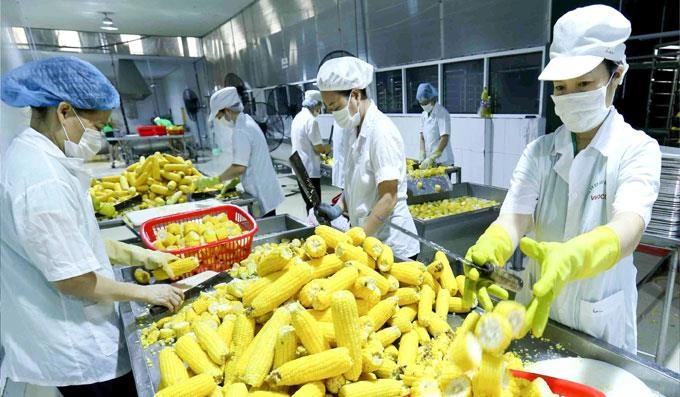
Door open wide for farm produce export to Europe ảnh 1Illustrative image (Source: VNA)

Hanoi (VNA) –
The recent signingof the EU-Vietnam Free Trade Agreement (EVFTA), which is expected to takeeffect from early 2020, has opened the door wider for Vietnamese farm produceto make inroads into the more than 500-million people strong market.

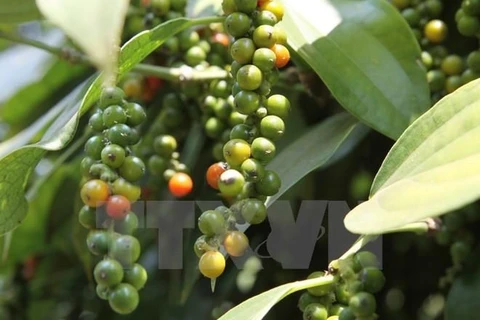
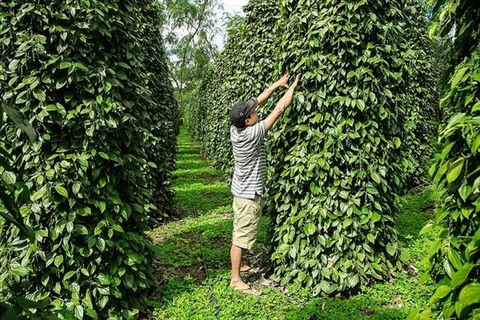
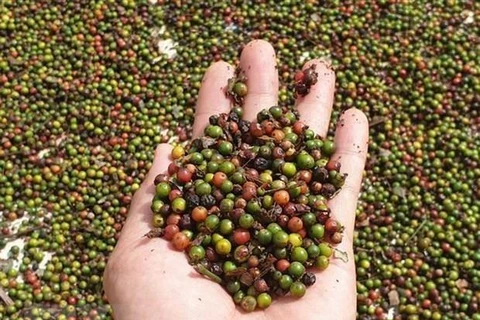
According to Chairman of the Vietnam PepperAssociation Nguyen Nam Hai, Vietnam exports about 40,000 tonnes of pepper tothe EU each year, meeting 53 percent of the market’s demand.

Along with pepper, other agricultural productsare gaining foothold in EU countries such as fruits, vegetables and cashewnuts.

Nguyen Quoc Toan, Director of the AgroProcessing and Market Development Authority (Agrotrade) under the Ministry ofAgricultural and Rural Development, said the EU is one of the three biggestimporters of Vietnamese farm produce. 

In the first eight months of 2019, the EU marketaccounted for more than 12 percent of Vietnam’s agricultural exports, he noted.

Deputy head of the European-American MarketDepartment under the Ministry of Industry and Trade Tran Ngoc Quan said the EUis committed to removing 94 percent of the total 547 tariff lines forvegetables and fruits after the EVFTA comes into effect.

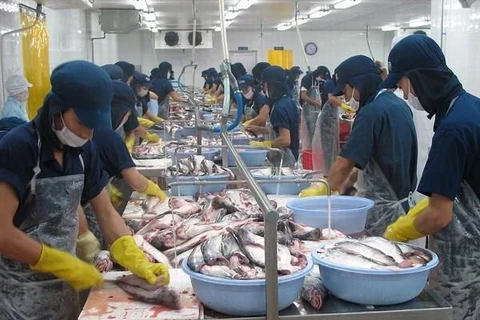
Apart from farm produce, the EU is also thesecond largest seafood importer of Vietnam, making up 17 percent of thecountry’s total aquatic export value, he added.

To boost exports to a choosy market like the EU,businesses should improve the quality of products and ensure food safety andorigin tracing.

Vuong Truong Giang, head of the plant protectiondepartment’s food safety and environment office from the Ministry ofAgriculture and Rural Development, suggested Vietnamese firms seek solutions tocontrolling the quality of products from producing to processing and preservingstages, and building standardize material growing zones to meet requirements onorigin.

Minister of Agriculture and Rural DevelopmentNguyen Xuan Cuong said the ministry has approved a planning scheme for keyfruit growing areas in the southern region through 2020.

Meanwhile, Minister of Industry and Trade TranTuan Anh said his ministry will work with trade counselors in EU countries toupdate trade barriers and help businesses attract investment in production andprocessing.

Businesses exporting farm produce to the EU saidto penetrate the market, there is no need to place heavy premiums on exportvolume, instead focusing on the quality and transparency of the origin ofproducts, designs and brands./.
VNA
See more

Octopus processing for export at Huy Nam Company in An Giang province. (Photo: VNA)

New opportunities for Vietnam’s seafood exports

The Vietnam-EFTA Free Trade Agreement brings together two groups of highly complementary economies. EFTA members Switzerland, Norway, Iceland and Liechtenstein have strengths in technology, innovation, finance, clean energy and sustainable development, while Vietnam is one of Asia’s most dynamic economies and is emerging as a major regional manufacturing, trade and investment hub.

The saponin content of Lai Chau ginseng can reach as high as 23.85% in its natural state, a remarkably high level compared to many other ginseng species. (Photo: baolaichau.vn)

Lai Chau ginseng development gains momentum

Blessed with rare and distinctive ecological values, the northern mountainous province of Lai Chau is stepping up efforts to conserve and develop its native ginseng, with the medicinal plant expected to play a growing role in the forest-based economy and local livelihoods.

The Vietnamese delegation poses for a group photo at the third meeting of the Vietnam-Canada Joint Economic Committee (Photo: VNA)

Vietnam, Canada broaden economic cooperation beyond trade

Vietnam is currently Canada’s largest trading partner in ASEAN. Building on the Comprehensive and Progressive Agreement for Trans-Pacific Partnership (CPTPP), the two countries are expanding bilateral economic ties into higher value-added areas such as clean energy, critical minerals, advanced technology, manufacturing and value-chain linkages.

The Index of Industrial Production (IIP) rises 14.4% in August and 11.9% in the first eight months compared to a year earlier. (Photo: VNA)

More momentum needed for economic growth in year-end race

To build momentum for the year-end race, one of the top priorities is to accelerate public investment disbursement, ensuring 100% of the allocated plan is disbursed without allowing funds to be concentrated in the final months of the year.

Vietnamese enterprises showcase products at the Vietnam Pavilion during the Foodist Istanbul 2026 fair. (Photo: Vietrade)

Vietnamese goods gain export opportunities in Türkiye, Spain

Vietrade said the programme helped businesses gain practical market information, identify potential products and partners, and better understand requirements on quality, pricing and distribution. Such direct connections are expected to help companies adapt their products and develop more effective export strategies.

Prime Minister Le Minh Hung (left) receives WTO Director-General Ngozi Okonjo-Iweala in New Delhi, India on September 12 (Photo: VNA)

PM Le Minh Hung calls on WTO to continue support for Vietnam

Vietnam actively and responsibly participates in the WTO’s agenda and supports its coordinating role in promoting inclusive and balanced global trade for peace, cooperation and development, while effectively responding to global challenges, said Prime Minister Le Minh Hung.

Vietnamese Trade Counsellor in India Bui Trung Thuong (Photo: VNA)

Vietnam sees opportunities to deepen engagement with BRICS: Trade Counsellor

Vietnam could deepen cooperation with BRICS through four main areas: expanding trade and market access; attracting and promoting two-way investment; engaging deeper in global supply chains and logistics networks; and advancing cooperation in science-technology, innovation and digital transformation.