Dossier on imperial citadel preservation, development gets UNESCO committee’s approval

Chairman of the UNESCO World Heritage Committee (WHC) Vishal V. Sharma on July 24 approved a decision to officially give consent to Vietnam’s proposals on the orientation and vision for researching, preserving, and developing the Central Sector of the Imperial Citadel of Thang Long.

Deputy Minister of Foreign Affairs Ha Kim Ngoc (left), Chairman of the Vietnam National Commission for UNESCO, at the meeting with Director of the World Heritage Centre Lazare Eloundou Assomo on July 22. (Source: VNA)

Hanoi (VNA) - Chairman of the UNESCO World Heritage Committee (WHC) Vishal V. Sharma on July 24 approved a decision to officially give consent to Vietnam’s proposals on the orientation and vision for researching, preserving, and developing the Central Sector of the Imperial Citadel of Thang Long.

The move was made at the WHC’s ongoing 46th session in New Delhi, India.

The WHC recognised and highly valued Vietnam’s achievements during the realisation of all commitments by the Vietnamese Government since the Central Sector of the Imperial Citadel of Thang Long was listed as a world heritage site in 2010.

The approval of the dossier on the preservation and promotion of the site’s values is expected to pave the way for the restoration of the space and main hall of Kinh Thien Palace, a primary relic there.

Noting the particular importance of this dossier, Deputy Minister of Foreign Affairs Ha Kim Ngoc, Chairman of the Vietnam National Commission for UNESCO, emphasised that all WHC members spoke highly of the willing, serious, and responsible spirit of Vietnam during the cooperation with the World Heritage Centre and the International Council on Monuments and Sites (ICOMOS) to realise Vietnam’s wish on the basis of the World Heritage Convention, the country’s adherence to commitments, and the further promotion of the heritage’s outstanding universal value.

Ngoc also described the approval of the dossier as “spiritual incense” offered to General Secretary of the Communist Party of Vietnam Central Committee Nguyen Phu Trong, who always paid attention to the preservation and promotion of the Thang Long Imperial Citadel’s value.

Director of the World Heritage Centre Lazare Eloundou Assomo said the dossier is important to not only Vietnam but also the world as it also covers new issues related to heritage development. He considered this as a role model of a member state’s cooperation with UNESCO and the advisory body, and also an epitome of world heritage preservation.

Within the framework of the WHC’s 46th session, Ngoc had meetings with UNESCO Director-General Audrey Azoulay and WHC Chairman Vishal V. Sharma. He also chaired a working session with ICOMOS President Teresa Patricio, ICOMOS Director-General Marie-Laure Lavenir, and heads of other countries’ delegations.

At the events, leaders of UNESCO, ICOMOS, and countries’ delegations offered condolences to Vietnamese leaders and people on the passing of General Secretary Trong.

They spoke highly of Vietnam’s sound cooperation with UNESCO and other member states, along with its significant and effective contributions to the organisation’s common affairs as a member of the six key governing bodies of UNESCO.

The officials considered Vietnam as a typical example of a member state’s cooperation with the advisory agency in the preservation and promotion of heritage value in association with sustainable development. They also called on the country to maintain close coordination, boost initiatives, and share experience with others in the region and the world./.
VNA

See more

Michelin Guide Vietnam recognises 11 one-Michelin star restaurants (Photo: Michelin Guide Vietnam)

Local ingredients, cultural roots propel Vietnam’s Michelin journey

One of the clearest examples is Hieu Luc, a modest fish soup eatery on Hai Ba Trung Street in Hanoi, which has been included in the Michelin Selected category for the second consecutive year. Known for its clear, delicately sweet broth made from freshwater perch and mustard greens, the restaurant serves a traditional specialty from Hung Yen province.

Delegates attending the ASEAN City Leaders Conference 2026 visit the Imperial Citadel of Thang Long on June 9. (Photo: VNA)

ASEAN city leaders explore Hanoi’s heritage sites

At the Imperial Citadel of Thang Long, delegates visited the Doan Mon Gate and learnt about the formation and development of the ancient capital through different historical periods at display spaces. They also explored the Kinh Thien Palace’s Dragon Steps (large stone steps with dragon carvings), regarded as the political and ceremonial centre of the imperial citadel during successive Vietnamese dynasties.

Ly Hoang Nam is Asia's No. 1 pickleball player. (Photo: webthethao.vn)

Ly Hoang Nam tops Asian pickleball rankings

Vietnam boasts five players in the DUPR Asian top 10, with Nam leading the rankings on 6,267 points ahead of competitors from the Philippines, India, Hong Kong (China) and Chinese Taipei.

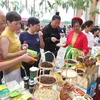
Visitors to the booth of the Vietnamese Embassy at the Embassies Food and Culture Festival held in Prague, the Czech Republic, on June 6 (Photo: VNA)

Vietnamese culture, cuisine leave lasting impression in Czech Republic

Featuring more than 100 booths representing diverse cultures from around the world, the festival transformed the heart of Prague into a vibrant multicultural space where visitors could sample traditional dishes, enjoy folk performances, listen to traditional music and experience unique cultural showcases from different continents.

Vietnamese artists play traditional musical instruments at the festival held in Karlovy Vary city, the Czech Republic, on June 5. (Photo: VNA)

Vietnam culture, cuisine showcased in Czech Republic

The festival featured more than 20 booths offering traditional Vietnamese dishes, including "pho" and spring rolls, alongside activities promoting Ao Dai (Vietnamese traditonal long dress). One of the highlights was the presentation of complimentary Ao Dai to Czech residents and international visitors.

The Nguyen Dynasty (1802-1945) imperial throne, a recognised national treasure of Vietnam, officially returns to public display at Thai Hoa Palace in Hue Imperial Citadel on June 4 (Photo: VNA)

Nguyen Dynasty throne returns to Hue Imperial Citadel after restoration

The throne has been reinstated at its original central position inside Thai Hoa Palace, the ceremonial heart of the former imperial court. Its return has attracted significant interest from visitors and heritage enthusiasts eager to see one of Vietnam’s most important royal artefacts back on display.

People join the “Ho Van Lantern Festival Night” programme at the special national relic site of the Van Mieu–Quoc Tu Giam (Temple of Literature) in Hanoi. (Photo: VNA)

Night-time economy drives growth of Hanoi’s cultural industries

Under the Politburo’s Resolution No. 80-NQ/TW on the development of Vietnamese culture, Hanoi has been given fresh opportunities to leverage its cultural, historical, tourism and creative assets. The city’s recently approved project on developing the night-time economy for 2026–2030, with a vision to 2045, is expected to create momentum for cultural industry growth while enhancing Hanoi’s standing as a creative and modern city with a distinctive identity.

Efforts made to preserve, promote values of Non Nuoc Cao Bang Global Geopark

Efforts made to preserve, promote values of Non Nuoc Cao Bang Global Geopark

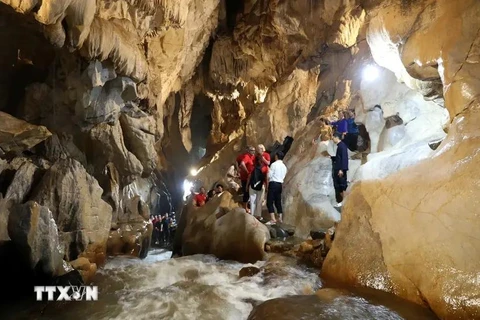
First recognised by UNESCO on April 12, 2018, the Non Nuoc Cao Bang Global Geopark in the northern province of Cao Bang is a land shaped by more than 500 million years of geological history. Covering over 3,683 sq.km and encompassing all or part of 36 communes and wards, the geopark is home to numerous scenic landscapes, as well as historical and cultural sites of exceptional value.