Ebola screenings to be intensified at border gates, hospitals

Screenings will be intensified at border gates and hospitals to early detect people suspected to contract deadly virus Ebola, particularly those who return from affected areas.
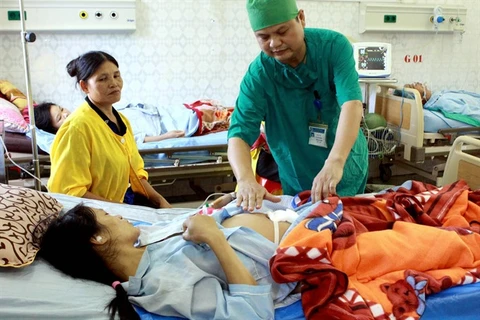
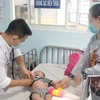
Ebola screenings to be intensified at border gates, hospitals ảnh 1Screenings will be intensified at border gates and hospitals to early detect people suspected to contract deadly virus Ebola. (Photo: VNA)

Hanoi (VNA)
– Screenings will be intensifiedat border gates and hospitals to early detect people suspected to contractdeadly virus Ebola, particularly those who return from affected areas.

The information was heard during a meeting held by theMinistry of Health’s Vietnam Public Health Emergency Operation Centre (PHEOCVietnam) on May 31 to assess the risk of Ebola outbreak in Vietnam and seek properpreventive measures.

The meeting concluded that the overall risk of theEbola virus spreading into Vietnam is low as most of Ebola cases werediscovered in Congo’s very remote areas and there are very few trade andexchange activities between Vietnam and Congo. However, there is still thepossibility of cases involving people entering Vietnam from the affectedregion.

To prevent a possible epidemic, hospitals were taskedto strengthen infection prevention and control and to prepare an isolation areaexclusively for Ebola suspected cases.

The Ministry of Health will continue liaising with theWHO to keep a close watch on the Ebola epidemic globally and at the same time,work closely with relevant ministries and state bodies to share information onthe epidemic, and entry and exit of travellers from the affected areas in orderto take appropriate and effective preventive actions.

Ebola is a highly infectious disease that spreadsthrough contact with even a small amount of bodily fluid of an infected person.Its early flu-like symptoms are not always easy to detect.

According to the International Health Regulations NationalFocal Point (IHRNFP) and representatives from the World Health Organisation(WHO), the outbreak of Ebola virus disease has returned to Congo since thebeginning of April.

By May 29, a cumulative total of 58 Ebola cases, including 27 deaths, have beenreported. Most of the cases were found in the remote areas of Bikoro, Iboko andWangata, far away from the capital city of Kinshasa, where travelling is noteasy with very few visitors.

There isno case reported in neighbouring countries and other parts of the world.

The WHOhas convened an emergency committee to discuss the epidemic, assessing that theEbola outbreak in Congo to be at level 3, the highest alert level. Though the level indicates there is a high risk of the virus spreadingto nearby countries, it is insufficient for the WHO to announce a public healthemergency of international concern (PHEIC). The world health body also stressedthat it was “particularly important there should be no international travel andtrade restrictions”.

The current outbreak - the ninth to hit Congo sinceEbola was identified in 1976 - involves the same strain of the virus thatstruck three West African countries in 2013-15 and sparked an internationalpanic. It went on to kill more than 11,300 people in the deadliest ever Ebolaepidemic.-VNA
VNA
See more

A doctor provides dental checkup for a student. (Photo: VNA)

Free health checkups for children ahead of new school year

According to the Hanoi Department of Health, the city has 4,776 educational institutions with more than 2.2 million preschool and school students. The health campaign will run from August 18 to September 4, targeting 100% coverage before the new school year begins.

Spraying insecticide to prevent dengue fever in Dan Hoa commune, Hanoi. (Photo: VNA)

Hanoi steps up dengue prevention as cases rise

According to the Hanoi Centre for Disease Control (CDC), 316 dengue cases were recorded across 74 communes and wards in the city from August 7-14, up 81 from the previous week. Eleven new outbreaks were also reported, bringing the total number since the beginning of 2026 to 63, with 24 still active.

Screening and early cancer detection using advanced medical equipment at a healthcare facility (Photo: VNA)

Vietnam targets Southeast Asia’s leading medical tourism position by 2030

Medical tourists to Vietnam currently mainly comprise overseas Vietnamese and visitors from Cambodia, Laos, the Republic of Korea, Japan, Australia and several European countries. Popular services include cosmetic dentistry, assisted reproduction, aesthetic medicine, general health check-ups and some advanced medical specialties.

An ambulance from the pre-hospital emergency care service in Phu Quoc special zone in An Giang province. (Photo: VNA)

Pre-hospital emergency care system to be launched nationwide

From 2027, the national pre-hospital emergency management platform will be put into operation, connecting data with the 113, 114 and 115 emergency call systems to facilitate rapid emergency dispatch and improve public access to emergency services.

Foreign patients travel to Vietnam for robotic cancer surgery at one-tenth of US costs

Foreign patients travel to Vietnam for robotic cancer surgery at one-tenth of US costs

With robot-assisted surgery costing tens of thousands of dollars in the US and Singapore, a growing number of international patients are traveling to Vietnam for robotic cancer surgery, including procedures for prostate, gynecological and gastrointestinal cancers, using the US made da Vinci Xi system at costs starting from just 3,000 USD.

Under a phased rollout beginning in 2026, every resident in Ho Chi Minh City will receive at least one annual health check-up or health screening. (Photo: VNA)

Ho Chi Minh City develops integrated multi-tier healthcare system

Under the new model, healthcare is organised into interconnected levels based on people's needs rather than administrative boundaries. Patients can move seamlessly between levels while their electronic health records and treatment information remain connected through digital platforms, referral systems, telemedicine, electronic medical records, and integrated health databases.

Doctors conduct heart and lung examinations for workers. (Photo: VNA)

Draft policy encourages people to prepare for old age from middle age

A draft circular guiding the implementation of the National Target Programme on Health Care, Population and Development (2026-2035) marks a shift from focusing solely on elderly care to encouraging healthy and independent ageing through early preparation. It covers healthy lifestyles, regular health check-ups, financial planning, suitable employment and home-based elderly care skills.