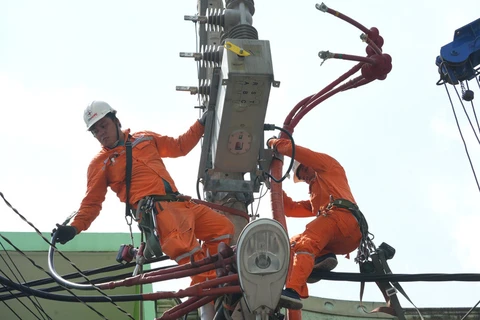
Workers of Vietnam Electricity check the transmission system. (Photo: VNA)
 An made the statement in response to National Assembly deputies’ question about why Vietnam had not connected domestic renewable energy projects with a total capacity of 4,600 MW to the national power grid but increased imports from Laos and China.
NA deputy Ta Thi Yen said at a meeting late last week that while the negotiations of pricing to connect renewable energy projects to the national power grid faced roadblocks, Vietnam was forced to increase the import from Laos and China to make up for the shortage. This was a huge waste when hundreds of solar and wind power energy projects could not generate power for consumption while the economy was facing a severe shortage of electricity, she said.
In response, An said that Vietnam imported electricity not because of the shortage. The country has been buying from China since 2005 via transmission lines in Lao Cai and Ha Giang provinces and from Laos, mostly hydroelectricity, following an intergovernmental cooperation agreement in 2019.
The electricity import from Laos was around 7 million kWh per day and 4 million kWh from China, very modest compared to the daily consumption demand, estimated at around 445-450 million kWh in the northern region.
An said that the purchase was under cooperation agreements with countries in the Greater Mekong sub-region, which would enable the connection of the power grid with other countries in the region. In addition, the electricity master plan No 8 also set out the target of exporting renewable energy to neighbouring countries.
Vietnam had 220 kV line linking with Laos and 110 kV with China. Under the commitments with Laos, Vietnam would import at least 3,000 MW from this country by 2025 and 5,000 by 2030.
An pointed out that the electricity import from Laos and China increased this year because of a shortage of supply caused by extreme weather and drought in the dry season.
The electricity import price was lower than some domestic sources, according to the ministry.
For example, it was around 6.5 cent or 1,540 VND per kWh from China and 6.9 cent from Laos. Statistics of Vietnam Electricity (EVN) showed that the average electricity purchasing price was around 1,845-2,200 VND per kWh in the first three months of this year, meaning that the prices from Laos and China were lower than some domestic sources.
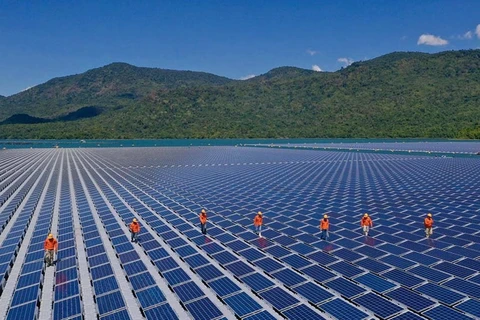
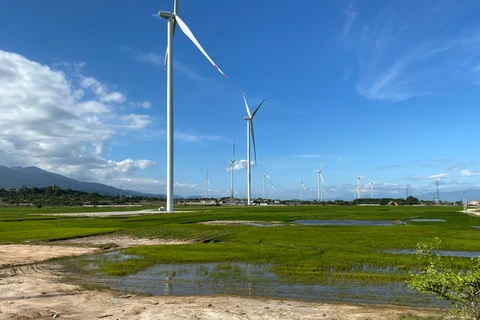
Bui Van Thinh, President of the Binh Dinh Wind Power Association, said that power shortage was mainly in the northern region while renewable energy projects were concentrated in the central and southern regions, creating pressure on the North–South 500 kV transmission network.
Buying electricity from China and Laos is reasonable, he said.
Regarding the roadblocks to the connection of more than 4,600 MW of renewable energy to the national power grid, An said that many projects had not met legal procedures due to violations of regulations about planning, land and construction investment.
He said that removing the roadblocks for renewable energy projects was being hastened based on the harmonisation of all sides' benefits.
EVN’s statistics showed that there were 52 wind and solar power projects with a total capacity of 3,155 MW which had applied for negotiations. Of them, 42 with a total capacity of nearly 2,259 MW completed pricing negotiations with EVN. About 33 projects with a total capacity of 1,581 MW had not applied for negotiations.
The Ministry of Industry and Trade approved temporary prices for 19 projects with a total capacity of 1,347 MW. As of May 26, five projects with a total capacity of 303 MW were eligible for commercial operation, meaning that the power system would have an additional supply source of more than 300 MW from these plants in the next few days./.
VNA