Electricity output predicted to rise by 7.9 percent in 2022

Power generation output and import in 2022 is forecast to hit 275.5 billion kWh, up 7.9 percent year-on-year, Vice Director of the National Load Dispatch Centre (NLDC) Nguyen Quoc Trung reported at a conference on January 10.
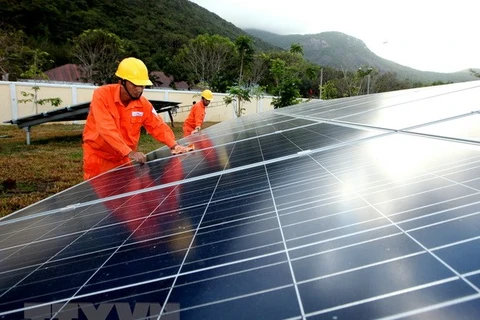
Electricity output predicted to rise by 7.9 percent in 2022 ảnh 1Electricity output predicted to rise by 7.9 percent in 2022. (Photo: VNA) 
Hanoi (VNA) – Power generation outputand import in2022 is forecast to hit 275.5 billion kWh, up 7.9 percent year-on-year, Vice Director of the National Load Dispatch Centre (NLDC) Nguyen Quoc Trung reported at aconference on January 10.

According toa plan on electricity supply and operation of the national power system in2022, the total output generated by hydro-power plants is expected to reach 82.5 billion kWh, 3.8billion kWh higher than the figure in 2021.

As many as 3,407 MW of power will be generated by traditional power supplies,including large thermal power plants such as Nghi Son 2 and Song Hau 1, Trung said. 

Vietnam planned to buy about 380 million kWh of electricity from Chinain May and June of 2022.

The peak load in the North is expected to grow by 9.5 – 13 percent,equivalent to an increase of 2,497 - 2,870 MW in consumption demand per year.

In 2021, the country's total electricity generation reached 255 billion kWh, up 3.2 percent compared to 2020.

The centre reported that as many as 7,433 MW of new power resources were provided for the national grid in 2021, lifting the total installed capacity of the nationalelectricity system to 78,682 MW, including 75 wind power plants totaling 3,600MW.

There were four new plants with a combined capacity of 372 MW joining themarket in the year, it added.

In the year, the NLDC operated theelectricity system safely and continuously, especially during difficult periodssuch as the peak months of the dry season in the North.

It also effectivelywell performed the workload related renewable energy projects, especially at the endof 2021./.

VNA

See more

An overview of the meeting in Ho Chi Minh City to discuss measures to ease pressures on production and trade, and stablise the domestic market amid the escalating conflict in the Middle East. (Photo: VNA)

Measures sought to address business challenges amid Middle East conflict

Vietnam is facing a three-stage ripple effect - first on transport and fuel-dependent industries, then on sectors relying on their outputs, and ultimately on consumers. Volatility in key commodities like fuel is disrupting the entire supply chain and increasing the risk of market instability.

Workers load rice bags onto a vessel for delivery. (Photo: VNA)

PM directs tasks to accelerate 2026 export growth

During January – February, Vietnam’s total export-import value hit 155.7 billion USD, up 22.3% year-on-year. Of the total, exports were estimated at 76.4 billion USD, up 18.3%, while imports totaled 79.3 billion USD, up 26.3%.

A quick report from data analytics platform Metric shows the number of active sellers across Shopee, TikTok Shop, Lazada and Tiki has dropped to just over 602,000, marking a year-on-year decline of more than 7%. (Illustrative photo: VNA)

Higher marketplace fees weigh on online sellers

Analysts identify rising operational costs as the key factor behind the exodus. In 2025, platforms simultaneously rolled out fee hikes ranging from 10–15%, significantly increasing the financial burden on merchants.

The latest approvals underscore the growing presence of Vietnamese rice in one of the world’s most demanding markets. (Photo: VNA)

Fragrant rice deepens EU market presence

Although the volume of individual shipments remains relatively modest, industry experts say the steady flow of exports reflects stable demand in the EU for high-quality rice.

Promoting stronger foreign direct investment (FDI) inflows is considered an important solution to help drive economic growth. (Photo: VNA)

Vietnam emerges as hub for high-quality FDI

Vietnam is gradually becoming a strategic destination for high-quality global FDI. Investment flows are increasingly directed toward sectors such as high-tech manufacturing, electronics, digital infrastructure, modern logistics, and industries that are closely linked to global supply chains.

Shrimp processing for export at Huy Nam company, An Giang province. (Photo: VNA)

Fisheries sector proactively adjusts to emerging challenges

In addition to food safety regulations, the US continues to closely monitor the origin of imported seafood through the Seafood Import Monitoring Programme (SIMP) administered by the National Oceanic and Atmospheric Administration (NOAA). Requirements linked to the Marine Mammal Protection Act (MMPA) are also a major concern for businesses.