Enhanced capacity of govt, enterprises needed to realise CPTPP

Enhanced capacity of govt, enterprises needed to translate CPTPP into success

Mechanisms must be established to enhance the capacity of both the Government and local enterprises so that the CPTPP can be a success, said Chairman of the VCCI Vu Tien Loc.
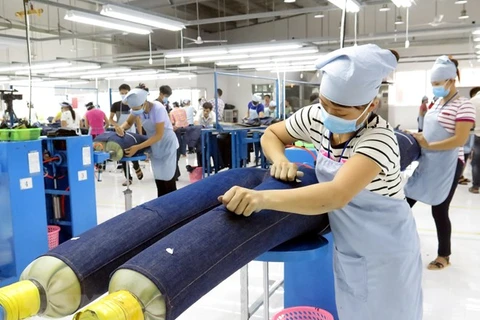
Enhanced capacity of govt, enterprises needed to translate CPTPP into success ảnh 1A factory of the Tinh Loi Garment Co. Ltd in the Lai Vu Industrial Park in Kim Thanh district, Hai Duong province (Photo: VNA)

Hanoi (VNA) – Mechanisms mustbe established to enhance the capacity of both the Government and localenterprises so that the Comprehensive and Progressive Agreement for Trans-PacificPartnership (CPTPP) can be a resounding success, said Chairman of the VietnamChamber of Commerce and Industry (VCCI) Vu Tien Loc.

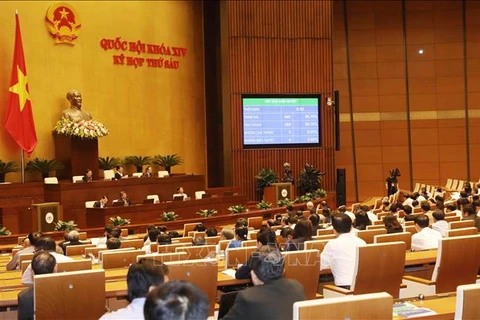
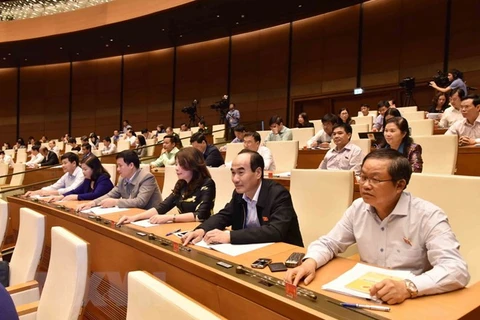
His statement was made after the 14thNational Assembly approved a resolution ratifying the CPTPP and related documentswith 96.7 percent of the vote on November 12.

Loc shared the view of many NA deputies in thatit is vital to develop an action programme that can outline an effectiveroadmap and implement the trade deal.

The action programme must develop all possiblescenarios to take the initiative in the fulfillment of CPTPP commitments and,at the same time, consult stakeholders to assess the impact of each scenarioand what Vietnam will lose if it fails to meet commitments, he said.

The programme should take into accountplans for each stage of CPTPP enforcement, keeping in mind not only compliance withthe pact, but also maintaining attainable goals for the economy and businesscommunity, he noted.

He added further that it should alsoinclude actions to support businesses affected by the CPTPP, particularly micro-,small-, and medium-sized enterprises, as well as those vulnerable in rural andagricultural sectors. If these businesses are not beneficial, the enforcementof the deal could be a failure, he said.

[Infographics: CPTPP expected to boost Vietnam’s GDP by 2.01% by 2035]

Echoing Loc’s view, NA deputy Le Thu Hafrom Lao Cai suggested that the Government develop a mechanism to deal withissues that may arise when the CPTPP enters into force, such as commercial disputes.She also emphasised the need to raise awareness among local firms of new CPTPPcommitments.

The effective implementation of the CPTPPrequires not only local firms but governmental agencies as well to thoroughlyunderstand the related domestic regulations and international practices thatwill put the trade deal to work, said NA deputy Nguyen Chien from Hanoi.

In addition, enterprises must pay more heedto improving the competence of their workers and learning about copyright andtrade protection policies of CPTPP member countries so as to sustain their businessdevelopment, he noted.

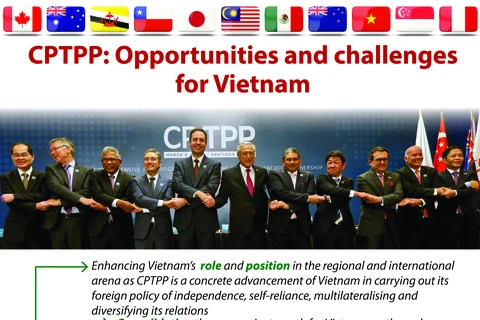
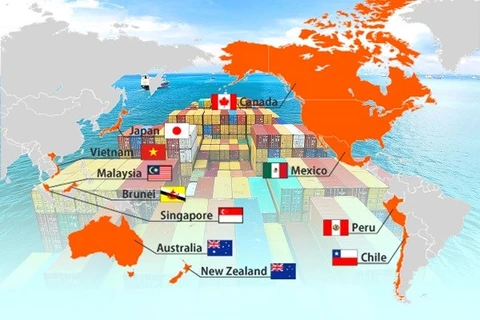
The CPTPP was signed by 11member states, namely Australia, Brunei, Canada, Chile, Japan, Malaysia,Mexico, New Zealand, Peru, Singapore, and Vietnam in March 2018.

It is one of the mostcomprehensive trade deals ever concluded, stripping 98 percent of tariffs forthe 11 countries, who have a combined GDP of more than 13.8 trillion USD andclose to 500 million consumers.

The pact will be enacted provisionally60 days after it has been ratified by six countries.

As such, the CPTPP is hopedto take effect in December 2018 as, thus far, Mexico, Japan, Singapore, NewZealand, Australia, and Canada have all already ratified the deal. –VNA 
VNA
See more

Enterprises must disclose to investors the issuance plan, legal and investment risks and the rights and obligations of issuers and bondholders. (Photo: VNA)

Vietnam tightens rules on corporate bond issuance

Under Decree No 200/2026/ND-CP, enterprises issuing bonds will continue to operate under the principle of self-borrowing, self-repayment and self-responsibility, meaning issuers are fully accountable for the efficiency of capital use, debt repayment capacity and any disputes arising from bond issuance, use of funds, and payment of principal and interest.

A performance on The Huc bridge of the temple as part of a nighttime tourism programme to discover the Ngoc Son temple on Hoan Kiem Lake, downtown Hanoi. (Photo: VNA)

Hanoi adopts framework to boost night-time economy development

The resolution encourages a wide range of cultural, artistic and tourism activities, including performances, exhibitions, film screenings, presentations of traditional and intangible cultural heritage, and other programmes held in public spaces, pedestrian streets, heritage sites, theatres, cinemas and cultural venues.

A cargo port in Thiruvananthapuram city, India (Photo: ANI/VNA)

Ample room remains for Vietnam–India logistics cooperation

The GTTCI expert noted that alongside logistics and integrated warehousing, e-commerce is expected to be a particularly high-growth sector in the coming years. He described it as a multi-billion-dollar market with significant untapped opportunities for cooperation between Vietnam and India.

The meeting between Minister of Finance Ngo Van Tuan and Ambassador Julien Guerrier, head of the EU Delegation to Vietnam, on June 15. (Photo: thoibaotaichinhvietnam.vn)

Vietnam, EU enhance cooperation in green finance

Minister of Finance Ngo Van Tuan called on the EU to help facilitate Vietnamese firms' access to green finance, expand technical and financial assistance for green transition, and enhance cooperation in strategic technologies, innovation, digital finance and high-tech human resources development.

An overview of the working session between Deputy Finance Minister Tran Quoc Phuong and Kim Dongil, Director of ADB representing the Republic of Korea, Papua New Guinea, Sri Lanka, Taipei (China), Uzbekistan, Vanuatu and Vietnam. (Photo: Ministry of Finance)

Vietnam, ADB to advance strategic projects with strong economic impact

ADB has identified a pipeline of 27 projects for Vietnam through 2029, with total planned financing of approximately 4.6 billion USD. The projects focus on sectors that are among Vietnam’s priorities, including infrastructure, energy, urban development, agriculture and public sector management.

Illustrative photo (Photo: VNA)

Exports gain momentum from high-tech growth drivers

According to the Ministry of Industry and Trade, Vietnam’s exports reached 215.66 billion USD in the first five months of 2026, up 19.5% year-on-year. Twenty-six export items generated more than 1 billion USD in revenue each, including seven with turnover exceeding 10 billion USD.

Participants in the conference (Photo: VNA)

Vietnam, Tunisia target coffee, olive oil as trade ties deepen

Though geographically distant, the two countries share strategic locations in their respective regions, skilled human resources, and a strong commitment to expanding international trade, which form the bedrock for a lasting and mutually beneficial partnership.

Da Nang People’s Committee Chairman Nguyen Manh Hung (second from left) presents investment policy approval decisions and investment registration certificates for three infrastructure projects in FTZ Zones 2, 3 and 4. (Photo: VNA)

Da Nang promotes investment links for pioneering Free Trade Zone

The conference also highlighted the role of digital technologies in building next-generation FTZs. Proposed solutions included the adoption of artificial intelligence (AI), the Internet of Things (IoT), big data, cloud computing and digital customs systems to improve operational efficiency, streamline logistics, accelerate customs procedures and enhance transparency for investors.