Enterprises face shortage of workers after easing of social distancing measures

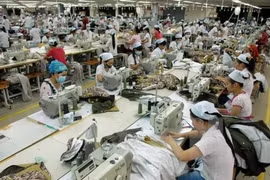
Enterprises in southern provinces that have resumed operation after the end of the social distancing period are facing a shortage of workers.
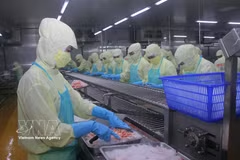
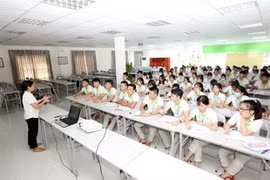
Enterprises face shortage of workers after easing of social distancing measures ảnh 1Enterprises in the southern provinces of Vietnam are facing a shortage of workers because many have not returned from their hometown after the easing of social distancing measures. (Photo: VNA)

HCM City (VNS/VNA)
- Enterprises in southern provinces that have resumedoperation after the end of the social distancing period are facing a shortageof workers.

Pham Oanh, whose hometown is in Thua Thien-Hue province, has been aconstruction worker in the southern provinces for about 10 years. Normally, hereturns to work in the southern provinces after Tet (Lunar New Year).

However, after the COVID-19 outbreak, he decided to look for a job in hishometown and is now working at a cement company in the province.

Pham Kim Yen, who lives in Thua Thien-Hue province and works for a garmentexport foreign company in Binh Duong province, said that her company had totemporarily close for a few months.

“I had to look for another job and now I work for a local garment company. Theincome is lower than when I worked in Binh Duong. However, I don't have to payrent for a house and the living cost in Binh Duong is higher than in ThuaThien-Hue.”

Truong Thi Thuy Lien, director of a leather and footwear export company in BinhDuong, said that many workers who had returned home for the Tet holiday did notreturn to work because of the COVID-19 pandemic. "My company is constantlyrecruiting but it is not enough. Estimated shortage is about 15 percent."

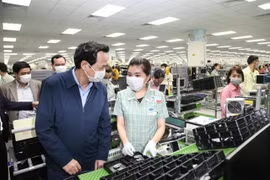
Le Nhat Tuong, chairman of Pousung Vietnam Ltd in Dong Nai province, said thecompany had built more factories and planned to recruit about 10,000 workers in2020. However, since the beginning of the year, only 1,000 new employees havebeen recruited, and the recruitment plan has been suspended.

In addition to adding more workers when there is a need to expand production,Pousung Company annually recruits new employees to supplement workers and 'jobskippers', Tuong said.

The food service sector also faces a shortage of workers. Many restaurants,cafes, and commercial services in Ho Chi Minh City have had to scale down orclose because of the shortage of workers.

Le Thanh Nhan, owner of a large restaurant in HCM City’s District 1, said thatof his 100 workers, "more than half are from central provinces and theyhave not returned because the COVID-19 pandemic is not fully undercontrol".

Lien’s footwear company has decided to outsource some stages of production whenthere are too many orders.

For Pousung Company, the company will invest in technology to reduce manuallabour, continue its annual recruitment and training plans for employees, andprovide incentive policies for new employees, according to Tuong./.
VNA

See more

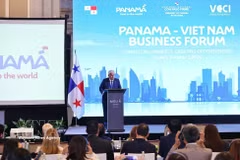
Panamanian President José Raúl Mulino speaks at the Panama-Vietnam Business Forum on October 7 in Hanoi. (Photo: VNA)

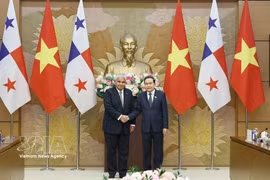
Vietnam, Panama seek to expand economic cooperation

In the presence of President Mulino, VCCI and the Chamber of Commerce, Industries and Agriculture of Panama signed a memorandum of understanding (MoU) to strengthen cooperation, enhance trade and investment promotion programmes, and support bilateral investment and trade.

Ministry updates on Vietnam-US reciprocal trade agreement talks

Ministry updates on Vietnam-US reciprocal trade agreement talks

The US is one of Vietnam’s major trading partners and holds paramount importance to the country’s exports. The conclusion of the bilateral trade agreement will help establish a stable and balanced trade framework toward sustainable development and open up greater opportunities for cooperation between the two countries.

MICE visitors enjoy services at Song Be Golf Resort in Ho Chi Minh City. (Photo: VNA)

Ho Chi Minh City shifts MICE tourism from venues to experiences

Ho Chi Minh City boasts significant advantages for MICE tourism, with the central area offering strengths in finance, trade and services; Binh Duong in industry, exhibitions and business connectivity; and Ba Ria-Vung Tau and Con Dao in marine tourism, resorts, ecology and distinctive experiences.

National Brand products are on display at the Vietnam National Brand International Forum. (Photo: VNA)

Vietnam's national brand value jumps 45% to over 462 bln USD

Deputy Minister of Industry and Trade Luong Hoang Thai outlined Vietnam's National Brand Programme 's achievements, the role of business community and plans for brand development in a press interview ahead of the 10th Vietnam National Brand Product recognition ceremony on October 16.

Khanh Hoa province possesses significant advantages for renewable energy projects and new energy sectors. (Photo: VNA)

New value chains from two industrial – renewable energy centres

To implement the revised Power Development Plan VIII, the Ministry of Industry and Trade has proposed establishing two inter-regional renewable energy industrial and service centres in the northern and southern regions to develop the renewable energy sector and a complete value chain.

WB Senior Environmental Specialist and Task Team Leader Stephen Ling speaks at the working session (Photo; VNA)

Ca Mau, WB cooperate in sustainable fisheries development

Scheduled to run from 2026 to 2029, the project aims to develop the local fisheries sector and deepen global integration, while adapting to climate change and protecting the environment through infrastructure upgrades, technological innovation, and better management and production capacity.

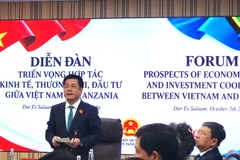
Vice President of the Vietnamese National Assembly Nguyen Hong Dien speaks at the forum. (Photo: Vietnam Trade Promotion Agency)

Tanzanian businesses seek greater cooperation, investment opportunities with Vietnam

Attending the forum during his working visit to Tanzania, Vice President of the National Assembly Nguyen Hong Dien said the two economies were highly complementary. Tanzania has strengths in natural resources, agriculture, energy, its domestic market and its strategic position in East Africa, while Vietnam has advantages in manufacturing and processing, high-tech agriculture, electronics, telecommunications and international trade.