Experts raise concerns about imported inflation risk

Vietnam needs to be wary of imported inflation, especially from rising global energy and commodities prices, experts have warned, urging attention to be paid to promoting exports and putting imports under control.
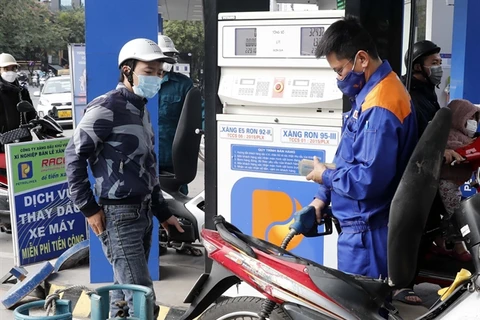
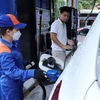
Experts raise concerns about imported inflation risk ảnh 1Rising oil and food prices are putting pressure on Việt Nam's inflation this year. (Photo: thanhnien.vn)
Hanoi (VNS/VNA) - Vietnam needs to be wary of imported inflation, especiallyfrom rising global energy and commodities prices, experts have warned, urgingattention to be paid to promoting exports and putting imports undercontrol.

According to Oxford Reference, imported inflation is inflation due to increasesin the prices of imports, which increases domestic costs of production andleads to rising prices of domestically produced goods.

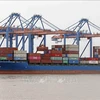
Signs of imported inflation arose from the beginning of this year with the pricesof imported fuels, materials and components increasing significantly, makingimports grow faster than exports.

Updates from the General Statistics Office showed that Vietnam’s import valuerose by 15.9 percent in the first two months of this year, compared to thegrowth rate of 10 percent of export value. The country switched from a tradesurplus of 1.4 billion USD in January to a trade deficit of 2.34 billion USD inFebruary.

In January-February, Vietnam posted a trade deficit of 937 million USD,compared to a trade surplus of 1.6 billion USD in the same period last year.

The increase in import value was due to the increases in prices of importsrather than in import volume. The import volume of some products even saw dropssuch as metals, cashew, coal and gas.

Economic expert Vu Dinh Anh said that the Russia-Ukraine conflict did not havea significant direct impact on Vietnamese trade but wasindirectly affecting trade with many foreign partners. Vietnam’strade with Russia and Ukraine accounted for just 1.06 percent and 0.1 percent,respectively, of the country’s total trade revenue.

However, the tensions together with sanctions from the US and EU on Russia wereheavily affecting fuel, material and food prices, creating inflation pressureon Vietnam.

Crude oil and food prices already increased sharply in 2021 and continued toskyrocket in the first months of this year.

According to the Food and Agriculture Organisation of the United Nations, thebenchmark gauge for world food prices FAO Food Price Index which tracks monthlychanges in the international prices of commonly-traded food commodities went upin February, reaching an all-time high, led by vegetable oils and dairyproducts.

Reuters reported that oil prices soared to their highest level since 2008 dueto delays in the potential return of Iranian crude to global markets and as theUS and European allies consider banning imports of Russian oil. Brent rose 11.67USD, or 9.9 percent, to 129.78 USD a barrel by 6:50pm EST (23:50 GMT),while U.S. West Texas Intermediate (WTI) crude rose 10.83 USD, or 9.4 percentto 126.51 USD, putting both contracts on track for their highest dailypercentage gains since May 2020.

Imported inflation did not happen in 2021 thanks to the Government’s effectivemacro-economic policies but has arisen as a risk this year. “Controllingimported inflation is a considerable source of pressure for Vietnam at thismoment,” Anh said.
Anh said that while the development of the Russia-Ukraineconflict remained uncertain, it was essential to pay attention topromoting exports and putting imports under control.

Former Deputy Director of the Vietnam Industry and Trade Information Centre LeQuoc Phuong said that the abundant supply of goods coupled with the stablemacro foundation would create room for controlling inflation but the loosenedmonetary and fiscal policies to promote economic recovery and increasingdomestic demand might negatively affect inflation.

Phuong said that the VND/USD exchange rate might increase by around 1-2 percentthis year, which would contribute to pushing up prices of imports.

Experts said it was essential for Vietnam to focus on enhancing productcompetitiveness and increase added value to promote exports while usingmore domestically-produced products to reduce imports, especially productswhich saw strong increases in import prices such as fertilisers and rubber.

The State Bank of Vietnam should maintain a stable exchange rate policy,experts urged, adding that any adjustment in the exchange rate should becarefully considered to encourage exports and limit imports.

Dragon Capital, based on JP Morgan’s three scenarios for oil prices,forecast that Vietnam’s inflation would increase by 3.58 percent in case theaverage oil price was at 88 USD per barrel, 3.8 percent if the oil price was at100 USD and 4.18 percent if the oil price was at 105 USD.  

However, Dragon Capital noted that the impact of rising oil prices might notaffect inflation as expected. Domestic fuel prices were affected by globalprices but they did not always move in the same direction.

Vietnam’s fuel price also included many different taxes and was considered afactor to stabilise the market. To control inflation, the Government could makesome policy adjustments, such as reducing the environmental tax on petrol.Taxes and fees currently accounted for 42 percent of petrol and oil prices.

Dragon Capital was also concerned about increases in prices of pork, riceand poultry./.
VNA
See more

Cai Mep - Thi Vai Port complex in Ho Chi Minh City (Photo: VNA)

Ho Chi Minh City seeks to make seaports new growth driver

To maximise its seaport advantages, Ho Chi Minh City is developing smart and green ports while promoting clean energy, lower emissions and sustainable supply chains. It aims to establish an integrated ecosystem linking seaports with industrial parks, logistics centres, free trade zones, multimodal transport networks and an international financial centre.

Farmers visit the off-season durian orchard of Cao Chi Dai in Vinh Hanh commune, An Giang province (Photo: VNA)

Vietnam promotes finance for green agriculture

Over the past five years, Vietnam has developed and gradually implemented a green finance system to support low-emission and environmentally friendly production, including agriculture. Based on the State Bank of Vietnam's Directive No. 03/CT-NHNN dated March 24, 2015, banks including BIDV, VCB, HDBank and Agribank have introduced green credit packages for waste treatment, high-tech agriculture, digital transformation, regional linkages and emission reduction across production chains.

An overview of the meeting between representatives from Polish businesses and the Agency for Domestic Market Surveillance and Development. (Photo: Agency for Domestic Market Surveillance and Development)

Polish businesses seek suppliers, partners in Vietnam

MAJAMI, a confectionery manufacturer and trader under Sweet House, is seeking distributors for Polish confectionery products in the Vietnamese market. Meanwhile, GABONA, a distributor and wholesaler of professional cosmetics, hair care and make-up products and beauty accessories, is looking for Vietnamese manufacturers of vegan and natural cosmetics.

Kendra Rinas, Chief of Mission for IOM Vietnam speaks at the event. (Photo: VNA)

Vietnam advances in building, using migrant labour data system: workshop

Data presented in the report reflects effective migration governance in recent years. The average recruitment cost paid by migrant workers dropped by 23.8%, from 164.9 million VND (6,400 USD) in 2021 to 125.7 million VND in 2025. Conversely, average first-month earnings abroad rose by 25.4%, increasing from 22.4 million VND to 28.1 million VND.

Workers produce leather shoes for export at Lefaso Tra Vinh Investment and Production Joint Stock Company in Tra Cu commune, Vinh Long province. (Photo: VNA)

Vietnamese exporters pivot to ease pressure from US tariffs

Pressure from the new US tariff policy is prompting Vietnamese exporters to reassess their strategies. Rather than pursuing volume-driven growth, many are shifting towards higher-value orders, tighter cost control, greater productivity and a more balanced allocation of markets to reduce reliance on a single destination.

A worker handles and stacks goods. Nearly 138,100 businesses were newly founded from January to August, up 7.7% over the same period last year, while more than 40,800 businesses completed dissolution procedures, a jump of 125.5%. (Photo: VNA)

Firm entry and exits point to continued restructuring pressure

Updates from the National Statistics Office last week showed that nearly 138,100 businesses were newly founded from January to August, up 7.7% over the same period last year, while more than 40,800 businesses completed dissolution procedures, a jump of 125.5%.

A Vietnamese business introduces durian cakes to Chinese visitors at the 22nd China-ASEAN Expo (CAEXPO) in 2025. (Photo: VNA)

Vietnam steps up trade, investment promotion at China-ASEAN Expo

According to the CAEXPO Secretariat, Vietnam will once again lease an entire exhibition area of about 3,000sq.m, featuring 170 booths, making it one of the ASEAN countries with the largest exhibition spaces at this year’s event. Nearly 100 Vietnamese businesses have confirmed their participation, including major brands such as Trung Nguyen Group, TH Group, Saigon Coffee and Biti’s.

An overview of the VIFC's Executive Council meeting on September 7 (Photo: VNA)

Six groups of products, services proposed at Vietnam International Financial Centre

Deputy Minister of Finance Nguyen Thi Bich Ngoc said the products and services include investment funds and asset management, asset-backed digital assets, international carbon credits, commodity trading and derivatives infrastructure linked to trade and supply-chain financing, financial technology, and bonds issued at the centre. As these groups are at different stages of readiness, they will be rolled out in phases rather than simultaneously.

The meeting between the Quang Ninh delegation and Siemens Mobility (Photo published by VNA)

Quang Ninh seeks cooperation, investment opportunities in Germany

A Quang Ninh official praised the collaboration between Siemens Mobility and VinSpeed in developing the Hanoi–Quang Ninh high-speed railway and expressed his hope that the project will pave the way for future cooperation between Siemens Mobility and Quang Ninh in modern railway development and workforce training.