Experts’ reactions to MoF tax plan mixed

Experts’ reactions to the Ministry of Finance’s (MoF) tax adjustment draft have been mixed, while the business community struggles to keep up with the variety of proposed tax hikes.
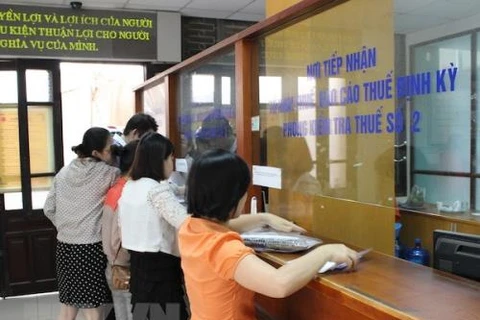
 Experts’ reactions to MoF tax plan mixed ảnh 1Taxpayers wait for completion of tax procedures at the Hanoi Tax Department. (Source: VNA)

Hanoi (VNA) - Experts’ reactions to the Ministry of Finance’s (MoF) taxadjustment draft have been mixed, while the business community struggles tokeep up with the variety of proposed tax hikes.

Most recently, the MoF’sproposal to impose auxiliary property tax rate of 0.3-0.4 percent per propertyvalue for houses worth from 700 million VND (31,000 USD) and up, was thesubject of controversy.

Since 2017, the MoF hadrepeatedly proposed amendments to current tax law towards increasing the numberof tax rates.

From hikingenvironmental protection tax on petroleum to increasing value-added tax (VAT)from 10 percent to 12 percent while reducing the number of goods entitled to 5 percentVAT, or special consumption tax on soft drinks, the MoF is intent onrestructuring State budget revenue via both direct and indirect taxes.

As such, it was nosurprise that representatives from the business community and financial expertswere skeptical of the ministry’s tax plans, as evident at a quarterlyconference held by the National Economics University (NEU) last week.

Dau Anh Tuan, Directorof the Legal Department at Vietnam Chamber of Commerce and Industry (VCCI),said he himself was "dazzled" by these proposals due to theircomplexity and severity.

He said the amendmentsof VAT, special consumption tax, corporate income tax, personal income tax,natural resource tax and export-import tax, would involve 30 different kinds ofminor taxes, and they were all rising.

Nonetheless, Tuanagreed that such increases in tax rates will result in strong revenuegain, but the MoF must take into account that enterprises are also facing otherhigh costs such as increased minimum wage and gasoline prices. 

Therefore, he arguedthat increasing taxes will have an immediate negative impact on businessperformance, as he believed on average costs are rising faster than revenuegrowth, and additional tax hikes would harm small and medium enterprises.

Ngo Tri Long, formerhead of Price and Market Research Institute under the MoF, said that since taxhikes are often a sensitive issue, there should be a detailed roadmap.

According to Long, sinceVAT is "regressive", meaning low-earning people have to spend alarger proportion of their income on consumption, the tax burden on essentialgoods will be higher for them than high income earners.

Phan Duc Hieu, DeputyDirector of the Central Institute for Economic Management (CIEM), also saidthat the proposed VAT increase would bring immediate gains to the State budgetbut would ultimately be a negative due to decreased purchasing power.

Phan Huu Nghi, head ofthe NEU’s Public Finance Department, said that increasing indirect taxes is acorrect trend for Vietnam, simply because they are easier to collect andcontrol.

Ta Loi, head of theNEU’s International Business, proposed replacing VAT with another tax onadditional cost to avoid tax overlap and tax fraud, which can be set at thesame level as corporate income tax on all consumable goods, and on a voluntary,independent and self-monitoring basis.

Nguyen Van Phung,Director of the Large Taxpayers Management Office under the General Departmentof Taxation, said that the MoF’s draft law proposals were simply part of along-term scheme for taxation restructuring, and that they were “withinreason”.

These tax incentives arefar from the tax system reform targets for 2011-2020 of 24 percent worth ofannual GDP, as at the moment it is only 18.1 percent.

Therefore, the MOF willand must amend a number of tax laws, though they had proved to put great pressureon the public, said Phung.

According to experts,citizens’ average income is still lower than the world’s average, sopolicymakers need to set a reasonable limit, as well as emphasising not justtax hikes but also avoiding losses from tax fraud and evasion.-VNA
VNA

See more

Sun Group partners with Dragone to jointly establish a new standard for performing arts in Vietnam (Photo: Sun Group)

Phu Quoc set for a global spotlight with Sun Group–Dragone flagship show

The agreement signed on April 10 represents Dragone’s first formal entry into Vietnam through a strategic partnership, underscoring the country’s growing appeal to leading global creative companies. It also reinforces Sun Group’s role as a pioneer in bringing world-class performing arts experiences to Vietnamese audiences.

Prime Minister Le Minh Hung (third, left) and delegates press buttons to start the project (Photo: VNA)

Work starts on Hanoi–Quang Ninh high-speed railway

Prime Minister Le Minh Hung attended a groundbreaking ceremony for the Hanoi - Quang Ninh high-speed railway line, Vietnam's first inter-regional high-speed railway, held in Quang Ninh province on April 12.

VinFast EV sales jump 127% in March 2026. (Photo: Vinfast)

VinFast EV sales jump 127%, cementing market dominance

According to its report, all models in VinFast’s EV lineup recorded strong growth in March. Notably, on March 28 alone, the company completed 3,520 orders, the highest number ever recorded in a single day by an automotive brand in Vietnam.

Illustrative image (Photo: VNA)

Australia announces import conditions for Vietnamese pomelos

Australia’s formal publication provides an important legal basis, marking the completion of the review, assessment and agreement on technical requirements for fresh Vietnamese pomelos. This represents a significant step forward in market access, creating favourable conditions for relevant agencies, localities and businesses to prepare for export activities in the coming time.

Containers of fresh Vietnamese durian for export are subject to a full-chain traceability system. (Photo: VNA)

First “green lane” durian shipment exported to China

​Under the “green lane” process, quality control begins at the cultivation stage, including soil sampling and monitoring, and continues through harvesting and processing, with traceability labels attached to trees and applied to fruit at the time of picking. It also allows plant quarantine procedures and the issuance of certificates of origin (C/O) directly in the localities where the orchards are located.

Delegates at the Vietnam Expo 2026 (Photo: VNA)

Vietnam pushes for deeper auto supply chain ties with RoK

The RoK stood as Vietnam’s largest foreign investor with more than 95.2 billion USD in registered capital as of February 2026, or about 18% of all foreign cash flowing in, with thousands of active projects. In January-February alone, the RoK led the pack with nearly 2 billion USD in pledges, grabbing a whopping 32.7% of total registered capital and showing no signs of slowing down.

More than 600 tourism firms, 15 countries and territories, and 34 provinces and cities are promoting destinations and introducing tourism products at the fair (Photo: VNA)

Digital transformation key to elevating Vietnam’s tourism: official

Speaking at the opening of the Vietnam International Travel Mart (VITM) 2026 in Hanoi on April 10, Deputy Minister of Culture, Sports and Tourism Ho An Phong noted that despite challenges in 2025, Vietnam largely fulfilled its socio-economic development goals. Tourism remained a bright spot, recording 21.5 million foreign arrivals and 135.5 million domestic visitors, with total revenue exceeding 1 quadrillion VND (37.9 billion USD).

A drone sprays fertiliser over rice fields. (Photo: VNA)

Low-altitude economy emerges as new growth driver for Vietnam

The UAV technology is particularly effective in addressing challenges faced by ground infrastructure, especially in densely populated urban areas and remote regions. Smart aerial devices also enable real-time data collection, improving governance, decision-making and digital transformation across industries.

Passengers at Cat Bi Airport in Hai Phong city (Photo: VNA)

Aviation sector ensures fuel supply for April 30–May 1 peak

Aviation fuel suppliers are actively negotiating and diversifying supply sources both domestically and internationally, while strengthening coordination, storage and distribution capacity to meet immediate demand. These efforts aim to support airlines in optimising operations and maintaining stable flight schedules.