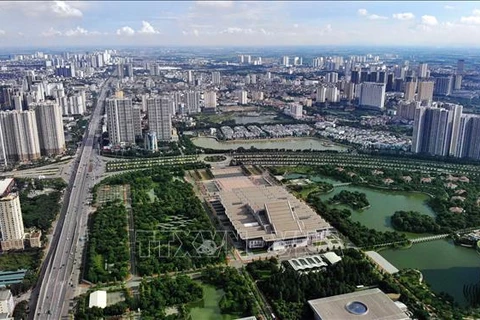
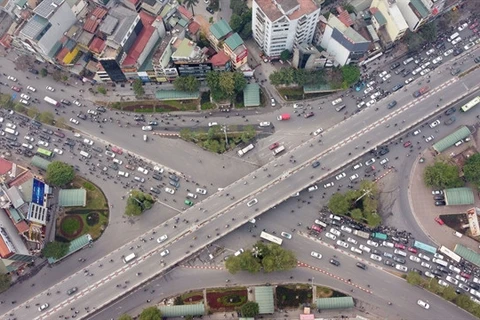
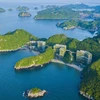
A view of Can Tho city. (Photo: VNA)
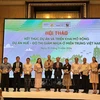
 Hau Giang (VNA) – A workshop on sustainable urban planning and development in the Mekong Delta was held on July 18 in the southern province of Hau Giang.
The event was part of a series of workshops on urban planning and sustainable development organised by the Party Central Committee's Economic Commission, the Ministry of Construction (MoC), the French Development Agency (AFD), and the provinces of Hau Giang, Son La, and Quang Tri.
It was reported that the Mekong Delta currently has 211 urban areas with an urbanisation rate of 32%, lower than the national average rate of 40.5%.
It is forecasted that from 2021 to 2025, the region will have over 250 urban areas with an urbanisation rate of about 35-36% by 2025 and about 42-48% by 2030.
According to studies, Vietnam is among the countries that are heavily affected by climate change, and the Mekong Delta is among the three deltas that will suffer the biggest inundation and lose the most land to encroachment in the world.
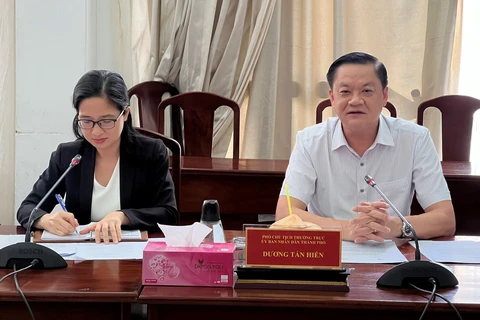
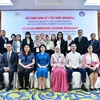
 At the workshop on sustainable urban planning and development in the Mekong Delta. (Photo: VNA)
 It is forecast that the sea level will rise by 0.5-1 metre by the end of the 21st century, about 0.47 metre yearly. Therefore, if there is no solution to respond to climate change, 35% of the population in the Mekong Delta and more than 10% of its area will be affected.
All 13 provinces in the Mekong Delta are at high risk of flooding due to climate change such as Kien Giang province (80%), Hau Giang province (80%), Bac Lieu province (40-50%), Soc Trang province (25-30%), and Ca Mau province (40-50%).
Climate change put about 300 urban areas in the coastal provinces of Vietnam, including dozens of urban areas in the Mekong Delta, at risk of inundation, flooding, and water source depletion due to saline intrusion.
Speaking at the workshop, Deputy Director of the MoC’s Urban Development Department Tran Thi Lan Anh said that following the direction of the Party Central Committee and the Government on proactively responding to climate change, the ministry coordinated with relevant ministries and agencies to propose the Prime Minister to promulgate urban development projects on climate change response in the period of 2013-2020 and the period of 2020-2030.
She said that a model for sustainable urban development, climate change adaptation in the Mekong Delta is a combined urban-rural system. Accordingly, the combination gives priority to “making room for water", ensuring the balance of the ecosystem and the existing structure of rivers, and canals.
According to a representative from the AFD, the management of urban public space should pay attention to infrastructure location, roads, and access roads so that they do not prevent the flow of floodwater.
At the workshop, Chairman of the Hau Giang provincial People’s Committee Dong Van Thanh introduced a project on green urban area development in the province’s Nga Bay city.
He said that the province is also gradually implementing disaster risk management policies and integrating these policies into the provincial planning and development.
Especially, Hau Giang uses tools and methods to integrate climate-related risks into urban development planning and urban infrastructure development, helping to strengthen the locality’s resilience.
The province also adjusted key orientations on the approach to climate change resilience and increased public awareness of risks relating to climate change./.