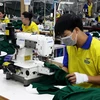
Female workers of Hue Garment and Textile Joint Stock Company (Hugatex) produce fabric, cloth and apparel for exports (Photo: VNA)
 HCM City (VNA) - Vietnamese apparel manufacturers need to embrace new technologies to meet the growing global fast fashion trends, according to the Vietnam Textile and Garment Association (VITAS).
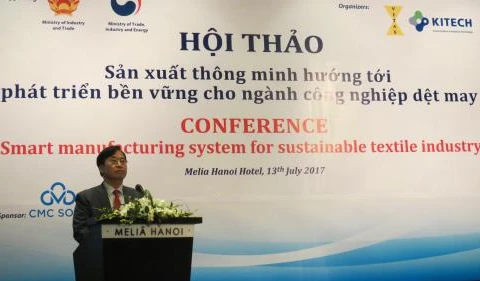
Speaking at a seminar titled “Is Vietnam apparel industry ready for fast fashion?” held in Ho Chi Minh City on November 23, Nguyen Thi Tuyet Mai, VITAS’ deputy general secretary, said the segment has seen rapid growth in the past few years.
Though there are multiple issues related to the sustainability of fast fashion products, their popularity among consumers is expanding dramatically, she said.
Fast fashion is the practice of rapidly translating high fashion designs into low-priced garments and accessories by mass-market retailers at low costs. As fast fashion implies, styles no longer follow a four-season fashion calendar but a weekly one.
Saurav Ujjain, Southeast Asia business head at ThreadSol, a Singapore-based technology company in the apparel industry, said globally styles are increasing at a 17.9 percent compounded annual growth rate.
A majority of fashion brands have shifted to the fast-fashion strategy, and demand is for high variety, low volume and short lead times, he said.
Therefore, there is intense pressure on apparel manufacturers to speed up their processes, he said.
Mai said Vietnamese firms have for long been familiar with outsourcing contracts, but outsourcing for fast fashion would be a big challenge for many of them.
In recent years, Vietnam has become a destination for major international fast fashion brands thanks to its large young population and increasing incomes.
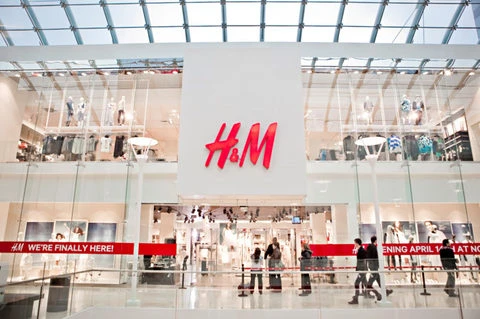
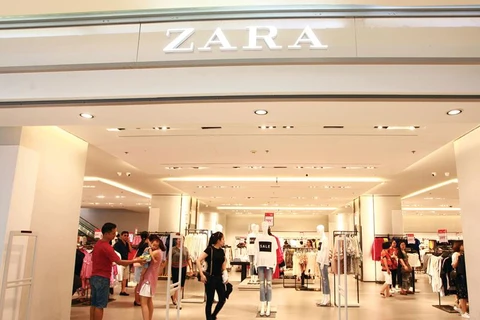
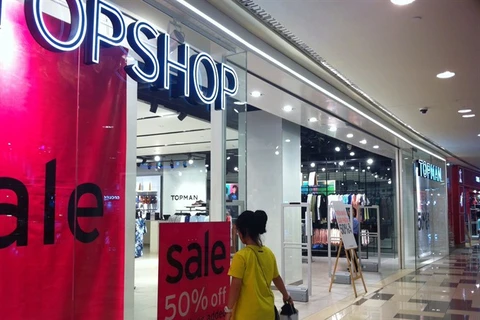
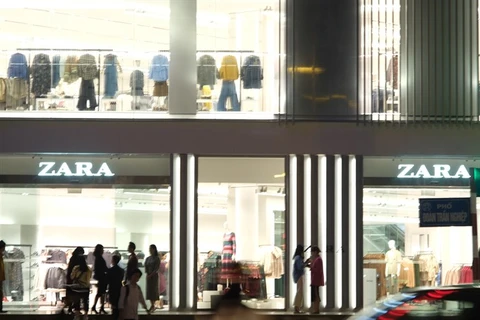
Consequently, brands such as Zara, H&M, Topshop and Mango are rushing to open more shops in the country, she said.
[Foreign brands up the ante in fashion market]
“To meet the needs of apparel and textile fast fashion brands like Zara and H&M as well as to get ahead in the competitive world of fashion, manufacturers must adapt new production processes to improve efficiency and performance.”
At the seminar, ThreadSol presented its range of innovative solutions for Vietnam’s apparel industry.
They include the material management model. From correct purchases of fabric through intelloBuy to the most accurate planning to cut fabric through intelloCut, these solutions can help manufacturers boost revenues and profits, Ujjain said.
Mai said Vi Nam’s garment industry developed strongly in 2010-15, growing at 17 per cent a year.
In the first nine months of this year, garment and textile exports were worth nearly 23 billion USD, a year-on-year increase of 9.3 per cent, she said, adding that the full-year figure is expected to top 30.5 billion USD.
Do Huu Thanh, director of Golden Lion Workwear, said his company makes uniforms for 750 international customers and has to create at least 200 different styles each month and complete each order in 15-30 days.
It has had to adopt technology to plan production accurately and minimise waste, he added.
Organised by VITAS and ThreadSol on the sidelines of the 2017 Vietnam International Textile and Garment Industry Exhibition, the seminar also featured a panel discussion on how manufacturers can rely on a combination of technology and best practices to deliver products timely without compromising on quality or cost to adapt to the fast fashion market.-VNA
VNA