FDI flow into garment and textile sector bounces back

The flow of foreign direct investment (FDI) into the Vietnamese garment and textile sector has rebounded thanks to the country’s sound investment climate and abundant workforce as well as its open economy, according to insiders.
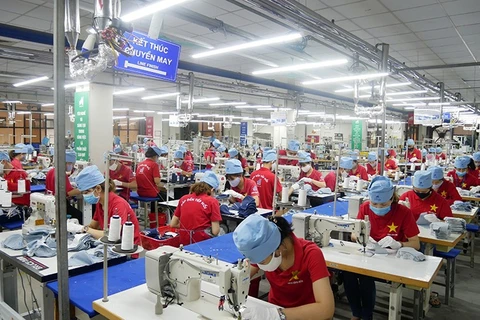
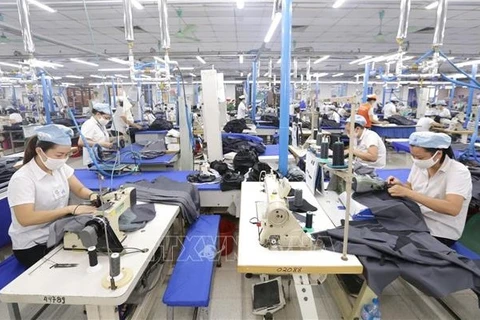
FDI flow into garment and textile sector bounces back ảnh 1Inside a garment and textile company in Phu Binh district, Thai Nguyen province. (Photo: VNA)
Hanoi (VNA) – The flow of foreign direct investment (FDI) into theVietnamese garment and textile sector has rebounded thanks to thecountry’s sound investment climate and abundant workforce as well as its open economy,according to insiders.

Chairman of the Vietnam Textile & Apparel Association (VITAS) Vu Duc Giang saidforeign garment and textile producers are expanding their operations in Vietnamto take advantages in the Vietnamese market.

He held that various free trade agreements (FTA), particularly new-generationdeals such as the Comprehensive and Progressive Agreement for Trans-Pacific Partnership(CPTPP), EU-Vietnam FTA (EVFTA) and Regional Comprehensive Economic Partnership(RCEP) to which Vietnam is a signatory is a locomotive for the sector to lureboth domestic and foreign investors.

The management board of industrial parks of the northern province of Nam Dinh has grantedan investment certificate to Hong Kong-based Crystal International Group tocarry out its 60-million-USD Yi Da Denim Mill project.

The group has run various plants in the northern localities of Hai Duong,Hai Phong, Bac Giang and Phu Tho and the southern province of Binh Duong, witha combined export revenue of some 1 billion USD and generating jobs for 40,000local workers.

Meanwhile, the world’s leading zipper producer YKK Corp. from Japan invested in its second plant at Dong Van industrial zone in the northern province of HaNam. According to YKK Vietnam General Director Yuji Furukawa, after 25 years ofoperation in Vietnam, YKK has increased its zipper productivity by 100 folds,and the number of workers seven folds to 2,800 labourers.

Earlier, YKK had to import several materials to provide its local customers. However, its Vietnamese plant is now able to manufacture all of YKK productsand even ship them to foreign countries like Cambodia and Myanmar, he said.

Most recently, SAB Industrial Vietnam Company Limited under China's Weixing group put into operation its 62-million-USD factory in the north-centralprovince of Thanh Hoa. Covering 66.44 hectares, the factory produces variousitems, including metal, plastic and nylon zippers, and plastic and metalbuttons.

Besides helping the sector reduce its dependence on imported raw materials, FDIcapital has played an important role in reducing manufacturing time andtransport costs, making products become more competitive.

In Quarter 1 of 2024, Vietnam gained nearly 8 billion USD from garment and textile export revenue, withFDI firms contributing over 60% of the total./.
VNA
See more

Shoppers at a supermarket in Hung Yen (Photo: VNA)

Retailers see tax compliance, AI as key to survival in 2026 survey

The annual survey, conducted at the end of 2025 among retail and food and beverage (F&B) sellers nationwide, found that businesses are shifting their focus from rapid growth to operational efficiency, cost control and legal compliance amid increasingly stringent regulatory standards.

Visitors shop at Glorious Spring Fair 2026 (Photo: VNA)

Spring Fair 2026 opens broader prospects for Vietnam–UAE trade cooperation

For Vietnam, the UAE serves not only as a consumer market but also as a gateway to the Middle East and North Africa. Vietnamese agricultural products such as cashew nuts, pepper, cinnamon and rice have steadily gained market share, while aquatic products, including tra fish and tuna, are increasingly present in the UAE’s hospitality sector.

Bao Viet Bank's employee counts Vietnamese banknotes at a transaction counter in Hanoi. (Photo: VNA)

Credit quota reform, tighter capital rules may widen gap among banks

Yuanta Vietnam Securities estimates that to achieve GDP growth above 10%, credit growth would need to exceed 16%. This suggests bank credit is no longer expected to be the main growth driver, with greater reliance on fiscal policy, public investment and capital markets.

Commercial Counsellor Do Viet Phuong, Head of the Vietnam Trade Office in Cambodia. (Photo: VNA)

Spring Fair 2026 offers ample room to deepen Vietnam–Cambodia trade ties

Cambodia holds substantial potential for cooperation in agro-processing and exports, especially in key products such as rice, cashew nuts and rubber. In recent years, the country’s cultivation area and agricultural output have grown steadily, providing a stable raw material base for processing industries.

Vietnam is projected to have approximately 2.4 million SMEs, accounting for over 98% of the country’s total enterprises. (Photo: cafef.vn)

Banks offer diverse solutions to support SMEs

With an increasingly significant role in the economy, the small and medium-sized enterprise (SME) sector is becoming a key segment in the credit growth strategies of many banks and the banks have been taking diverse solutions to support the enterprises.

Workers process coconuts for export at Vina T&T Group. (Photo: nhandan.vn)

Agricultural exports reliant on securing raw material supply

According to Secretary General of the Vietnam Pepper and Spice Association Le Viet Anh, pepper remained Vietnam’s leading spice export in 2025, with shipments exceeding 247,000 tonnes, accounting for 59.3% of total spice export volume. Export revenue reached 1.66 billion USD, out of total spice exports of 2.1 billion USD.

Prime Minister Pham Minh Chinh speaks at the meeting between standing Government members and representatives of ministries, agencies and Phu Tho province (Photo: VNA)

PM orders new Lo river bridge to meet emerging development needs

Stressing both immediate and long-term imperatives, Prime Minister Pham Minh Chinh directed that authorities pursue a dual-track approach: repairing the existing bridge to ensure safety while simultaneously investing in a new structure capable of opening up new socio-economic development space and safeguarding national defence and security.