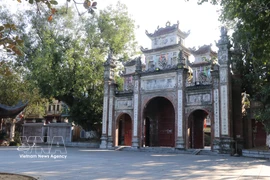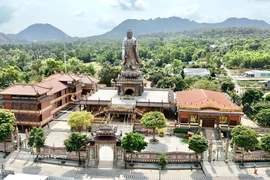
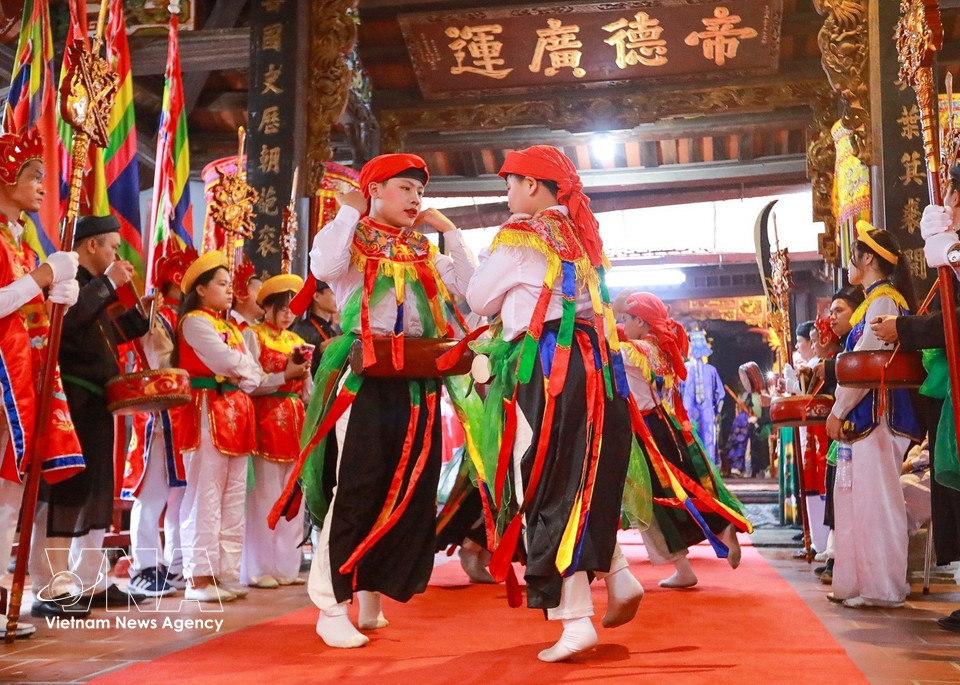
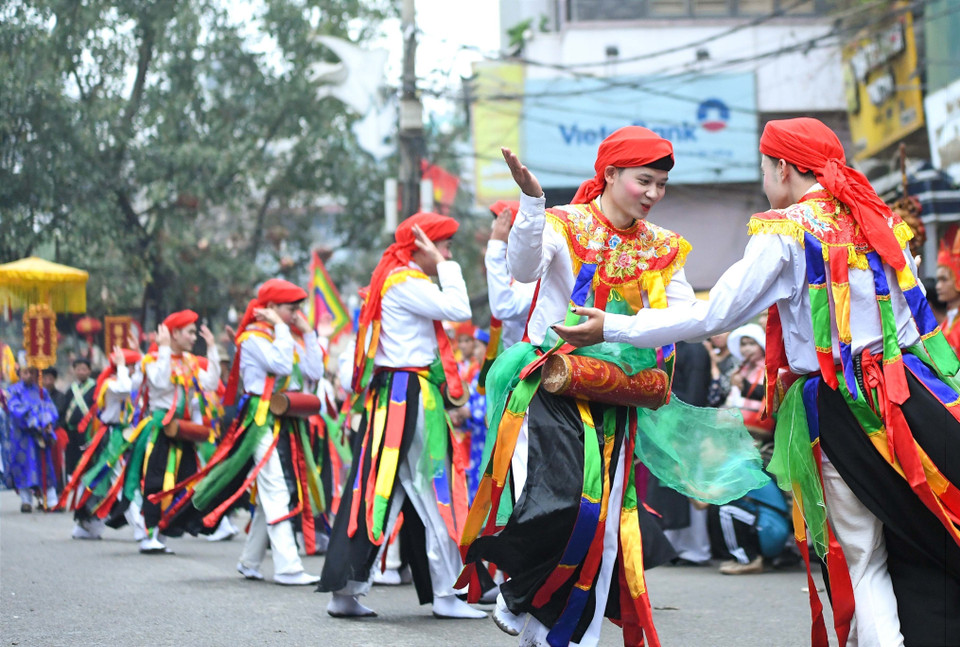
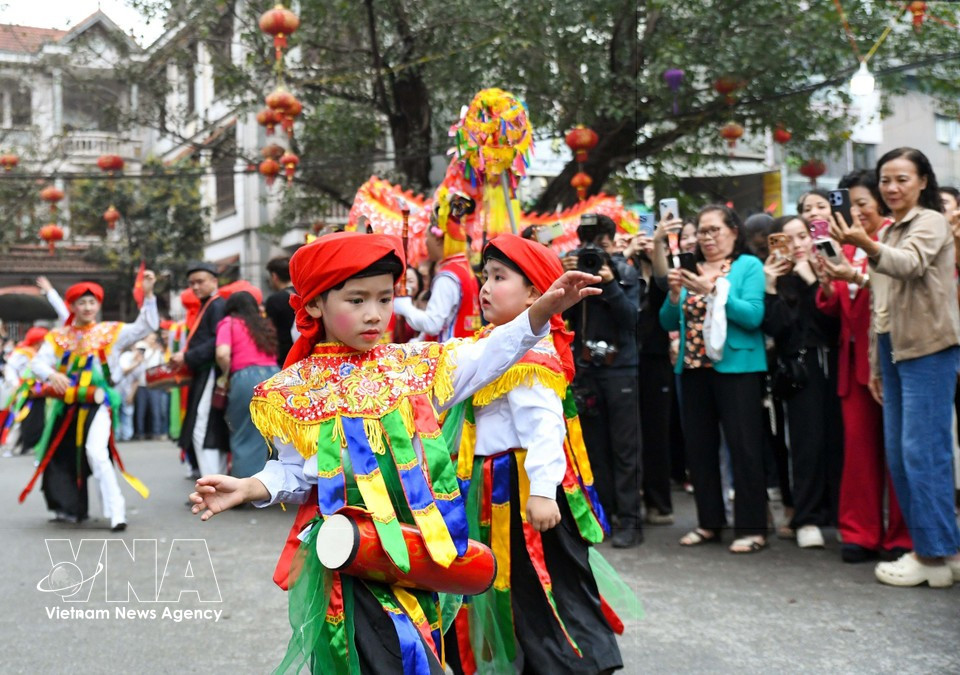
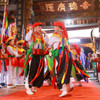
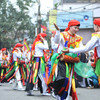
Held annually from the 9th to the 12th day of the first lunar month, the festival honours Bo Cai Dai Vuong Phung Hung, a national hero who fought foreign invaders and defended the country. According to tradition, when Bo Cai Dai Vuong Phung Hung gathered insurgents in the village to fight the Tang army, he ordered soldiers to dress as women in colourful costumes, strap small drums to their chests and perform the dance to boost morale and create a joyful atmosphere. (Photo: VNA)
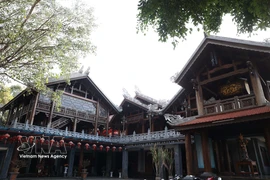
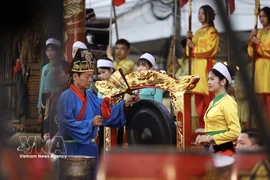
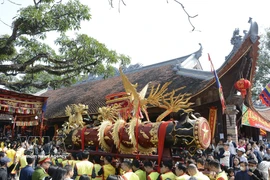
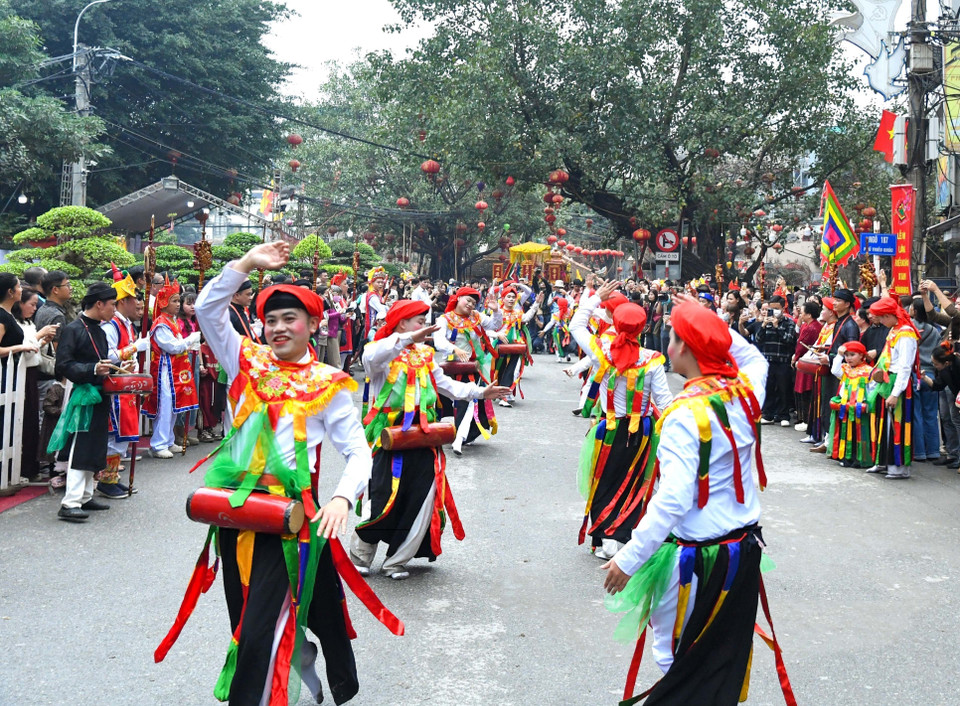
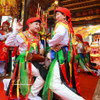
The “Con di danh bong” dance was performed at the communal house of Trieu Khuc village during the opening ceremony of the village’s traditional festival on the 10th day of the first lunar month of the Year of the Horse. This year, the festival takes place from February 25 to 28, 2026 (the 9th to 12th days of the first lunar month of the Year of the Horse). (Photo: VNA)
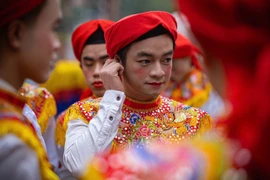
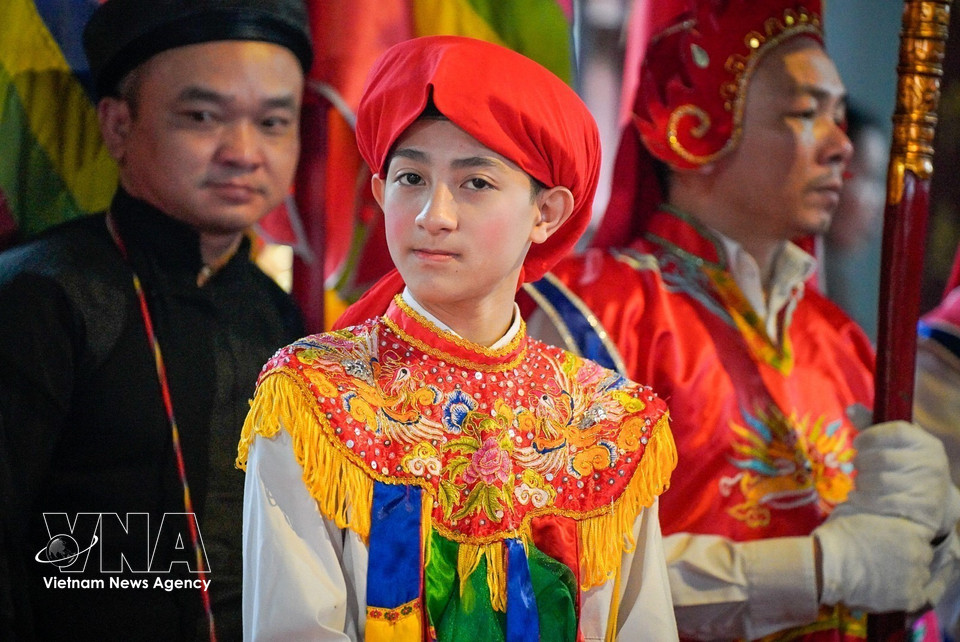
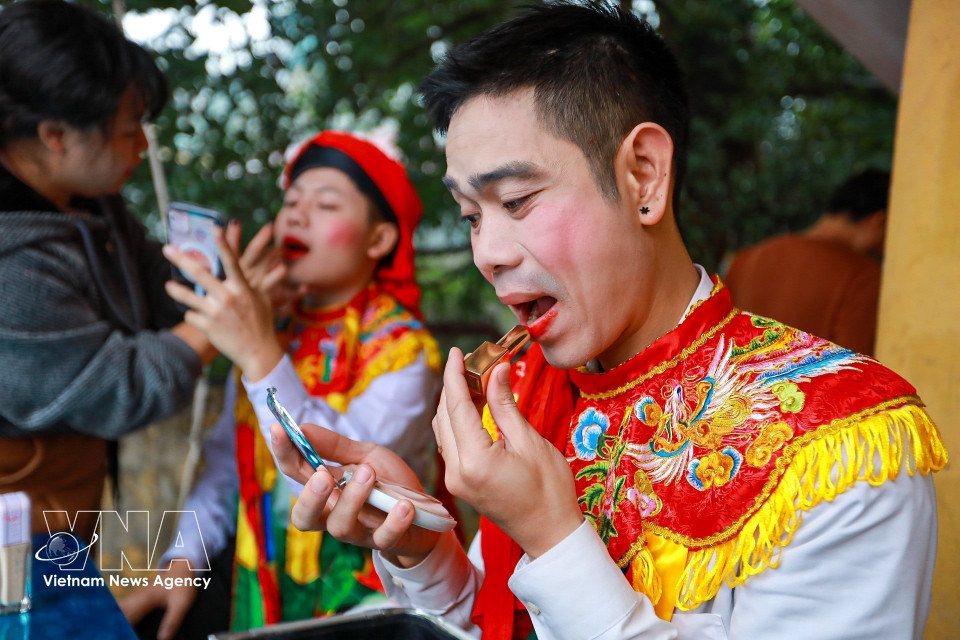
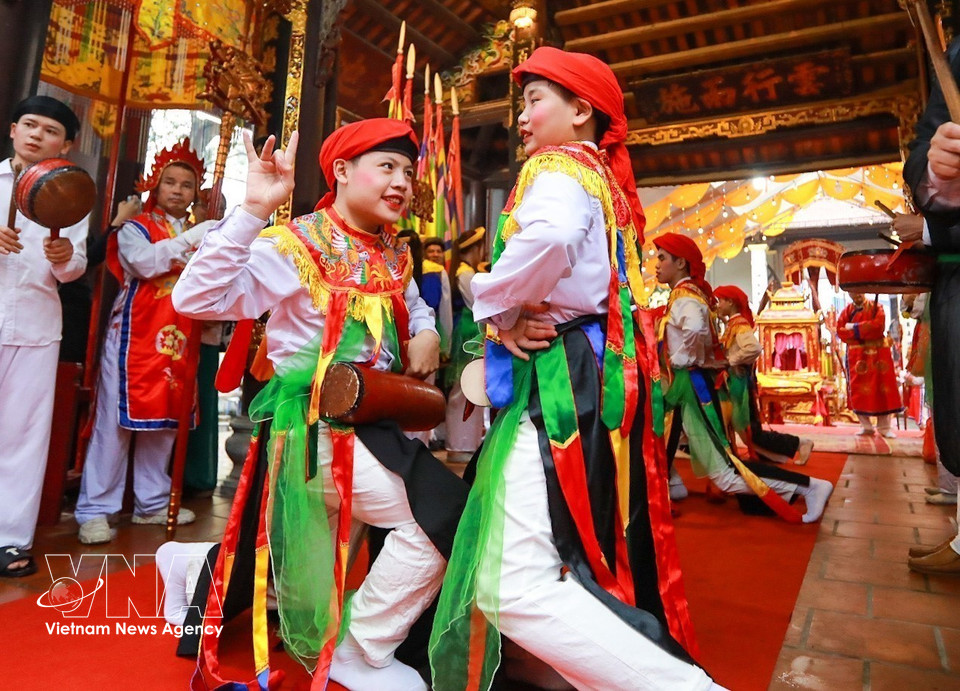
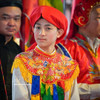
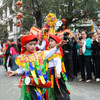
Young men selected to perform the dance are usually chosen for their handsome appearance, bright faces and gentle personalities. They wear make-up with red lips and rosy cheeks, dress in female costumes, strap drums to their chests and perform graceful movements to lively drumbeats. (Photo: VNA)
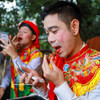
Participants prepare their make-up and costumes before the performance. (Photo: VNA)
With their elegant appearance and soft, rhythmic movements, the young men dress as women create a distinctive charm, giving the dance both ritual significance and the lively spirit of folk culture. (Photo: VNA)
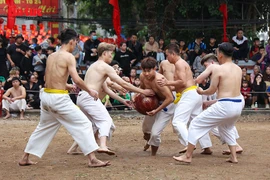
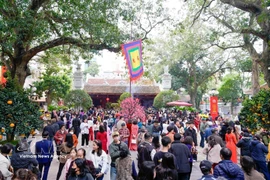
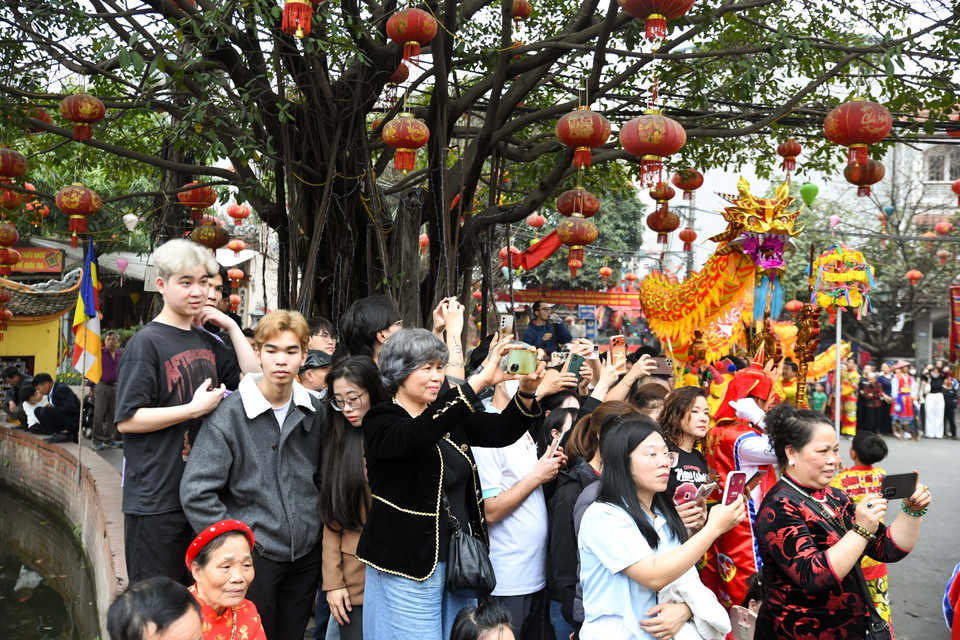
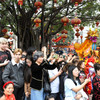
The “Con di danh bong” dance attracts large numbers of local residents and visitors. (Photo: VNA)
It is regarded as one of the representative folk dances of the ancient land of Thang Long, contributing to the preservation of the locality’s traditional cultural values. (Photo: VNA)
0
1
2
3
4
5
6
7

Festival features ancient cross-dressing dance

The ancient dance “Con di danh bong” is a distinctive highlight of the traditional festival in Trieu Khuc village, Thanh Liet ward, Hanoi. The graceful, rhythmic movements of young men dressed as women create a lively atmosphere during the early spring festivities, reviving a unique form of folk performance and reflecting the enduring vitality of local heritage in modern times.