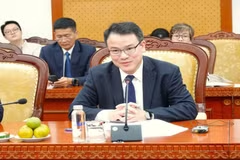
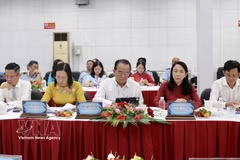
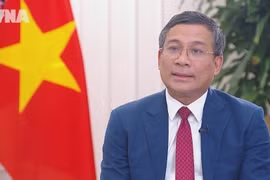
Deputy Prime Minister Vuong Dinh Hue chairs the first meeting of the National Financial and Monetary Policy Advisory Council on June 22. (Photo: vietstock.vn)
Hanoi (VNA) - The National Financial and Monetary Policy Advisory Council will concentrate on dealing with the reorganisation of credit institutions and State-owned enterprises, and handling bad debts during the rest of the year.
The council, which is tasked to advise the Government on financial and monetary issues, will also focus on restructuring State budget revenues and spending, assuing public debt security, and working out schemes against dollarisation in the economy.
Deputy Prime Minister Vuong Dinh Hue made the announcements as he chaired the first meeting of the council on June 22, after the 31-member commission was established following a decision by Prime Minister Nguyen Xuan Phuc on June 17.
Hue is the chairman of the council, and its standing vice chairman is State Bank of Vietnam Governor Le Minh Hung. Two other vice chairpersons are Minister of Finance Dinh Tien Dung and National Financial Supervisory Commission Chairman Vu Viet Ngoan.
Hue said the council will have an “independent voice” while consulting financial and monetary operations of the Government and the Prime Minster.
He assigned the State Bank of Vietnam- the standing agency of the council- to regularly poll international experts, entrepreneurs and scientists to support the operations, besides holding quarterly council meetings.
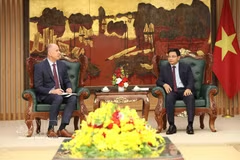
On June 22, Hue received Standard Chartered Vietnam General Director Nirukt Sapru at the Government headquarters, asking British bank Standard Chartered to continue assisting the Vietnamese Government in working with international credit rating agencies.
He said the Government needs recommendations from the bank so that the rating agencies can have comprehensive and objective assessments about Vietnam’s socio-economic situation. This is necessary for the country to improve its image in the international arena in general, and investors’ world in particular.
He also asked the bank to keep a close contact with the Ministry of Finance in monitoring global capital market developments, forecasting macro-economic conditions, and developing the local financial market.
Sapru suggested Vietnam pay more attention to its bond issuances in international markets because this is a premise for effective public debt management.
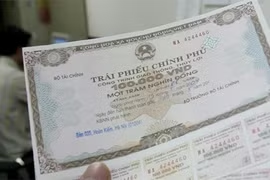
During a working session on public debt on June 21, Hue urged ministries, sectors and localities to quicken capital disbursement to ensure job generation and national economic growth.
Minister of Planning and Investment Nguyen Chi Dung said the disbursement progress in public investment projects had been slow this year.
Ministries, sectors and localities had disbursed a total of over 83 trillion VND (3.73 billion USD) worth of public investment capital this year, equivalent to some 33 percent of the quota set by the National Assembly for 2016.
Dung attributed the situation to slow submission of capital plans by the authorities and incomplete documents guiding the assessment and approval of investment projects. Obstacles in land clearance and weak competence of contractors also led to the tardiness.
Hue asked the Ministries of Planning and Investment and Finance to promptly review the guiding documents and intensify inspection of the quality of public investment projects to promote their roles towards socio-economic growth.
During another working session with the Ministry of Finance on June 21, Hue said the issuance of a list of imported products, which must follow customs procedures at Vietnamese border gates, must be under established laws while creating favourable conditions for businesses and trade.
He asked the ministry to attach importance to these issues when compiling the list of imported products which must have customs procedures conducted at Vietnamese border gates.
“Careful study is needed, given the recent promulgation of Government Resolution 35/NQ-CP on support to enterprises by 2020,” he said.
The possible impact, such as congestion of goods at border gates or rising business costs, must be taken into consideration, he said.
According to the Ministry of Finance, which was in charge of compiling the list, the issuance was in line with Decree No.08/2015/ND-CP instructing the implementation of customs procedures following the Law on Customs, with one term stating that based on import and export in each period, the Prime Minister had decided the list of imported products with customs procedures to be conducted at border gates.
Deputy Minister of Finance Do Hoang Anh Tuan said the move was aimed at tightening customs checks on products to limit consumption in the domestic market or on products with high risk of trade frauds.-VNA