First general election – turning point in Vietnam’s revolution

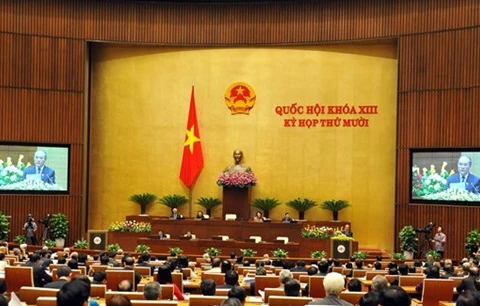
The successful first general election on January 6, 1946 went down in history of Vietnam’s revolution as a turning point, featuring the country as an independent state and a people’s democratic state.
First general election – turning point in Vietnam’s revolution ảnh 1National Assembly Chairman Nguyen Sinh Hung (Source: VNA)

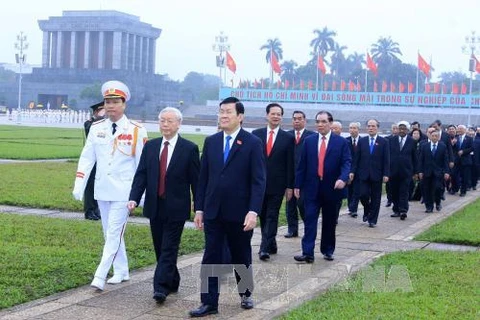
Hanoi (VNA) – The successful first general election on January 6, 1946 went down in history of Vietnam’s revolution as a turning point, featuring the country as an independent state and a people’s democratic state – the first of its kind in Southeast Asia and Africa, said National Assembly Chairman Nguyen Sinh Hung.

Talking to the Vietnam News Agency on the occasion of the 70 th anniversary of the first general election, the NA Chairman affirmed that the event represented the symbol of the national will and strength.

After nearly one century fighting for national independence, Vietnamese people rose out of the colonised status and became citizens of an independent state who enjoyed the right to elect their own National Assembly representing their will and aspirations.

The National Assembly became the most powerful state body which represents people to decide issues related to the nation’s destiny, he stated.

He attributed the success of the event to the sound decision of the Party and the late President Ho Chi Minh, who determined that it was a ripe time for people to decide their own fortune.

With that decision, the whole people’s strength and the great national unity were rallied to build up the first people’s democratic state and Vietnam was announced worldwide as an independent state with its operation fully aided by executive and judicial bodies, he added.

Therefore, “the August Revolution and the then first general election created the huge impact and extended to a national liberation movement and a people’s democratic movement in the region and the world at large,” affirmed Chairman Hung.

Regarding experience learnt from the organisation of the first general election, the NA Chairman attributed the success of the event to the strength and support of the local populace.

According to him, this was a great political event responded by people with the rate of participating voters reaching nearly 90 percent, and 333 deputies were elected across the country.

Referring to the outstanding accomplishments made by the legislative body and its contributions to the country’s achievements during the 30-year reform, Chairman Hung said that the triumph of the first National Assembly was the promulgation of the 1946 Constitution whose value remains today.

During the two resistance wars against French and US forces, the NA had made decisions on issues of extreme importance, contributing to gaining the national reunification and then rebuilding efforts.

After 30 years of renewal, parliamentary diplomacy has been promoted, helping increase the position and role of the Vietnamese NA and the nation at large in the international arena.

The legislative body has tightened its bilateral external relations, set up ties with parliaments of many countries over the world.

As a member of many inter-parliamentary organisations, the Vietnamese NA has contributed to these forums’ effective operations and collaboration with initiatives and constructive recommendations, which has, in return, benefited the nation-building and defence.

The body has also hosted a number of important events, including the 132 nd Inter-Parliamentary Union General Assembly in March 2015 – an important premise of the World Conference of Speakers of Parliament, which had important contributions to the 2030 Agenda for Sustainable Development.

During the nation’s international integration, the NA has ratified agreements and international treaties and realised them in the law making process.

It has held a decisive role in the country’s big policies related to reforming the economy, perfecting the market economy institutions, developing science, education and culture, and dealing with climate change and security threats.

Chairman Hung said that after 70 years of formation and development, the NA has grown robustly, fulfilling soundly its function as the people’s highest representative body and the most powerful state body of the Socialist Republic of Vietnam.

It has well done its law-making task through amending the Constitution five times, especially the 2013 Constitution. These Constitutions provided a firm foundation and long-term orientations for the country to enter the next stage of development, he added.-VNA
VNA

See more

Vietnamese students in China welcome Party General Secretary and State President To Lam’s visit to China and his spouse at the airport (Photo: VNA)

Top Vietnamese leader’s visit to China carries significance: Chinese scholar

Party General Secretary and State President To Lam’s visit to China from April 14-17 will inject fresh momentum into the Comprehensive Strategic Cooperative Partnership, intensify connectivity, and create conditions to upgrade cooperation in trade, infrastructure, security, and people-to-people ties, ultimately supporting regional peace, stability, and prosperity.

Party General Secretary and State President To Lam and his entourage visit the Xiong'an New Area in Hebei province on April 14. (Photo: VNA)

Top Vietnamese leader visits China’s Xiong'an New Area

Established in April 2017, the Xiong’an New Area is regarded by China as an important historical strategic choice of the Communist Party of China (CPC) Central Committee, following the development of the Shenzhen Special Economic Zone in Guangdong and the Pudong New Area in Shanghai.

General Secretary of the Communist Party of Vietnam (CPV) Central Committee and State President To Lam and his spouse Ngo Phuong Ly are welcomed at Beijing Capital International Airport on April 14 morning. (Photo: VNA)

Top Vietnamese leader arrives in Beijing, beginning state visit to China

The state visit marks a new beginning in the bilateral relations as both countries enter a new stage of development. Vietnam is stepping into a new development era following the successful 14th National Party Congress, while China is embarking on the implementation of its 15th five-year socio-economic development plan.

Professor Cui Shoujun of the School of International Studies at Renmin University of China in an interview with the Vietnam News Agency (VNA)'s reporters. (Photo: VNA)

Top Vietnamese leader’s visit hoped to provide fresh momentum for bilateral ties: Chinese professor

According to Professor Cui, the visit underscores the guiding role of high-level diplomacy in shaping the bilateral relations. The decision by Vietnam’s top leader to choose China for his first overseas trip shortly after assuming the presidency highlights the strategic significance of the bilateral ties and reaffirms the long-standing friendship often described as “both comrades and brothers.”

Party General Secretary To Lam (R) welcomes Party General Secretary and President of China Xi Jinping in Hanoi in April 2025. (Photo: VNA)

Vietnam–China: New momentum for trade growth

In 2025, China remained Vietnam’s largest trading partner. Conversely, Vietnam was China’s biggest trading partner in ASEAN and ranked fourth globally, with two-way trade reaching 256.4 billion USD, up 24.8% year-on-year. In the first two months of 2026 alone, trade turnover hit 66.7 billion USD, an increase of 30.2%.

Party General Secretary and State President To Lam receives Prime Minister of Slovakia Robert Fico on April 13. (Photo: VNA)

Slovak PM concludes official visit to Vietnam

The visit by Prime Minister of Slovakia Robert Fico on April 12-14 was described as a vivid demonstration of Slovakia’s goodwill and high regard for the traditional friendship between the two countries, marking a significant milestone that opens a new phase of more stable and substantive development in bilateral ties.

General Secretary of the Communist Party of Vietnam Central Committee and State President To Lam (Photo: VNA)

Promoting traditional friendship, enhancing strategic connectivity between Vietnam and China: Top leader

Building on the foundation of friendship carefully nurtured by previous generations of leaders of the two countries, on the high-level common perceptions that have been established, on the determination of agencies, sectors and localities, and on the support of the people of both countries, Vietnam–China relations will certainly continue to develop in a stable, healthy and long-term sustainable manner, bringing more tangible benefits to the two Parties, States and peoples, and making increasingly positive contributions to peace, stability, cooperation and development in the region and the world.

From left: Party General Secretary and State President To Lam (3rd) and visiting Slovak Prime Minister Robert Fico (2nd) enjoy the Vietnam–Slovakia friendship concert at the Ho Guom Opera in Hanoi on the evening of April 13. (Photo: VNA)

Vietnamese, Slovak leaders attend friendship concert in Hanoi

In the near future, further artistic exchanges between Vietnam and Slovakia are anticipated, with Slovak orchestras and ensembles expected to perform in Vietnam, while Vietnamese artists will have opportunities to showcase their talents in Slovakia, thereby deepening bilateral cultural cooperation and people-to-people ties.

Party General Secretary and State President To Lam (R) and Slovak Prime Minister Robert Fico (Photo: VNA)

Top leader hosts Slovak Prime Minister

Slovakia always considers Vietnam the most important partner in Southeast Asia and one of its top three partners in Asia. The elevation of bilateral ties to a Strategic Partnership and the signing of multiple cooperation agreements between ministries, agencies and businesses would provide fresh momentum for collaboration.

Party General Secretary and State President To Lam (R) and Viktor Zolotov, Director of the Federal National Guard Service of Russia in Hanoi on April 13. (Photo: VNA)

Top leader receives head of Russia’s Federal National Guard Service

Vietnam attaches great importance to its traditional friendship and comprehensive strategic partnership with Russia, expressing satisfaction at the regular exchanges and contacts maintained between agencies of both countries at various levels, contributing to strengthened bilateral ties.