Indonesia strives to restore its position as a major sugar exporter
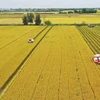
The Indonesian government targets full self-sufficiency in consumer sugar within three to four years by increasing sugarcane productivity and modernising mills.
Indonesia’s blue food production — covering capture fisheries, aquaculture and seaweed — reaches at least 24 million tonnes per year, Trenggono said while delivering a public lecture at Gadjah Mada University (UGM) in Yogyakarta recently.
Vietnam will steadfastly support Cuba in protecting its independence, sovereignty, self-determination, and development rights, said Minister Counsellor Nguyen Hoang Nguyen, Chargé d’Affaires at the Vietnamese Delegation to the UN.
Vietnam is increasingly seen as a strong potential driver within the ASEAN Economic Community (AEC) thanks to its competitive strength in manufacturing and production, said a Malaysia-based scholar.
Launched in 2002, the project covered four rice-growing regions across 11 Cuban provinces. In its 2024–2025 phase, yields of fresh unhusked rice averaged 5.8 tonnes per hectare, 2.5 times higher than the traditional local output and surpassing the project’s initial target of 5 tonnes.
Indonesia, home to more than 280 million people, needs productive land, modern irrigation, and resilient distribution systems. To this end, the government is expanding food estates in several regions, with water resources playing a central role.
An official of Bapanas said public trust depends on maintaining high-quality reserves, adding it is time for the state logistics agency Bulog to speed up rice distribution.
The Indonesian Ministry of Agriculture’s budget ceiling for 2026 has been set at 40 trillion IDR (nearly 2.5 billion USD). This includes 6.9 trillion IDR for employee expenses, 1.3 trillion IDR for operational costs, and 31.72 trillion IDR for non-operational spending.
Army battalions comprising thousands of soldiers have been deployed, focusing on agriculture and health tasks throughout Indonesia, particularly in remote areas.
With a combined market of over 370 million consumers, Vietnam and Indonesia leverage agricultural strengths: Vietnam leads in rice exports, while Indonesia dominates palm oil and coffee and is advancing toward rice self-sufficiency. Key cooperation opportunities span sustainable fisheries, hi-tech farming, agricultural science innovation, integrated value chains, and market access.
At their meeting, which took place in the Angolan capital of Luanda on August 7 as part of State President Luong Cuong’s ongoing state visit to the African nation, the two officials also agreed to make full use of existing cooperation mechanisms, particularly the Vietnam – Angola Intergovernmental Committee, and step up exchanges of delegations at all levels.
Deputy PM Tran Hong Ha called on FAO and participating countries to join Vietnam in building a joint initiative endorsed by high-ranking leaders to ensure that the benefits of international agricultural cooperation directly reach all people, especially farmers.
The article by Cuba’s Inter Press Service detailed how Vietnamese private enterprise Agri VMA leased 1,000 ha of land in Los Palacios district, Cuba’s westernmost province of Pinar del Río, for rice cultivation over a three-year period. The project’s first harvest in 2025 recorded an impressive yield of 7.2 tonnes per hectare, far exceeding the local average of 1.6 tonnes.
Indonesia on June 15 officially removed import quotas on live cattle as part of efforts to strengthen national food security.
Under the project implemented since 2003, Vietnam sent its experts to Cuba to directly guide Cuban people to change their farming methods, provided training, and donated some specialised agricultural machinery.
Indonesia's agricultural land faces mounting pressure from multiple fronts, from oil palm plantations to urbanisation and tourism development.
To support rice production, the government has ramped up fertiliser subsidies, distributed agricultural machinery, accelerated planting schedules, and introduced digital tools for farming.
The agricultural sector plays an important role in Malaysia’s socio-economic development, but it still records a high trade deficit of up to 9.3 billion USD.
Indonesia is projected to have a rice surplus of 1.68 million tonnes through May 2025.
During an inspection tour of the westernmost province of Pinar del Río on April 25, the PM visited a joint rice cultivation project with Vietnam and was briefed on the progress of a large-scale pilot model underway in Los Palacios district.