Forex rate forecast to remain stable till year-end

The Vietnamese dong was expected to remain broadly stable against the US dollar over the remainder of 2019 and to be slightly weaker on average over 2020, buoyed by robust foreign direct investment (FDI) inflows, dollar purchases by businesses, and a healthy foreign reserve position, experts forecast.
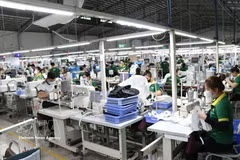
Forex rate forecast to remain stable till year-end ảnh 1Strong foreign direct investment inflows will support the stability of the dong in the remaining months of 2019. (Source: VNA)

Hanoi (VNS/VNA) - The Vietnamese dong was expected to remainbroadly stable against the US dollar over the remainder of 2019 and to beslightly weaker on average over 2020, buoyed by robust foreign directinvestment (FDI) inflows, dollar purchases by businesses, and a healthy foreignreserve position, experts forecast.

The dong has remained stable against the dollar at around 23,200 VND since Julyand has averaged 23,260 VND year-to-date.

"The dong will remain stable as FDI inflows are expected to remain strongover the coming months with a quick resolution to the US- China trade warunlikely. Businesses will probably continue shifting part of their supplychains out of China and to the rest of Asia, and Vietnam is expected to be astrong beneficiary of this move given its positive business environment, manyfree trade agreements, and a low cost, large and relatively young labourforce," finance expert Nguyen Tri Hieu  told Viet Nam News.

According to Hieu, the bulk of FDI flowing into Vietnam remained in themanufacturing sector due to the relocation of supply chains, although risingdemand for infrastructure would also create opportunities and thus lure FDIinto the infrastructure and construction industry over the coming months.

Hieu also believed a burgeoning middle class on the back of rapid economicgrowth would also continue to attract FDI into the retail sector. During thefirst nine months of 2019, total FDI increased by 3.3 percent over the sameperiod in 2018 to 26.2 billion USD, of which wholesale and retail accounted for1.4 billion USD.

Meanwhile, strong prior inflows of FDI into the manufacturing sector as well as Vietnam’sposition in the global supply chain were expected to increase the country’simports in tandem with its exports. Given that global trade is mainlytransacted in US dollars, this points towards an increase in dollar demandamong businesses.

As a result, domestic firms will likely increase purchases of the US dollarover the coming months. Meanwhile, as part of a regulatory amendment announcedin August, commercial banks will no longer provide mid and long-term foreigncurrency loans for offshore payment of imported goods and services. Theamendment aims to reduce dollarisation in the economy and to improve theinterest rate transmission of monetary policy. Under the new regulation, localimporters will have to borrow in dong and buy dollars to fulfil offshore paymentobligations.

In addition, experts said the nation’s good foreign reserves would also helpstabilise the dong in the coming months. The latest data showed Vietnam’s foreignreserve position was at 63.9 billion USD in May, representing three months ofimport cover.

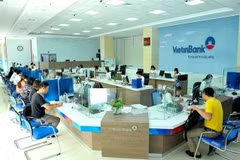
Can Van Luc, Chief Economist at the Bank for Investment and Development ofVietnam, believed the State Bank of Vietnam (SBV) had sufficient foreign exchangereserves to continue its course of active intervention to ensure currencystability, which suggests the dong would likely see minimal volatility over thecoming months.

As for long-term outlook, analysts from Fitch Solutions Macro Research expectedthe dong to persist on a gradual depreciatory trend against the dollar due tohigher structural inflation in Vietnam versus the US and the dong’sovervaluation. Fitch forecast the unit to average 23,650 VND per USD in 2021.

Fitch forecast inflation in Vietnam to average 3.3 percent between 2019 and2021, above the 2.2 percent average forecast for the US over the same period.It continued to expect upside inflationary pressures to stem from higherlivestock prices due to the ongoing spread of African swine fever in Vietnam,which had affected all 63 provinces, and strong demand for building materialsfrom a pipeline of both public and private sector projects to exert pressure oninflation in the housing and construction materials category.

Additionally, the dong’s real effective exchange rate (REER) is trading 10.6 percentabove its 10-year average, which suggests currency overvaluation, althoughFitch believed that some of the strength in the REER could be attributed toproductivity gains. Nonetheless, higher structural inflation in Vietnam andexcessive currency strength would diminish Vietnam’s export competitivenessover the long run, which would weigh on the country’s economic growth giventhat exports accounted for 95.4 percent of GDP, Fitch said, adding that itthought the SBV would favour a weaker dong in the long run./.
VNA

See more

Vietnamese Commercial Counsellor in Israel Le Thai Hoa speaks at a business-matching workshop with Israeli importers. (Photo: VNA published)

Israeli businesses seek Vietnamese suppliers

two-way trade between Vietnam and Israel reached nearly 3.5 billion USD in the first 10 months of 2026, up 12.7% year on year. Vietnam's exports to Israel totalled 997.1 million USD, surging 41.4%. If market conditions remain stable, bilateral trade is projected to reach around 4.4 billion USD for the whole year, with Vietnam's exports estimated at about 1.3 billion USD.

Ambassador Pham Hung Tam (second from right) and Australian Minister for Trade and Tourism Don Farrell (centre). (Photo: VNA)

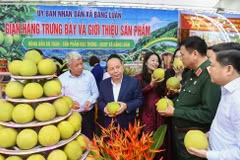
Vietnam urges Australia to resume imports of fresh pomelos soon

The Ambassador noted that two-way trade turnover in the first 10 months of 2026 had expanded by around 20% year on year. During the same period, Vietnam's tourism sector welcomed around 543,000 visitors from Australia, according to figures from the Ministry of Culture, Sports and Tourism.

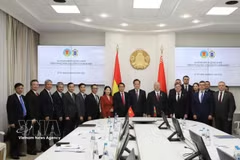
Participants in the working session between the State Audit Office of Vietnam and the State Control Committee of Belarus (Photo: VNA)

Vietnam step up state audit cooperation with Russia, Belarus

The State Audit Office of Vietnam and the Accounts Chamber of Russia signed an MoU on cooperation and expressed their wish to further expand collaboration at both bilateral and multilateral levels, focusing on the role and impact of supreme audit institutions on macroeconomic policies, digital transformation and the application of information technology to public auditing.

Prof. Tran Dang Xuan from Hiroshima University speaks at the event (Photo: VNA)

Vietnam's Japan-based academic network pitches research-to-market links

The Vietnamese Academic Network in Japan (VANJ)’s recent 7th annual conference linked more than 200 Vietnamese, Japanese and international scientists, experts, businesses and research students to push research cooperation, technology transfer and quality workforce development.

VietinBank’s LDR is around 92.8%, according to estimates by the ACB Securities Company based on data as of June 30. (Photo: VNA)

Banks with sufficient funding base to benefit from new safety ratio policy

The new policy, which will take effect early next month, raises the loan-to-deposit ratio (LDR) cap to 95% from the current 85%, while starting a phased transition towards Basel III liquidity standards, including by introducing a liquidity coverage ratio (LCR) and net stable funding ratio (NSFR).

The daily reference exchange rate is set at 25,652 VND/USD on November 17. (Photo: VNA)

Reference exchange rate edges higher

With the current trading band of +/- 5%, the ceiling rate applicable for commercial banks during the day is 26,935 VND/USD, and the floor rate 24,369 VND/USD.

Manufacturing materials for solar cell production at JA Solar Vietnam Co., Ltd., a Hong Kong (China)-invested enterprise in the Quang Chau Industrial Park, Bac Ninh city (Photo: VNA)

Vietnam, China widen economic, trade cooperation space

General Secretary of the Communist Party of Vietnam Central Committee and President To Lam’s trip to China for the 33rd APEC Economic Leaders’ Week and bilateral engagements is expected to add new momentum, including deeper economic connectivity, broader trade, investment and supply chain links, and a more balanced, substantive economic relationship that matches both sides’ potential.

The sidewalks on Hung Vuong street in Quang Tri province are under renovation. (Photo: VNA)

Quang Tri approves 103 priority projects for investment during 2026–2030

The 103 projects are categorised into seven fields, comprising energy; logistics; tourism, services, and trade; green and high-tech agriculture; industry, industrial zones, and production infrastructure; urban development and commercial housing; and healthcare, wellness, and resort services.

Workers make clothes for export to the Japanese market at Hung Viet Garment Company in Hung Yen province (Photo: VNA)

Vietnam’s textile-garment firms striving to achieve export targets, sustain employment

To achieve the annual target, textile and garment businesses are jointly implementing several core tasks, including diversifying export markets and partners, developing the supporting industries for raw materials and accessories to establish integrated supply chains, investing in technological innovation linked to AI, stepping up high-quality workforce training, promoting green transformation based on circular economy models, and building brands in both domestic and international markets.

Minister of Public Security General Luong Tam Quang (R) receives Choo Hyeong Wook, President and CEO of the Republic of Korea’s SK Innovation in Hanoi on November 16. (Photo: VNA)

Vietnam promotes international cooperation in energy, high technology

Minister of Public Security General Luong Tam Quang called on the RoK's SK Innovation to share experience and work with Vietnamese partners in developing clean and renewable energy, hydrogen, liquefied natural gas, energy storage technologies and carbon emission reduction solutions.

Delegates pose for a photo at the Chile-Vietnam Business Forum in Hanoi on November 16 (Photo: VNA)

Vietnam, Chile seek to expand trade ties

Chilean President José Antonio Kast pointed to potential for cooperation in agriculture and food, and called for stronger technical cooperation, better market access and closer links in innovation, technology, services and sustainable development.

Production of footwear for export at Lefaso Tra Vinh Industrial Investment and Production Joint Stock Company, Tra Cu commune, Vinh Long province (Illustrative image. Source: VNA)

VEFTA implementation requires exporters to restructure supply chains: Experts

Under VEFTA, tariff reductions to zero will be meaningless for Vietnam’s key export sectors, including textiles and garments, footwear, and agricultural and aquatic products, if goods are found to contain banned chemicals, violate rules of origin or lack transparency regarding their carbon footprints.