Garment industry needs to iron out wrinkles to enable growth

Given an unstable global economy with strong consumer demand for transparency and sustainability, Vietnam's textile-garment industry is facing mounting difficulties, prompting a need to transform for growth.
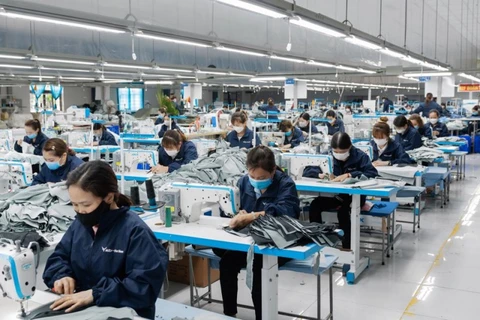
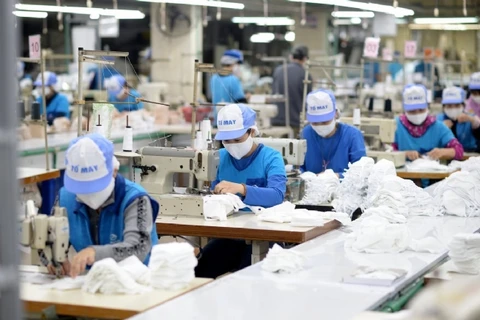
Garment industry needs to iron out wrinkles to enable growth ảnh 1Illustrative photo (Source: VNA)

Hanoi (VNA) – Given an unstable global economy with strong consumer demand for transparency and sustainability, Vietnam's textile-garment industry is facing mounting difficulties, prompting a need to transform for growth.

Vice General Secretary of Vietnam Textile & Apparel Association (VITAS) Nguyen Thi Tuyet Mai said the US and EU – two major textile and garment import markets of Vietnam – have recently issued stricter regulations on the origin of products.

Economist Huynh Thanh Dien said that Europe is expected to adopt a common strategy to eliminate ‘throwaway’ consumption toward a goal of having only sustainable and recyclable apparel entering the EU market by 2030.

Kieu Manh Kha, Supply Chain Manager at the Vietnam Office of the Cotton Council International, noted all brands will require their supply chain to provide traceability information by 2030. In the short term, by 2025, about 25-50% of brands will apply the requirement.

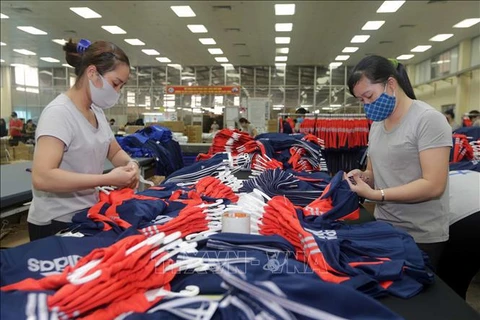
About 80% of enterprises operating in the Vietnamese textile and garment industry are small and medium companies. The sector employs over 2 million industrial workers and nearly 1 million service workers, but the labour productivity remains low and production costs have yet to be optimised.

In the context of the current volatile and difficult business environment, experts held that only sustainable and flexible development, investment in digital transformation, and application of scientific advances and circular economy model can help businesses stand firm in the market.

Garment industry needs to iron out wrinkles to enable growth ảnh 2Illustrative photo (Source: VNA)

In December last year, the Prime Minister signed a decision approving the strategy for the development of the textile, garment and footwear industry to 2030, with a vision to 2035.

According to Mai, this is the legal corridor for the sector to seize opportunities serving growth in the next 15 years, with an expectation that the nation can completely export with Vietnamese brands by 2035.

To this end, enterprises need to comply with labour commitments, sustainably protect the environment, and be profitable, she said.

Regarding the transparency of origin, Kha advised businesses to consider joining the US Cotton Trust Protocol programme as quickly as possible. Via the support programme, Vietnamese textile and garment firms can add quantitative traceability to each product, hence a more transparent supply chain for growth in popularity.

Dien suggested given the current difficulties, companies, in the short-term, should turn to new markets rather than getting back to the domestic market./.
VNA

See more

An overview of the seminar entitled "Opportunities and challenges for market development in Turkish market" (Photo: Ministry of Industry and Trade)

Türkiye offers export potential for Vietnamese food producers: seminar

Türkiye’s target of lifting total exports of goods and services to more than 400 billion USD in 2026 could create additional opportunities for Vietnamese agricultural products, food and beverages, said Ta Manh Cuong, director of the Trade and Investment Promotion Support Centre.

SSC Vice Chairman Bui Hoang Hai speaks at the opening of the programme on July 21. (Photo: VNA)

Vietnam boosts crypto market oversight capabilities

Diederik Van Wersch, Chainalysis' ASEAN Regional Director, noted that Vietnam has a high level of crypto asset adoption, offering significant opportunities for innovation while creating greater demands for oversight and risk management.

Vietnam Railways has introduced a range of tourism, heritage and dedicated train services, attracting growing numbers of passengers. (Photo: VNA)

Railways reinvent themselves with tourism, heritage trains

One of the most notable successes is the premium Hoa Phuong Do (Flamboyant Flower) train operating between Hanoi and Hai Phong city. Since entering service in May 2025, the train has completed nearly 3,000 trips and carried around 1.33 million passengers.

Representatives of relevant parties witness the arrival of the shipment. (Photo: VNA)

First Czech pork shipment officially enters Vietnamese market

A Czech diplomat described the arrival of the first container as the successful outcome of a long and complex market-opening process involving years of negotiations, regulatory approvals and close cooperation between Czech and Vietnamese authorities.

A view of financial buildings in downtown Ho Chi Minh City along the Saigon River. (Photo: VNA)

HSBC: Vietnam’s growth, macroeconomic stability to face tougher test in H2

In a recently released report, Vu Binh Minh, CFA, Associate Director, FX Trading, Markets and Securities Services at HSBC Vietnam, said Vietnam’s economy has built a relatively favourable position in the first six months of the year with GDP expanding 8.18% – the highest first-half growth rate in recent years – as key growth drivers have operated in tandem.

Ha Tay Shoes has secured numerous export orders from the US and European markets. (Photo: VNA)

CPTPP strengthens free trade, expands global economic connectivity

Since taking effect, the CPTPP has significantly expanded Vietnam's access to major markets across North America, the EU, and the Asia-Pacific, contributing to strong export growth in key sectors such as textiles and garments, footwear, and agricultural, forestry and fishery products. The agreement has also encouraged greater investment into Vietnam by promoting regional production networks and clearer rules of origin.

Tan Mingming, Deputy Director of the Foreign Affairs Office of the Dezhou Municipal People’s Government. (Photo: VNA)

Chinese firms put Vietnam on expansion radar

Tan Mingming, Deputy Director of the Foreign Affairs Office of the Dezhou Municipal People’s Government, told Vietnam News Agency reporters that the city has spent years deliberately tightening its links with the Association of Southeast Asian Nations (ASEAN), with Vietnam seen as a key partner.

A perspective of the Viettel Military Industry and Telecoms Group's high-tech semiconductor chip manufacturing plant at Hoa Lac Hi-Tech Park. (Photo: Viettel)

Hanoi builds momentum as Vietnam's semiconductor hub

As Hanoi continues to strengthen its semiconductor ecosystem, the city is creating a new growth driver for both the capital and the country, enhancing Vietnam's technological capabilities and paving the way for deeper integration into the global semiconductor value chain.

Clams are processed for export at the factory of Thanh Hoa Seafood Import-Export JSC in Thanh Hoa province. (Photo: VNA)

Vietnam steps up export to achieve 550-billion-USD target

Against a backdrop of persistent uncertainty in global commerce, the Government is implementing a broad range of measures to strengthen export growth during the remainder of the year. These include expanding overseas markets through economic diplomacy, maximising the benefits of free trade agreements (FTAs), streamlining administrative procedures, reducing logistics costs, improving access to credit and helping businesses overcome trade barriers. Authorities are also encouraging deeper processing, official cross-border exports and greater market diversification to improve the competitiveness of Vietnamese products.

A hydroponic vegetable garden in Nguyet Hoa ward operated by Green Farm Co., Ltd. (Photo: VNA)

Incentive policies for high-tech agricultural zones

Under Decree No. 263/2026/ND-CP, qualified projects are given priority to participate in State support programmes as well as funds and policies on research and development, technological innovation, technology transfer, human resource training, investment promotion and trade promotion.