Gia Lai works hard to preserve ethnic cultural identities

Authorities of the Central Highlands province of Gia Lai have devised a series of measures to preserve and promote cultural identities of ethnic minority groups.
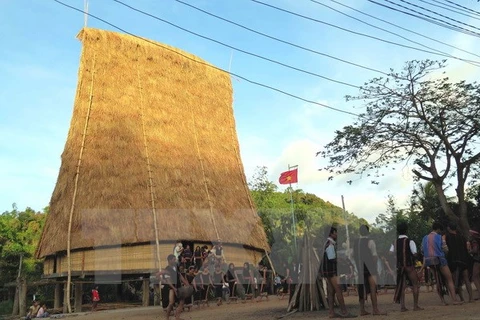
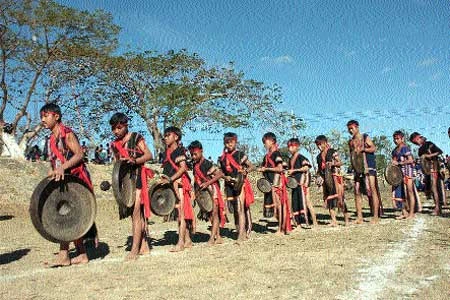
Gia Lai works hard to preserve ethnic cultural identities ảnh 1Illustrative photo. (Photo: VNA)

Gia Lai (VNA) – Authorities of the Central Highlands province of Gia Lai have devised a series of measures to preserve and promote cultural identities of ethnic minority groups, which account for over 45 percent of the locality’s population.

The province, which possesses various cultural identities, considers this a key task for its 2015-2020 socio-economic development plan.

The province is implementing a 2016-2020 project to preserve and uphold the value of the Gong culture space, part of a plan to conserve and promote cultural values of ethnic minority communities. The space of Gong culture in the Central Highlands was recognised by UNESCO as an intangible and cultural oral masterpiece in 2005.

Gia Lai boasts more than 6,000 sets of gongs, many of them extremely old. It is home to 13 national sites and site complexes, as well as four local-level ones.

Research on gongs and traditional costumes of local ethnic minority groups have attracted the interest of scientists in and outside the province.

As part of efforts to preserve the art genre, many gong-playing courses have been organised in schools, and clubs and ensembles have been established. Gong festivals are held every two years, drawing many gong troupes from across the province.

Local authorities are also working to preserve the Bahnar group’s epic poems, which received the title of National Intangible Heritage in September 2013.

Preferential policies have also been adopted to encourage singers and storytellers to continue performing and passing their knowledge on to younger generations.

Additionally, training courses have been organised for staff working in cultural fields to improve their knowledge of conservation of traditional culture.

Communication campaigns aim to raise public awareness about the importance of cultural preservation, thus enhancing ethnic minority groups’ ability to conserve and promote their cultures.

Relevant agencies are working to support vocational training and build traditional trade villages that make brocades, weave and produce traditional musical instruments. Artisans were given funds to open classes on gong playing, folk singing and brocade weaving.

Local authorities have paid special attention to restoring and maintaining traditional festivals. They have also built and upgraded infrastructure in order to help maintain cultural parks, villages, and spaces for cultural exhibitions and museums.

According to Phan Xuan Vu, Director of the provincial Department of Culture, Sports and Tourism, many traditional cultural identities of the locality are falling into oblivion because of increasing economic and cultural exchange among ethnic groups.

He urged stronger efforts and more practical measures from local authorities to deal with the situation, contributing to preserving cultural identities of local ethnic minority groups.-VNA
VNA

See more

Book displays and introductions help foster a love of reading and spread reading culture throughout the community. (Photo: VNA)

Vietnam seeks strong global presence for its children's books

Vietnamese children’s literature has steadily expanded its presence in international literary circles in recent years. From a few notable titles earning recognition in respected competitions, the sector has shown encouraging progress in bringing Vietnamese stories to readers around the world.

A stall offering discounted combo meals of bread and drinks at the fourth Banh mi Festival in Ho Chi Minh City on April 23 (Photo: VNA)

Ho Chi Minh City ranks among world’s top culinary destinations

According to Time Out, the appeal of Ho Chi Minh City’s cuisine lies in its creativity, much of which was shaped during challenging periods in history. Iconic dishes such as banh mi (sandwiches) and com tam (broken rice) are highlighted as examples of this resourcefulness.

The international short documentary film festival “Viet Culture in Motion” officially opens at the Saint-André des Arts cinema in Paris on June 11 (Photo: organising board)

Vietnamese youth tell cultural stories on European screen

The international short documentary film festival “Viet Culture in Motion” highlights the efforts of young Vietnamese and overseas Vietnamese filmmakers to introduce Vietnam’s culture and people to international audiences through documentary storytelling. It has brought together professional filmmakers, screenwriters and cultural and film activists from Vietnam and abroad.

Delegates to the 107th meeting of the AIMF Executive Bureau 2026 (Photo: VNA)

Hue spreads heritage city values within Francophone community

Its participation marked an important step for the central city of Hue to expand its international partnerships, deepen integration with municipalities worldwide, and cement its role and standing as a dynamic and responsible heritage city within the Francophone network.

With its rich history, aesthetic grace, and spiritual meaning, the lotus stands as a central symbol in defining Hue’s cultural identity. (Photo: tapchidongnama.vn)

Lotus Festival lights up Hue’s summer

Scheduled for June 19-21 at Bong Lai Islet on Tinh Tam Lotus Lake in Phu Xuan ward, one of Hue’s most renowned scenic landmarks and a symbol of royal garden art, the festival draws inspiration from the lotus’s enduring beauty in court culture. The event aims to honour local heritage while offering visitors a distinctive summer tourism experience.

The “Vietnam Pavilion” at Aldea Global 2026 (Photo: VNA)

World Cup 2026: Vietnam leaves distinct mark at global cultural showcase

The “Vietnam Pavilion” at Aldea Global 2026 offers Mexican visitors and international guests an opportunity to explore the country’s rich cultural heritage, history and people through exhibitions, tourism promotion activities, traditional arts presentations and displays of representative cultural products.

Michelin Guide Vietnam recognises 11 one-Michelin star restaurants (Photo: Michelin Guide Vietnam)

Local ingredients, cultural roots propel Vietnam’s Michelin journey

One of the clearest examples is Hieu Luc, a modest fish soup eatery on Hai Ba Trung Street in Hanoi, which has been included in the Michelin Selected category for the second consecutive year. Known for its clear, delicately sweet broth made from freshwater perch and mustard greens, the restaurant serves a traditional specialty from Hung Yen province.

Delegates attending the ASEAN City Leaders Conference 2026 visit the Imperial Citadel of Thang Long on June 9. (Photo: VNA)

ASEAN city leaders explore Hanoi’s heritage sites

At the Imperial Citadel of Thang Long, delegates visited the Doan Mon Gate and learnt about the formation and development of the ancient capital through different historical periods at display spaces. They also explored the Kinh Thien Palace’s Dragon Steps (large stone steps with dragon carvings), regarded as the political and ceremonial centre of the imperial citadel during successive Vietnamese dynasties.

Ly Hoang Nam is Asia's No. 1 pickleball player. (Photo: webthethao.vn)

Ly Hoang Nam tops Asian pickleball rankings

Vietnam boasts five players in the DUPR Asian top 10, with Nam leading the rankings on 6,267 points ahead of competitors from the Philippines, India, Hong Kong (China) and Chinese Taipei.

Visitors to the booth of the Vietnamese Embassy at the Embassies Food and Culture Festival held in Prague, the Czech Republic, on June 6 (Photo: VNA)

Vietnamese culture, cuisine leave lasting impression in Czech Republic

Featuring more than 100 booths representing diverse cultures from around the world, the festival transformed the heart of Prague into a vibrant multicultural space where visitors could sample traditional dishes, enjoy folk performances, listen to traditional music and experience unique cultural showcases from different continents.