Global Innovation Index helps Vietnamese firms to develop future strategies: insiders

The 2024 Global Innovation Index (GII), in which Vietnam climbed two places to the 44th among the 132 countries and economies, reflects the country’s strengths and weaknesses in innovation and helps Vietnamese firms to develop future strategies, according to insiders.

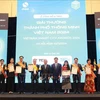
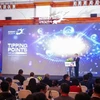
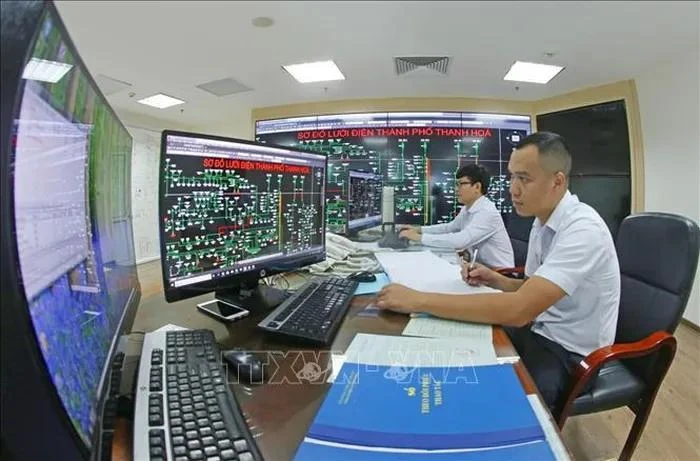
Illustrative image (Source: VNA)

Hanoi (VNA) – The 2024 Global Innovation Index (GII), in which Vietnam climbed two places to the 44th among the 132 countries and economies, reflects the country’s strengths and weaknesses in innovation and helps Vietnamese firms to develop future strategies, according to insiders.

This year’s GII report was released by the World Intellectual Property Organisation (WIPO) at a ceremony held in Switzerland on September 26.

Le Ngoc Tri, CEO of EM&AI JSC specialising in tech solutions, said the indicators reflect Vietnam’s innovation progress, helping startups like his firm gain an insight into the domestic market.

Meanwhile, Do Quy Su, Chairman of the Board of Directors and CEO of FiveSS Technology JSC, hailed the Vietnamese Government’s efforts in promoting innovation by enterprises, particularly tech startups, adding the GII makes it easier for Vietnamese firms to develop their own strategies for the future.

Over the past years, the Vietnamese Government has taken the index as a key management tool, and assigned ministries, agencies, and localities to raise relevant indicators, helping create improvements for 14 consecutive years.

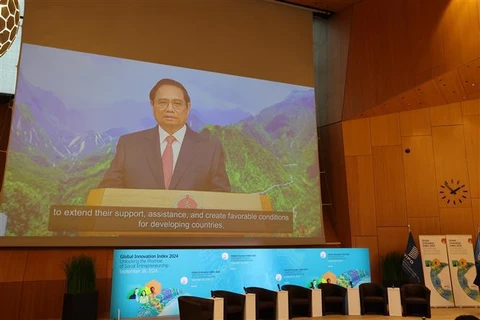
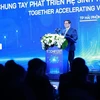
Speaking via videoconferencing at the announcement ceremony, Prime Minister Pham Minh Chinh stressed that Vietnam has put the people at the centre, and taken them as the subjects and beneficiaries of innovation. Therefore, the country needs a global and all-people approach, promotes multilateralism, and calls for international cooperation in innovation.

Minister of Science and Technology Huynh Thanh Dat held that Vietnam should pay more heed to both innovation input and output, especially the indicators where its performance remains poor, thus maintaining and improving its GII ranking.

He emphasised the importance of breakthroughs in mechanisms and policies to create momentum for science-technology development and innovation, raise businesses’ capacity of adopting and absorbing cutting-edge technologies, and enhance the innovative startup ecosystem, focusing on the models with positive impacts on the environment and society.

The 2024 GII shows that Vietnam ranks 1st globally in high-tech exports, high-tech imports. and creative goods exports.

Additionally, it has three indicators in the top 10 globally - labour productivity (3rd), number of smartphone applications (7th), and the share of research and development spending covered by businesses in total R&D expenditure (9th)./.

VNA

See more

Sorting fish prior to transport for distribution. (Photo: VNA)

Fishermen keep pace with digital technology

Across central coastal provinces, authorities have introduced policies to restructure fleets, reduce vessel numbers, and support fishermen in transitioning to more sustainable livelihoods. Provinces such as Dak Lak and Gia Lai have earmarked nearly 1 trillion VND to support occupational changes and decommission inefficient vessels, while others including Nghe An, Quang Tri, Hue, and Quang Ngai are implementing roadmaps to phase out thousands of underqualified boats.

Phuc Loi ward in Hanoi has launched the “Digital Literacy for All” movement, forming support teams to help residents install applications such as iHanoi and eTax. (Photo: VNA)

Hanoi advances technological innovation in key economic sectors

The municipal People's Committee recently issued Plan No. 109/KH-UBND on technological innovation in key economic sectors through 2035, which serves as both a catalyst and a strategic move to systematise, elevate and reinforce the capital’s leading role in the digital era.

General Secretary of the Communist Party of Vietnam (CPV) Central Committee and State President To Lam (first, right, front row) listens to a presentation about the China-ASEAN AI Application Cooperation Centre (Photo: VNA)

Top Vietnamese leader visits China–ASEAN AI Application Cooperation Centre

The China–ASEAN AI Application Cooperation Centre, jointly established by the Guangxi Zhuang Autonomous Region and ASEAN countries, aims to promote inclusive and mutually beneficial development of AI globally. It is regarded as a flagship project in advancing the “Digital Silk Road” initiative in Nanning.

A view of the 224th session of the UNESCO Executive Board in Paris. (Photo: VNA)

UNESCO extends recognition of 2 Category II science centres in Vietnam

The continued operation and enhancement of the two Category II centres under UNESCO’s auspices reflect Vietnam’s policy of positioning science, technology and innovation as key drivers of development, while closely linking scientific advancement with deeper and more substantive international integration in the current context.

China–ASEAN Artificial Intelligence Application Cooperation Centre deeply integrates future technologies with distinctive ASEAN cultural characteristics. (Photo: VNA)

China–ASEAN AI cooperation centre drives regional tech cooperation

With strong policy support and growing participation from businesses and research institutions, the China–ASEAN Artificial Intelligence (AI) Application Cooperation Centre is expected to act as a digital bridge, promoting technological integration and opening new avenues for Vietnam–China cooperation in the digital era.

Politburo member and Chairman of the Party Central Committee’s Organisation Commission Nguyen Duy Ngoc (ninth, left) and the Vietnamese delegation pose for a group photo with leaders of the Zhongguancun Science Park and Beijing city. (Photo: VNA)

Vietnam, China step up cooperation in science, technology, innovation

Politburo member and Chairman of the Party Central Committee’s Organisation Commission Nguyen Duy Ngoc, who also serves as Standing Deputy Head of the Central Steering Committee for the Development of Science, Technology, Innovation and Digital Transformation, toured the park’s exhibition area and was briefed on the formation and development of Zhongguancun, along with Beijing’s achievements in science, technology and innovation.

A technician from Viettel Bac Ninh examines equipment at a 5G base transceiver station. (Photo: VNA)

Bac Ninh accelerates development of 5G, data infrastructure

In the first quarter, Bac Ninh’s telecommunications infrastructure continued to develop in a synchronous manner. All communes have been connected to dedicated data transmission networks, and 100% of the population is covered by mobile services.

Illustrative photo (Photo: VNA)

An Giang identifies key tasks in science-technology development

The priorities focus on four pillars: science and technology, innovation, digital transformation, and real-world applications to boost socio-economic development. These are expected to create breakthroughs in governance, production, and daily life.

Illustrative image (Photo: VNA)

Vietnam Research Excellence Fellowship for 2026-2030 approved

Under the Vietnam Research Excellence Fellowship (VREF) for the 2026–2030 period, PhD students are identified as a core research force directly contributing to breakthroughs in sci-tech and innovation. Investing in top-tier doctoral candidates is more than workforce development, but a high-stakes strategic bet to forge a cohort of world-class scientists and technologists who can power Vietnam’s long-term economic ambitions.