Gov't proposes to continue 2% interest rate support policy

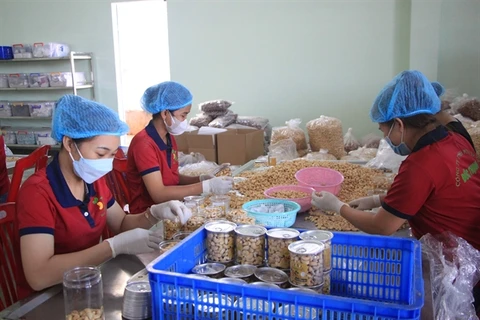
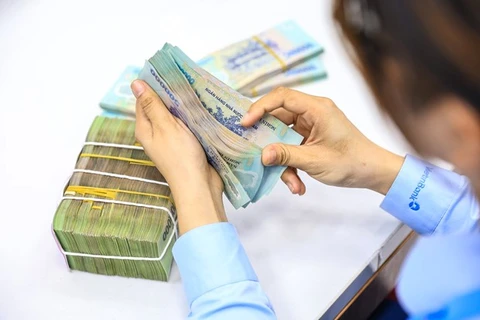
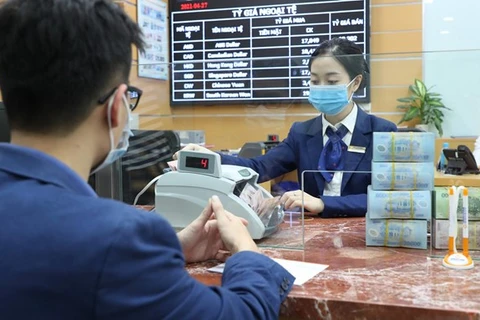
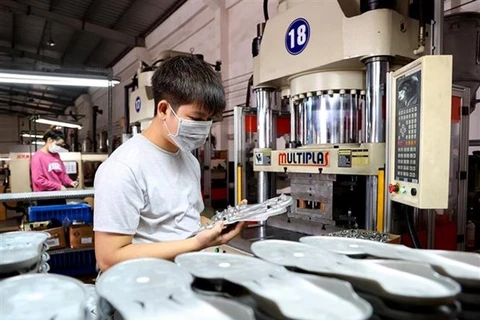
The Government has put forward a proposal to continue with the 2% interest rate support policy for enterprises, cooperatives, and business households, at a recent meeting of the National Assembly Standing Committee.
Gov't proposes to continue 2% interest rate support policy ảnh 1A road construction site in HCM City. (Photo: VNA)
Hanoi (VNS/VNA) - The Government has put forward aproposal to continue with the 2% interest rate support policy for enterprises,cooperatives, and business households, at a recent meeting of the NationalAssembly Standing Committee. 

Deputy Minister of Planning and Investment Do Thanh Trung said thepolicy, among others, had been playing an important part in boosting economicrecovery. As of the end of September 2023, approximately 95.7 trillion VND hadbeen disbursed under numerous support schemes and policies.

There was a need to review the current developments as somepolicies had exhausted their budget while others had not produced desirableresults or had been moving along too slowly. 

In addition, the Government advised that the policies be extendeduntil the end of 2025. 

A government report said Vietnam has allocated approximately 154trillion  VND under the programmes for2022-2023, aiming to expedite the commencement of construction for economic andsocial infrastructure projects, high-speed roads, and major border-crossingbridges.

However, there have been challenges and obstacles including delaysin completing investment procedures, allocation, and planning of funds forcertain tasks and projects resulting in some projects facing difficulties infully disbursing the allocated funds.

Therefore, the Government proposed the NA's Standing Committeegreenlight the transfer of available resources, estimated at 16.1 trillion VND,into four preferential lending policies. The Government also proposed thecancellation of a number of programmes under the management of the Ministry ofLabour, Invalids and Social Affairs, and the Ministry of Education.

Chairman of the NA's Economic Committee Vu Hong Thanh asked theGovernment to conduct additional review and research into the above-mentionedchallenges and obstacles to speed up the disbursement of public investmentcapital from the beginning of 2024, especially for critical national projects,key infrastructure, and the three National Target Programmes.

He said top priorities should include the domestic market,promoting trade, expanding and diversifying markets, improving product quality,and participating more deeply and widely in regional and global supply chains,striving for a sustainable trade surplus./.
VNA
See more

Toy production at a Hong Kong-invested factory (Photo: VNA)

Vietnam targets deeper market penetration in Hong Kong in 2026

Vietnam-Hong Kong trade hit 62.3 billion USD in the first 11 months of 2025, soaring 73.1% annually. Vietnamese exports to Hong Kong amounted to 36.8 billion USD, a 90.6% hike, ranking fourth among Hong Kong’s import sources, while imports from Hong Kong stood at 25.5 billion USD, up 52.9% and ranking third.

Vietnam’s start-up market enters restructuring phase

Vietnam’s start-up market enters restructuring phase

In 2026, venture capital inflows into Vietnam’s start-up ecosystem are expected to recover gradually, though in a more selective manner. VinVentures forecasts that capital will focus on start-ups that have survived the rigorous screening of 2024–2025, possess clear business models, strong commercialisation capacity, and the ability to generate real cash flows.

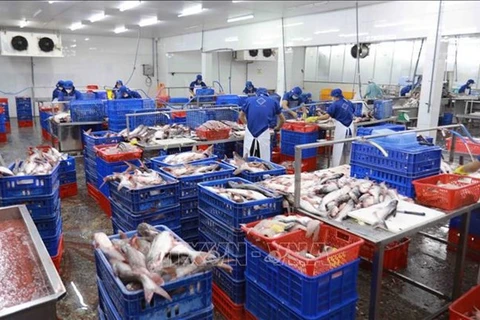
Workers process tra (pangasius) for export (Photo: VNA)

Vietnam–Singapore trade continues to thrive

For the year as a whole, Vietnam retained its position as Singapore’s 10th largest trading partner. Bilateral trade reached a record high of nearly 40 billion SGD, up 26.2% from the previous peak of 31.67 billion SGD recorded in 2024.

Eric Van Vaerenbergh, an energy expert and lecturer at the Brussels Engineering School (ECAM) (Photo: VNA)

Belgian expert optimistic about Vietnam’s economic outlook

Vietnam should move from a growth model based mainly on expanding capital and labour to one driven by productivity improvements. He said that this requires enhancing the quality of the workforce, particularly engineers, technicians, and managers in industrial sectors.

Workers at the VSIP Hai Phong industrial and urban complex, which specialises in producing electronic components for office equipment. (Photo: VNA)

Roadmap aims to improve business climate and boost competitiveness

By the end of 2026, Vietnam aims to rank among the world’s top 50 performers in the United Nations Sustainable Development Goals, advance at least three places in the International Property Rights Index, and climb at least one position in the Global Innovation Index.

Vietnam is strengthening its position in the technology value chain, becoming a major manufacturing hub for complete consumer electronics products. (Photo: VNA)

ESG standards offer opportunities to reposition Vietnam’s electronics firms

The 2025-2027 period will be a critical turning point, as exporters to the European market will be required to strictly comply with ESG standards, including net-zero emissions roadmaps, labour standards, corporate governance and transparency requirements. As a key export sector, the electronics industry is being directly and strongly affected by this shift.