Hanoi (VNA) - The biggest challenge facing the health sector lies with financial mechanisms for initial health care at the grassroots level, Minister of Health Nguyen Thi Kim Tien has said.
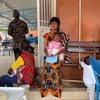
 People are waiting for their turn at the medical station of Doan Ket commune, Van Don district, Quang Ninh province (Photo: VietnamPlus).
 According to the Ministry of Health, Vietnam has a widespread medical network, covering from the central to communal levels, with more than 11,000 health clinics in communes and wards.
Tien described these clinics as the “doorkeeper” in initial health care and they should develop further. However, she said, there remain tangles regarding human resources and material facilities in this regard.
Weaknesses of human resources in communal medical clinics
The minister said the Vietnamese Government prioritises enhancing the capacity of the grassroots medical system and better initial medical services, creating a foundation to provide health care for all people, towards sustainable development goals (SDGs).
During field trips to many provinces, including Ninh Binh, Ha Nam and Quang Ninh, she found some bottlenecks regarding material facilities at local medical clinics.
The official took clinics in Ninh Binh and Ha Nam as examples, where there is a serious shortage of patient rooms while rooms for family planning and productive health services have not been optimised.
A survey conducted by the Health Strategy and Policy Institute unveils the poor capacity of the medical staff at communal health stations, saying they are unable to diagnose symptoms of common diseases like diarrhoea, respiratory infections in children and pregnancy complications.
According to the institute, 38 percent of interviewed health workers said they have no chances to participate in short- and long-term training courses. Meanwhile, 26 percent said material facilities and equipment in communal medical clinics have not satisfied professional demands. Besides, financial mechanisms have not encouraged health workers to improve their performance.
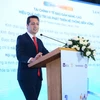
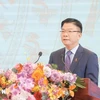
 Minister of Health Nguyen Thi Kim Tien (Photo: VietnamPlus)
 The national health network has been consolidated and perfected, with more than 1,400 hospitals and 180,000 beds, providing services for more than 10 million people. Up to 78 percent of the communal health stations have doctors.
As part of efforts to step up grassroots health care, the ministry has piloted the family medicine model in 26 communal medical clinics.
Tien said the biggest challenge facing the domestic medical sector lies with financial mechanisms for initial health care at grassroots level. She also pointed out the inefficiency in the implementation of the public-private model in this sphere.
By 2025, about 70 percent of medical clinics are expected to operate under the family medicine model, which is set to be rolled out in all clinics by 2030, according to the minister.
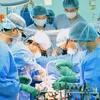
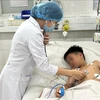
 A health worker (Photo: VietnamPlus)
 To deal with the above-said problems, the Party Central Committee issued Resolution No. 20 on October 25, 2017 on enhancing public health protection, care and improvement in the new situation.
Apart from achievements, the resolution highlights instability, inefficiency in the sector, especially preventive and grassroots medicine and initial health care, along with low quality of services and hospital overload.
It also puts forth tasks and solutions such as revamping the operation of communal medical clinics, synchronously implement activities to prevent and control non-communicable diseases, paying more attention to preventive medicine, and intensifying the management and treatment of non-communicable and chronic diseases, and long-term health care at grassroots health centres.
Therefore, piloting the family medicine model in the 26 communal clinics is significant to perfecting the grassroots medical network, gearing towards the formation of district-level multi-functional medical centres that directly manage communal medical clinics./.
| Resolution No. 20-NQ/TU issued by the Party Central Committee on October 25, 2017 on enhancing public health protection, care and improvement in the new situation sets the target that by 2025, 95 percent of medical clinics at communes, wards and townships will launch preventive medicine, and manage and treat some non-communicable diseases. The rate is projected to reach 100 percent by 2030. |