Guideline training crucial to overseas worker safety

The International Organization for Migration (IOM) – the UN Migration Agency, in collaboration with the Department of Overseas Labour (DOLAB) under the Ministry of Labour, Invalids and Social Affairs, organised training on the application of the Standard Guideline on Public Communication to Raise Awareness for Vietnamese Migrant Workers (the Guideline).
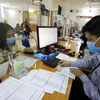
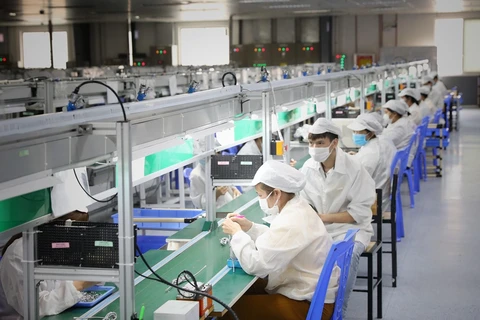
Guideline training crucial to overseas worker safety ảnh 1Workers undergo several procedures before they go to the Republic of Korea to work. (Photo: VIetnamPlus)

Hanoi (VNA) - The International Organization for Migration (IOM) – the UN Migration Agency, in collaboration with the Department of Overseas Labour (DOLAB) under the Ministry of Labour, Invalids and Social Affairs, organised training on the application of the Standard Guideline on Public Communication to Raise Awareness for Vietnamese Migrant Workers (the Guideline).

The online training welcomed the participation of representatives from the Department of Labour, Invalids and Social Affairs and Employment Service Centres (ESCs) from 25 provinces across the country.

The Standard Guideline on Public Communication to Raise Awareness for Vietnamese Migrant Workers is part of the collaborative effort between IOM and DOLAB to promote safe labour migration and prevent human trafficking. This initiative falls under the scope of the project "Tackling Modern Slavery from Viet Nam: Enhancing behaviour change communication and assistance services", implemented by IOM with support from the UK Government.

After more than two years of disruption due to the COVID-19 pandemic, the overseas labour migration has gradually resumed, with many countries opening their borders again to foreign workers. The development of this guideline is thus timely, as it supports public communications at local level to encourage the making of informed decision for migration. It also protects vulnerable individuals and communities from the risks of modern slavery and human trafficking.

The guideline introduces practical methods to plan public communication strategies and activities that meet local situations while inducing behaviour change. The behaviour change communication methods are developed based on the experience and lessons learned from IOM's recent campaigns promoting safe migration and preventing human trafficking.

Doyen Jun, Head of Projects and Partnerships at IOM Vietnam said with the reopening of the borders, many Vietnamese workers will go overseas. However, as travel and health requirements for international travels changed so frequently and in complicated manner during COVID-19, official and reliable information on safe migration has never been more important.

“IOM appreciates this opportunity to collaborate with DOLAB to combine the efforts for our joint mission in promoting safe and regular migration, to better protect labour migrants”, she said. “IOM Viet Nam looks forward to receiving valuable feedbacks and suggestions from the provinces to better reflect the specific local context and their needs”, she stated.

Meanwhile, Dang Si Dung, Deputy Director of DOLAB noted that this is an activity of priority under the collaboration between DOLAB – the state agency in charge – and IOM, with the aim of promoting safe labour migration.

“The guideline is developed for officials at local labour agencies supporting migrant workers, especially those who develop and execute communication plans on labour migration at all levels, officials from provincial and district-level DOLISAs and ESCs. The training today introduces guideline and welcomes feedback to finalize it before it goes into effect this May”, said Dung.

The guideline is a handbook for officials supporting migrant workers at all levels. Once finalised, the guideline will be disseminated to the DOLISAs, ESCs and other related agencies. The idea is to implement public communication plans, towards the goal of raising awareness for migrant workers, helping them to make informed migration decisions via safe and regular migration pathways.

Vietnam aims to send 130,000 labourers to work overseas this year. However, the country has so far only sent 33,500 people in the first half of the year due to the pandemic, down 40 per cent from the same period last year. In May only, local businesses sent just 126 workers abroad.

In the last six months, more than 5,000 Vietnamese labourers in overseas markets returned home because of COVID-19./.
VNA

See more

Cultural activities are held at the 2026 Vietnamese Language Summer Camp in Klinok village on the outskirts of Minsk, Belarus. (Photo: VNA)

Vietnamese language preserved across globe

In the new context, Politburo Resolution No. 23-NQ/TW, dated August 2, 2026, continues to place the preservation of the Vietnamese language within the strategic vision of mobilising resources from the Vietnamese community abroad and promoting Vietnamese cultural values around the world.

Overseas Vietnamese teachers participating in the 2026 training course on Vietnamese language teaching methods (Photo published VNA)

Leveraging overseas Vietnamese resources for Vietnam-France ties

As Vietnam enters a new era of prosperous and harmonious development, top leader To Lam's official visit to France will significantly contribute to the special dynamics of bilateral relations while fostering shared commitments to international peace, security, and stability.

Ambassador Nguyen Huong Tra briefs representatives of the Vietnamese communities in Belgium and Luxembourg on the country's situation. (Photo: VNA)

Overseas Vietnamese ready to contribute to national transformation

Affirming that overseas Vietnamese are an integral part of the nation and partners in its development and creation, Vietnamese Ambassador to Belgium and Head of the Vietnamese Mission to the European Union (EU) Nguyen Huong Tra pledged to listen to them openly and responsibly, and convey their recommendations to authorities at home.

The operation to remove the bomb is carried out cautiously and meticulously by military forces. (Photo: VNA)

Phu Tho: 200kg bomb safely relocated, detonated

According to a report by the Phu Tho Military Command, local residents spotted the bomb on August 31 in the Da River after the river water receded, exposing it beneath mud and soil on the riverbed. The bomb remained intact, including its fuse, and was located about 300m from a residential area.

Quang Ninh's seaport infrastructure, including the Ha Long International Cruise Port, is capable of serving large cruise ships. (Photo: VNA)

Quang Ninh 2030: Ambitious targets for a breakthrough

These objectives reflect the principle that economic development must not become detached from living standards; rather, the benefits of growth should create opportunities for all residents to share in its achievements.

A police officer guides a citizen on how to use VNeID app. (Photo: VNA)

Shift to data-driven administrative procedures needs acceleration

Under a draft decree replacing Decree 63, authorities will have to proactively pull information from databases and records for informational or technical procedures. Applicants would no longer be required to resubmit documents, and certification or information requests could not be turned into discretionary licensing through an “ask – give” mechanism.

Cuban journalist Luis Manuel Arce Isaac, author of the article published in Mexico’s Voces del Periodista magazine. (Photo: Screenshot/VNA)

Mexican journalist praises Vietnam’s profound transformation

According to the article, Vietnam’s progress over the past decades has turned President Ho Chi Minh’s aspiration for a country that would be more dignified and more beautiful into reality in ways that have far exceeded what was initially envisioned.

The Liaison Board of the Vietnamese Community in Singapore organises the annual Mid-Autumn Festival to strengthen community bonds and spread Vietnamese language and culture. (Photo: VNA)

Continued efforts made to nurture love for homeland through mother tongue

From language classrooms and community activities to digital platforms, Vietnamese is being preserved through increasingly diverse approaches. More than a means of communication, the mother tongue carries memories, culture and affection for the homeland. Ensuring that Vietnamese remains naturally present in the daily lives of overseas Vietnamese is therefore an important way to nurture their lasting bond with the Fatherland.