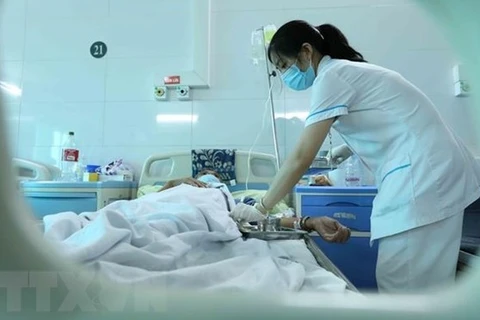
Dengue fever patients in the National Hospital for Tropical Diseases. (Photo: VNA)
 Data from the Hanoi’s Centre for Disease Control showed that the city recorded 308 new cases over the past week, bringing the total number of people infected this year to 1,342.
The total caseload is three times higher than the same period last year, the centre said.
Cases have been mainly found in districts of Dong Da, Thuong Tin, Thanh Tri, Thanh Oai, Phu Xuyen, Hoang Mai and Ba Dinh.
Than Manh Hung, deputy head of Emergency Department of the National Hospital for Tropical Diseases, said the hospital has treated many patients with severe dengue fever.
Currently, the north region is in the peak period, especially in rainy weather, he said.
Hung said people should be vigilant for disease prevention because there is no vaccine for dengue fever and no specific treatment.
In addition to preventing the spread of the virus, patients should be closely monitored, especially in the severe stage of the disease, usually starting from the fourth day onwards, he said.
At the period, the patients are susceptible to dengue shock, he said.
Many people confuse symptoms of influenza with dengue or dengue fever with COVID-19 so they might be negligent with the complications, he said.
If people have any symptoms such as fever, cough, body aches, they should go to medical facilities to be examined and diagnosed so that if they contract dengue fever, the doctor will monitor and treat them as soon as possible, he said.
Disease prevention
According to a representative of the city’s Health Department, the department will continue maintaining a task force to ensure that it is ready to promptly respond to developments that could occur in the city.
The department has also directed relevant units to strengthen monitoring patients in the community and hospitals to promptly handle with the disease, the department said.
Along with that, it has tightened the monitoring of areas where cases are recorded to prevent the spread of the disease, the department said.
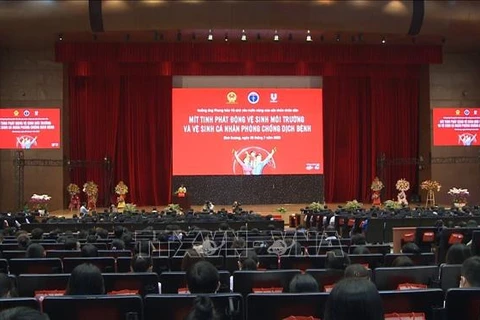
Campaigns on environmental sanitation and killing larvae in high risk areas will be immediately implemented, the department said.
Dissemination of preventing dengue fever has been promoted so that people can proactively implement prevention measures at home, the department said.
The Hanoi’s Centre for Disease Control has ordered local schools to make plans to fight against diseases, focusing on high-risk diseases such as dengue fever, COVID-19 and influenza.
Schools have been told to prepare facilities and medical equipment to prevent the diseases according to regulations; and set up teams to kill larvae.
Teachers and students at the schools are recommended to actively implement environmental sanitation; practise personal hygiene measures such as washing hands with soap and clean water, wearing masks, covering mouth when coughing or sneezing, and not spitting indiscriminately.
The schools have to coordinate with local health centres to quickly handling any possible cases.
To prevent dengue fever, the Ministry of Health urges people to spend ten minutes a week to kill larvae and take preventive measures such as regularly washing water tanks and other water containers.
People need to sleep under mosquito nets even during the daytime, wear long-sleeved clothes, use mosquito sprays and mosquito repellent creams to kill mosquitoes and prevent bites.
In particular, people do not arbitrarily treat dengue fever at home./.
VNA