Hanoi hosts 2024 Vietnam-Asia Smart City Summit

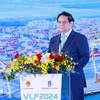
The 2024 Vietnam-Asia Smart City Summit commenced in Hanoi on December 2, aiming to put forward technology solutions and management strategies that help cities modernise infrastructure and develop smart and sustainable services for residents.

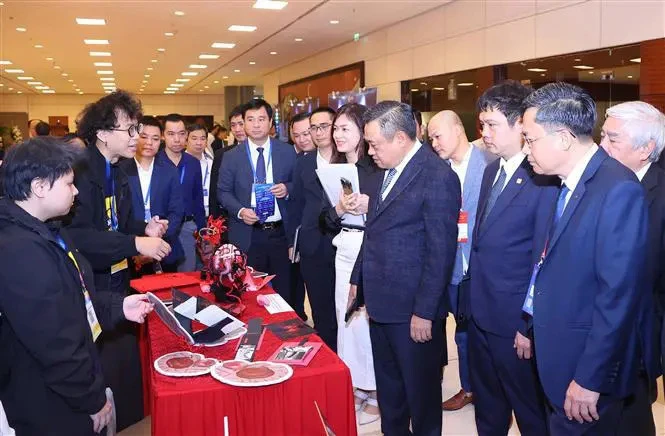
A booth showcases products and services for smart city development (Photo: VNA)

Hanoi (VNA) – The 2024 Vietnam-Asia Smart City Summit commenced in Hanoi on December 2, aiming to put forward technology solutions and management strategies that help cities modernise infrastructure and develop smart and sustainable services for residents.

Themed “Smart Cities - Digital Economy - Sustainable Development,” the event was co-organised by the Vietnam Software & IT Services Association (VINASA) and the Hanoi Department of Information and Communications.

Statistics show that by the end of 2023, Vietnam had 902 urban areas with an urbanisation rate of 42.7%, comparable to the Asian average. Urban economies contributed approximately 70% of the nation’s GDP. However, the rapid pace of urbanisation poses challenges, including the need to identify new development drivers in the context of global volatility terms in politics, economy, and technology.

VINASA Chairman Nguyen Van Khoa highlighted three critical development areas: the digital economy, the green economy, and emerging technologies. He stressed that the digital economy requires the transformation of traditional industries, the green economy focuses on sustainable growth that respects environmental and cultural values, and new technologies are driven by promising sectors such as semiconductors and artificial intelligence (AI).

Ha Minh Hai, Vice Chairman of the Hanoi People's Committee, emphasised the summit’s importance in fostering collaboration among leaders, experts, and top tech enterprises. He noted that the event will explore breakthrough solutions in semiconductors, AI, smart transportation, clean energy, and sustainable environment. Lessons and experiences shared at the summit are expected to empower Hanoi and other localities to capitalise on opportunities, tackle challenges, and materialise their ambitions for smart, green, and sustainable cities.

Smart city development has become a global and regional priority. As a leader in this trend, Vietnam has made significant progress in policymaking, fostering a conducive investment climate, and researching and implementing smart city technologies in various provinces and cities.

Nguyen Viet Hung, Director of the Hanoi Department of Information and Communications, stated that Hanoi's smart city development priorities include urban transportation, heritage preservation, cultural and tourism development, and environmental protection, specifically water and air quality. The "Hanoi Smart City Development Project to 2025, with vision to 2030" outlines key sector-specific solutions to address these priorities, he noted.

Hung emphasised the importance of a robust data infrastructure, saying that Hanoi will build and develop a modern, harmonious, safe, and efficient data system to meet the demands of smart urban management, serve residents and businesses, and promote the city’s sustainable socio-economic growth.

He went on to say that the plan focuses on optimising decision-making processes through data, enhancing the efficiency of public services, and improving the quality of life for residents as well as repositioning Hanoi as a leader in digital transformation and sustainable development in the country and the world.

The two-day summit brings together over 80 speakers and experts participating in seven thematic sessions. Discussions focus on crafting policies and leveraging technologies to make Vietnam’s cities smarter and more sustainable, enhancing citizens' prosperity and well-being.

There are also themed seminars and exhibitions showcasing achievements and solutions in digital transformation and smart city development, and business matching and cooperation activities./.


VNA

See more

Duong Thi Lap's garden has 200 kumquat trees ready for Tet (Photo: VNA)

Tet bloom markets: rising demand, stable prices

Across Vietnam, key farming hubs for flowers and ornamental plants are buzzing with activity as the Lunar New Year (Tet) approaches, with farmers robust plant health, eye-catching designs, surging consumer demand, and broadly stable pricing.

Retail sales of goods in January estimated at 487.4 trillion VND (Photo: VNA)

Total retail sales of goods, service revenue up 9.3% in January

Retail sales of goods in January was estimated at 487.4 trillion VND, accounting for the largest share and increasing 9.3% year-on-year. Growth was driven by many categories, including household appliances and equipment, which rose 9.4% thanks to early-year shopping demand and promotional programmes by retailers.

Fishing vessel monitoring system (VMS). (Illustrative photo: VNA)

Quang Tri backs VMS subscription fees for fishing vessels

Under a recently approved provincial resolution, the support will be disbursed once a year. Total funding for the three-year programme is estimated at more than 12.2 billion VND from the provincial budget, benefiting around 1,360 vessels across the province.

Delegates at the meeting in Hanoi on February 9, 2026. (Photo baotintuc.vn)

Vietnam to release 2026 economic census data seven months earlier

Nguyen Thi Huong, head of the Standing Group of the Steering Committee of the 2026 Economic Census and Director of the National Statistics Office (NSO), said the first phase of data collection was underway nationwide and was scheduled to conclude on March 10.

At Xa Mat international border gate (Photo: VNA)

📝OP-ED: Decree 46 - Not proof of distorted “systemic failure”

Temporary suspensions, adjustments, or revisions of newly enacted policies are never ideal and should be minimised. Yet such course corrections occur worldwide, irrespective of a country's development stage or market-economy maturity. What counts is rapid remediation to contain losses, extraction of lessons to prevent recurrence, and firm resistance to the dissemination of misleading or hostile allegations, which will help both enforcers and those subject to compliance maintain clarity and composure.

Delegates at the signing ceremony of the MoU between the Brazil–Vietnam Chamber of Commerce (BVC) and the Espirito Santo Chapter of the Brazil–Vietnam Chamber of Commerce and Industry (CCBV-ES). (Photo courtesy of the Vietnamese Embassy in Brazil)

Vietnam, Brazil step up trade promotion cooperation

The Brazil–Vietnam Chamber of Commerce (BVC) and the Espirito Santo Chapter of the Brazil–Vietnam Chamber of Commerce and Industry (CCBV-ES) recently inked the MoU to enhance cooperation and expand business opportunities for enterprises from the two countries, with support from the Vietnamese Embassy in Brazil.

Chua Ve container port in Hai Phong (Photo: nhandan.vn)

Vietnam accelerates green transition for seaports

In recent years, while expanding infrastructure and boosting operational efficiency, the country has steadily rolled out a national green port initiative to align with international standards and encourage sustainable growth in the maritime industry.

More than 4.1 million air passengers are forecast during the peak travel period of the Lunar New Year 2026. (Photo: VNA)

19 additional aircraft to be deployed to serve Lunar New Year peak period

During the pre-Tet peak, several routes from Ho Chi Minh City to destinations such as Hue, Thanh Hoa, Vinh, Pleiku, Tuy Hoa, Quy Nhon, Chu Lai and Dong Hoi have recorded booking rates above 90%, with some reaching 100%. In contrast, return flights from localities to Ho Chi Minh City remain low, with many flights reporting booking rates below 35% and several operating as ferry flights to return aircraft.

Shoppers at the first Glorious Spring Fair (Photo: VNA)

Spring Fair 2026: Opportunities for businesses to expand connections

Many businesses are doing more than presenting product functions; they are also telling the story of their raw-material regions, production processes, and social and environmental responsibility. This reflects a clear transition: companies are no longer competing solely on price, but increasingly on perceived value and consumer trust.