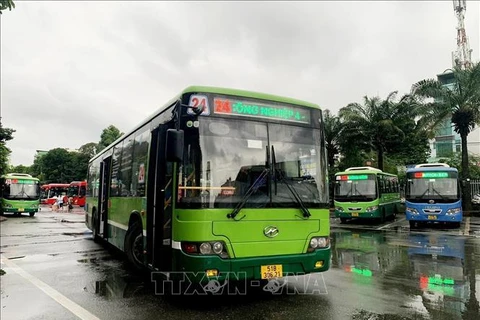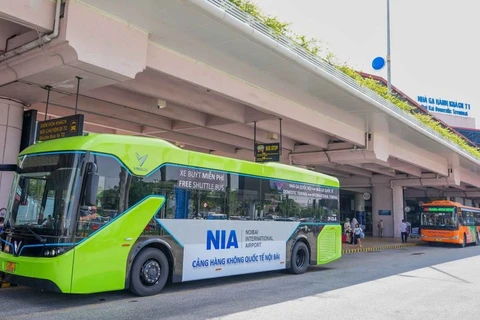
HCM (VNA) - Ho Chi Minh City has set a target of having all of its buses using clean fuels or electricity by 2030, heard a workshop on green and electric energy for public transport held in the southern largest economic hub on July 30.
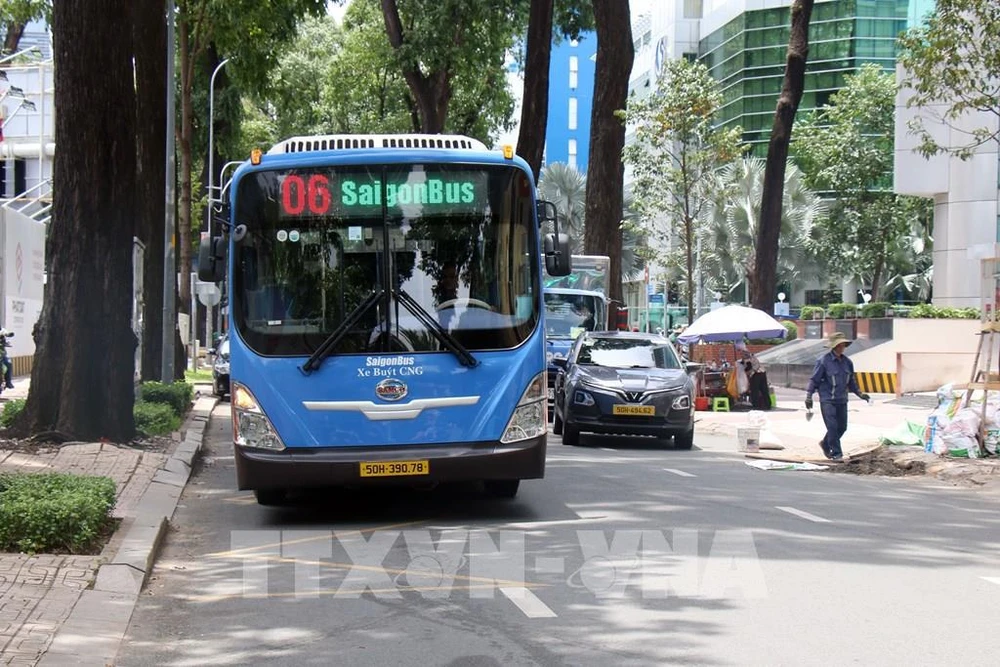
The city now has 2,209 buses running on 138 routes, of them 546 buses, accounting for 24.7% of the total, use compressed natural gas (CNG) or electricity. The bus network covers all areas in HCM City, serving travel demand of about 300,000 passengers daily.
In line with the Prime Minister's Decision 876/QD-TTg, dated July 22, 2022, the city aims to ensure all new or replaced buses will utilise green energy starting in 2025, with a long-term goal of achieving a fully green bus fleet by 2050. Additionally, all taxis are expected to use green energy by 2030.
Pham Vuong Bao, Deputy Director of the Public Transport Management Centre, highlighted that the city is aiming to reach its 2030 target earlier than the national deadline. However, this transition faces several challenges, including the high cost of electric buses compared to diesel, a lack of CNG refueling stations, and underdeveloped charging infrastructure.
The city is also exploring various support mechanisms for businesses involved in the transition. These include offering low-interest loans and tax incentives to facilitate the shift from fossil fuels to clean energy. The city’s Department of Transport intends to finalise these policies by September, starting with buses and extending to other vehicles in subsequent phases.
Khuat Viet Hung, Director of the Institute of Transport Strategy and Development, noted that the city's target is ambitious compared to national standards. The city benefits from a significant number of bus route contracts ending and undergoing rebidding in 2025 and 2026, which could accelerate the transition. Nonetheless, integrating new infrastructure, particularly land for charging stations, remains a significant challenge.
From 2024 to 2030, the city will tender contracts for 108 bus routes involving approximately 1,901 buses. By 2025, the city plans to have 2,542 buses, increasing to 3,317 by 2030. Despite these plans, the development of green energy vehicles faces hurdles such as insufficient CNG refueling stations and high investment costs as electric buses are around 13% more expensive than diesel models. Additionally, the charging infrastructure for electric buses is not yet fully developed.
Pham Xuan Mai, an expert from the Ho Chi Minh City University of Technology, said that while CNG buses are decreasing in popularity due to the rapid development of electric buses, and the latter are expected to grow substantially due to technological advancements, supportive policies, and increasing consumer demand.
To support the expansion of electric buses, Mai recommended the government to invest in charging infrastructure, including solar-powered stations, and develop renewable energy sources to ensure clean power supply.
Similarly, Mai Linh Group's representative highlighted that solar energy is an optimal solution for achieving the net-zero emission target and is currently evaluating electric vehicles for its taxi services while seeking partnerships with electric vehicle manufacturers.
Nguyen Duy Khanh from Saigonbus pointed out that the initial cost of electric buses is significantly higher, approximately 6 billion VND (237,000 USD) per bus. He suggested that the government should consider offering lower interest rates on loans, with proposals ranging from 1-2%, compared to the 3% suggested by the Public Transport Management Centre.
The Department of Transport is currently proposing various support mechanisms, including interest rate subsidies, import tax reductions, and investment in charging infrastructure to encourage the adoption of green energy buses.
Director of the department Tran Quang Lam emphasised that the city is committed to prioritising the shift to green energy and will work on developing supportive policies through two phases. The first phase, by September, will focus on finalising mechanisms for electric and CNG buses, with the second phase addressing all types of vehicles.
The department is also working on mapping out the charging station network, initially focusing on bus depots and major bus stations.
The city's Department of Industry and Trade will also organise workshops on investment policies, technical quotas, supporting mechanisms, among others to support enterprises, associations and sectors participating in the transition./.