HCM City proposes six BOT transport projects worth over 4 billion USD

Ho Chi Minh City’s Department of Transport has proposed six transport projects built under Build-Operate-Transfer (BOT) contracts with a total investment of more than 97 trillion VND (4.11 billion USD).
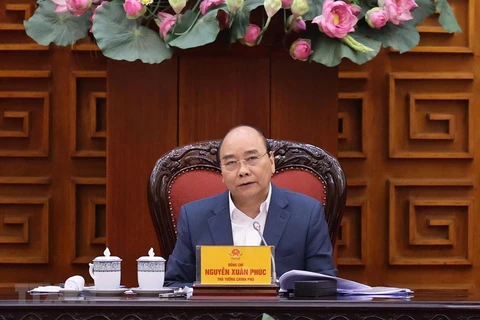
HCM City proposes six BOT transport projects worth over 4 billion USD ảnh 1HCM City proposes six BOT transport projects worth over 4 billion USD. (Photo: VNA)

HCM City (VNS/VNA) – Ho Chi Minh City’s Department ofTransport has proposed six transport projects built underBuild-Operate-Transfer (BOT) contracts with a totalinvestment of more than 97 trillion VND (4.11 billion USD).


Mobilising more investment from the private sector is a viable wayto raise funds for urgent projects while the State budget is still limited, thedepartment said.

The proposed projects will be upgrading and widening existingmain roads to residential areas, gateways and neighbouring provinces that areexpected to have increasing transportation demand.

They include upgrading a 9.6km-long section on National HighwayNo. 1A with total estimated investment of 12.9 trillion VND (548 millionUSD).

Other projects include upgrading a 9.1km-long section onNational Highway No. 22 for 1.2 trillion VND (51 million USD), and a 5.8kmsection of National Highway No.13 for 12.2 trillion VND (518 million USD).

A 9.7km extension of the east-west axis connectingwith Ring Road No. 3 will have total investment of 13.8 trillion VND (560.4million USD).

Widening a 26.8km section on the north-south road axis to Hiep PhuocIndustrial Park will cost 54.2 trillion VND (2.3 billion USD), andupgrading a 5.8km parallel road to National Highway No. 50 will cost about3.8 trillion VND (161 million USD)./.
VNA
See more

Toy production at a Hong Kong-invested factory (Photo: VNA)

Vietnam targets deeper market penetration in Hong Kong in 2026

Vietnam-Hong Kong trade hit 62.3 billion USD in the first 11 months of 2025, soaring 73.1% annually. Vietnamese exports to Hong Kong amounted to 36.8 billion USD, a 90.6% hike, ranking fourth among Hong Kong’s import sources, while imports from Hong Kong stood at 25.5 billion USD, up 52.9% and ranking third.

Vietnam’s start-up market enters restructuring phase

Vietnam’s start-up market enters restructuring phase

In 2026, venture capital inflows into Vietnam’s start-up ecosystem are expected to recover gradually, though in a more selective manner. VinVentures forecasts that capital will focus on start-ups that have survived the rigorous screening of 2024–2025, possess clear business models, strong commercialisation capacity, and the ability to generate real cash flows.

Workers process tra (pangasius) for export (Photo: VNA)

Vietnam–Singapore trade continues to thrive

For the year as a whole, Vietnam retained its position as Singapore’s 10th largest trading partner. Bilateral trade reached a record high of nearly 40 billion SGD, up 26.2% from the previous peak of 31.67 billion SGD recorded in 2024.

Eric Van Vaerenbergh, an energy expert and lecturer at the Brussels Engineering School (ECAM) (Photo: VNA)

Belgian expert optimistic about Vietnam’s economic outlook

Vietnam should move from a growth model based mainly on expanding capital and labour to one driven by productivity improvements. He said that this requires enhancing the quality of the workforce, particularly engineers, technicians, and managers in industrial sectors.

Workers at the VSIP Hai Phong industrial and urban complex, which specialises in producing electronic components for office equipment. (Photo: VNA)

Roadmap aims to improve business climate and boost competitiveness

By the end of 2026, Vietnam aims to rank among the world’s top 50 performers in the United Nations Sustainable Development Goals, advance at least three places in the International Property Rights Index, and climb at least one position in the Global Innovation Index.

Vietnam is strengthening its position in the technology value chain, becoming a major manufacturing hub for complete consumer electronics products. (Photo: VNA)

ESG standards offer opportunities to reposition Vietnam’s electronics firms

The 2025-2027 period will be a critical turning point, as exporters to the European market will be required to strictly comply with ESG standards, including net-zero emissions roadmaps, labour standards, corporate governance and transparency requirements. As a key export sector, the electronics industry is being directly and strongly affected by this shift.