HCM City's airport gives COVID tests to passengers returning from north

Ho Chi Minh City’s authorities are testing arrivals from three major airports in the north (Noi Bai in Hanoi, Van Don in Quang Ninh province and Cat Bi in the northern port city of Hai Phong) as tens of thousands of passengers are returning after the Lunar New Year holiday.
HCM City's airport gives COVID tests to passengers returning from north ảnh 1Passengers at the domestic terminal at Tan Son Nhat International Airport in HCM City ahead of the Lunar New Year holiday. (Photo: VNA)
HCMCity (VNS/VNA) – Ho Chi Minh City’s authorities are testingarrivals from three major airports in the north (Noi Bai in Hanoi, Van Donin Quang Ninh province and Cat Bi in the northern port city of Hai Phong) astens of thousands of passengers are returning after the Lunar New Year holiday.

Accordingto the HCM City Centre for Disease Control and Prevention (CDC), as ofFebruary 14, some 200 samples had been taken each day for testing ona random basis at Tan Son Nhat International Airport in HCM City. 

Themove is part of the city’s effort to monitor community transmission cases. Fourhospitals, including Nguyen Tri Phuong, Ear Nose and Throat, Hung Vuong, andTraditional Medicine, have participated in the screening.

SinceFebruary 11, the city has also tested people considered at high-risk ofcontracting the virus at bus stations, wet markets and some rental housingunits in order to monitor the risk in the community.

Inaddition, the HCM City CDC has been conducting testing at hospitalsacross districts since September 15.

Toensure safety for passengers at Tan Son Nhat, airport staff must betested one day before their working shifts.

Morethan 1,600 families of employees of the Vietnam Airport Ground ServicesCompany Limited (VIAGS) have also been asked to test, as ofFebruary 10.

Themain cluster of cases at the airport was related to VIAGS.

Source of infection 

Accordingto the HCM City-based Hospital for Tropical Diseases, the virus strain (A.23.1)associated with the Tan Son Nhat airport outbreak was first found inthe African country of Rwanda in late October.

Thisis the first time that the Rwanda variant has appeared in Vietnam andSoutheast Asia. It is not the highly contagious UK variant (B.1.1.7) orthe variant detected in South Africa.

TheRwanda variant has been discovered in a few other countries such as theUS, the United Arab Emirates (UAE), Australia, and several countries in Europe,including the UK and Denmark. However, no “abnormal developments” havebeen reported in those countries.

Basedon an analysis, experts believe the Rwanda variant is likely tohave infected the staff at Tan Son Nhat airport through cargo flights.

Dr.Phan Trong Lan, Director of the HCM City Pasteur Institute, said: “The mostlikely hypothesis is that the strain originated from cargo flights fromthe United Arab Emirates.”

Cargo crewmembers are not subject to quarantine and testing because they are not allowedto get off the plane, he added.

Duringthis period, flights from the United Arab Emirates arriving at the Tan SonNhat airport were possibly the source of infection for the loadingstaff on the ground, who had contact with aircraft crew members. 

Lannoted, however, that the risk of infection from outside the airport cannotbe ruled out, but it is unlikely to be the source.

Accordingto the HCM City CDC’s initial assessment, most of the patients related tothe Tan Son Nhat outbreak had no symptoms or very mild symptoms. Many caseshave tested negative quickly after a few days of treatment athospitals.

Thecentre said it would work with experts to collect data on epidemiology,clinical signs, antigens, antibody test results, and sequencing genes to learnfurther about the cases.

Sincethe first case was detected at the airport, the city has recorded 36COVID-19 cases as of February 16, including 10 patients who are loadingstaff at the Tan Son Nhat airport and 26 cases who are family members of theloading staff. 

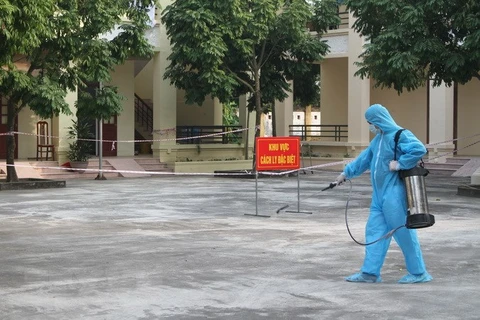
Cityauthorities have imposed a strict lockdown on areas that are related to thecases. All non-essential services and entertainment, and cultural and sportsactivities have been suspended until further notice.

“Theinfection chain at Tan Son Nhat hotspot has basically beencontained,” according to the HCM City CDC.

Thecity is continuing to conduct extensive screening in the community to assessthe risk of disease./.
VNA

See more

Assoc. Prof. Dr. Duong Duc Hung, Director of Viet Duc University Hospital, presents a token of appreciation in recognition of the noble gesture of the organ donor’s family. (Photo: baochinhphu.vn)

British teen’s organ donation saves three Vietnamese lives

A 19-year-old British tourist who died during a trip to Vietnam has saved the lives of three Vietnamese patients with end-stage organ failure, in a deeply moving act of compassion. The young woman is the first foreign national to donate organs in Vietnam.

A workshop at the One Health Summit, held in Lyon, France, from April 5 to 7, 2026. (Photo: VNA)

Vietnam backs global One Health commitments at Lyon summit

The MAE welcomed the French Government’s organisation of the One Health Summit, describing it as an important forum to advance global political commitments and strengthen international cooperation in preventing zoonotic diseases.

Ilustrative image (Photo: pngtree.com)

Vietnamese scientists unlock genetic insights into rare diseases

Prof. Dr. Nguyen Huy Hoang, Deputy Director of the Institute of Biology under the Vietnam Academy of Science and Technology, and his research team conducted a project titled “Genetic mutation analysis in Vietnamese patients with selected rare diseases using whole-exome sequencing technology.” The project, implemented from 2022 to 2024, aims to clarify the genetic causes of these diseases within the Vietnamese population.

Health workers and residents perform mass wellness exercises, promoting healthy lifestyles in the community. (Photo: VNA)

Ho Chi Minh City targets modern, inclusive healthcare system

On April 5 alone, 58 hospitals and health centres conducted screening programmes across 64 wards and communes, with a focus on outlying areas. Beyond early detection, residents receive consultations, long-term health monitoring guidance, and access to specialised services locally.

Vice Chairwoman of the National Assembly Nguyen Thi Thanh, Minister of Health Dao Hong Lan, and delegates attend the programme. (Photo: nhandan.vn)

Healthy lifestyles, disease prevention highlighted on national health day

Vice Chairwoman of the National Assembly Nguyen Thi Thanh emphasised the need for consistent and effective implementation of the resolution across the political system, with priorities including refining healthcare policies and institutions, strengthening preventive and grassroots healthcare networks, expanding population health management, promoting early detection, and improving school-based physical education and nutrition.

Politburo member, Secretary of the Party Central Committee and Chairman of the Commission for Information, Education and Mass Mobilisation Trinh Van Quyet (front row, fifth from left), together with delegates, participate in a walk after the launch of All People’s Health Day in Hanoi on April 5. (Photo: VNA)

All People’s Health Day promotes early disease prevention

The launch marked the first year the activity has been implemented in a coordinated manner nationwide. Members of the public were able to visit free screening areas, receive nutritional advice, participate in mass exercise performances, enjoy artistic programmes, and join a walk in response following the ceremony.

Volunteer young doctors are expected to provide free health screenings for around 10,000 residents (Photo: VNA)

Free cancer screening, health checks to benefit 10,000 people in Hanoi

Participants will receive comprehensive health checks through a streamlined one-stop process, including blood pressure measurement, height and weight assessment, BMI and cardiovascular risk evaluation, blood tests, general examinations and specialist consultations in internal medicine, paediatrics, obstetrics, ophthalmology, ENT, dentistry and oncology. Rapid blood glucose testing and biochemical screening will also be conducted to detect diabetes and metabolic disorders.

Dr Du Tuan Quy from the Children’s Hospital 1 in Ho Chi Minh City examines a patient with hand, foot and mouth disease. (Photo: VNA)

Over 25,000 hand, foot and mouth disease cases posted in 3 months

In the first three months, more than 25,000 cases of hand, foot and mouth disease have been recorded nationwide. Of the total cases, around 18,000, or nearly 72%, were concentrated in southern provinces. The disease has primarily affected children aged between one and five.

Early cancer screening at Da Nang Hospital. (Photo: VNA)

AI boosts early detection of non-communicable diseases

Deputy Minister of Health Nguyen Thi Lien Huong said NCDs pose a growing global challenge, accounting for over 70% of deaths worldwide, mainly from cardiovascular diseases, cancer, diabetes and chronic respiratory diseases. In Vietnam, the burden is rising rapidly, requiring urgent and sustained preventive strategies.

Most infections were reported among children under 10 years old, making up 99.3%, with those aged 1–5 accounting for the highest proportion (92.7%). (Illustrative photo: VNA)

Hand, foot and mouth cases increase five-fold in Q1

Most infections were reported among children under 10 years old, making up 99.3%, with those aged 1–5 accounting for the highest proportion (92.7%) due to close contact in kindergartens and limited hygiene practices.