Health Ministry warns of risks of COVID-19 outbreaks

The Ministry of Health (MoH) has warned of the potential risk of COVID-19 outbreaks due to the emergence of new variants of SARS-CoV-2.
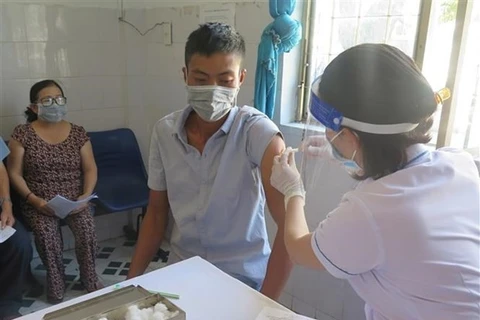
Health Ministry warns of risks of COVID-19 outbreaks ảnh 1Illustrative image (Photo: vneconomy.vn)

Hanoi (VNA) – The Ministry of Health (MoH)has warned of the potential risk of COVID-19 outbreaks due to the emergence of newvariants of SARS-CoV-2.

According to the ministry, the COVID-19 pandemic has been still under controlwhen the daily number of new cases stands at double digits. For two consecutiveweeks, Vietnam has not recorded COVID-19 related fatality. Among the severe patientsbeing treated, there is no case requiring mechanical ventilation.

Regarding the XBB.1.5 sub-variant of Omicron recently discoveredin the US, the ministry said documents from the World Health Organisation (WHO)showed that the XBB.1.5 sub-variant was the cause behind the increase of COVID-19 infectionsin the US. This sub-variant has been detected in Europe, Australia andparts of Southeast Asia.

Angela Pratt, Chief Representative of WHO in Vietnam, said current diagnosticand protective measures remain in place, including WHO-approved COVID-19vaccines, she said.

The MoH requested localities to enhance surveillance at border gates, public areas and medicalestablishments to swiftly detect and timely handle suspected cases,especially those entering from areas which record COVID-19 outbreaks and appearanceof new variants.

Localities andmedical facilities have also been required to coordinate with hygiene and epidemiologyinstitutes, and hospitals that have the ability to identify new variants to takesamples for testing and research, thus assessing risks.

Specialised units have been asked to regularly assess and analyse thesituation and risk factors, thus proactively developing scenarios and responseplans to all possible situations.

Vice Director of the MoH’s PreventiveMedicine Department Nguyen Luong Tam on January 15 inspected theCOVID-19 pandemic at Lao Cai international border gate in the northern mountainousprovince of Lao Cai.

The provincial Department of Health was demanded to strictlyimplement directives of the MoH, and soon give advices to the provincial People'sCommittee on approving the plan for COVID-19 prevention and control in 2023,and enhancing communication activities at border gates to raise awareness ofpandemic prevention among people and tourists./. 

VNA

See more

Illustrative photo (Photo: VNA)

Vietnam intensifies efforts to end malaria by 2030

In 2025, the country reported 246 cases with no deaths, down more than 30% year-on-year. In the first months of 2026, only 25 cases were recorded, again with no fatalities. So far, 26 out of 34 provinces and cities have been officially recognised as malaria-free.

Illustrative image -(Source: Internet)

Vietnam warns of HiPP baby food after Austria’s recall

The Austrian Agency for Health and Food Safety (AGES) has announced that HiPP – a German-Swiss baby food producer – and supermarket chain SPAR had recalled all 190g-jars of HiPP Vegetable Carrot with Potato from 1,500 stores in Austria due to suspected contamination with rat poison.

The caregivers’ club in Coc village, Pu Luong commune, the north-central province of Thanh Hoa, has established a livelihood support fund, helping households develop their economies through models such as rice cultivation, vegetable growing, fish farming and poultry raising. (Photo: VNA)

Community-based child nutrition care model benefits Thanh Hoa’s locality

After more than one year of implementation with the support of World Vision, the model has delivered positive outcomes in improving nutrition and enhancing the quality of childcare. Household livelihoods have improved, mothers’ awareness and caregiving skills have been strengthened, and notably, the rate of child malnutrition in Coc has declined markedly.

Assoc. Prof. Dr. Duong Duc Hung, Director of Viet Duc University Hospital, presents a token of appreciation in recognition of the noble gesture of the organ donor’s family. (Photo: baochinhphu.vn)

British teen’s organ donation saves three Vietnamese lives

A 19-year-old British tourist who died during a trip to Vietnam has saved the lives of three Vietnamese patients with end-stage organ failure, in a deeply moving act of compassion. The young woman is the first foreign national to donate organs in Vietnam.

A workshop at the One Health Summit, held in Lyon, France, from April 5 to 7, 2026. (Photo: VNA)

Vietnam backs global One Health commitments at Lyon summit

The MAE welcomed the French Government’s organisation of the One Health Summit, describing it as an important forum to advance global political commitments and strengthen international cooperation in preventing zoonotic diseases.

Ilustrative image (Photo: pngtree.com)

Vietnamese scientists unlock genetic insights into rare diseases

Prof. Dr. Nguyen Huy Hoang, Deputy Director of the Institute of Biology under the Vietnam Academy of Science and Technology, and his research team conducted a project titled “Genetic mutation analysis in Vietnamese patients with selected rare diseases using whole-exome sequencing technology.” The project, implemented from 2022 to 2024, aims to clarify the genetic causes of these diseases within the Vietnamese population.

Health workers and residents perform mass wellness exercises, promoting healthy lifestyles in the community. (Photo: VNA)

Ho Chi Minh City targets modern, inclusive healthcare system

On April 5 alone, 58 hospitals and health centres conducted screening programmes across 64 wards and communes, with a focus on outlying areas. Beyond early detection, residents receive consultations, long-term health monitoring guidance, and access to specialised services locally.

Vice Chairwoman of the National Assembly Nguyen Thi Thanh, Minister of Health Dao Hong Lan, and delegates attend the programme. (Photo: nhandan.vn)

Healthy lifestyles, disease prevention highlighted on national health day

Vice Chairwoman of the National Assembly Nguyen Thi Thanh emphasised the need for consistent and effective implementation of the resolution across the political system, with priorities including refining healthcare policies and institutions, strengthening preventive and grassroots healthcare networks, expanding population health management, promoting early detection, and improving school-based physical education and nutrition.