High cost, lack of infrastructure barriers to electric car market

The Ministry of Industry and Trade has just released a list of factors that are undermining the development of the electric car industry in Vietnam.
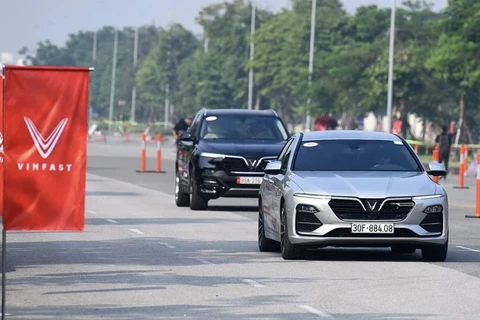
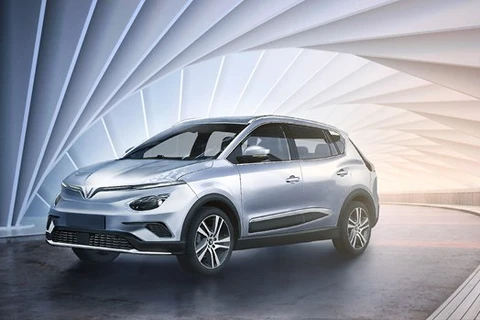
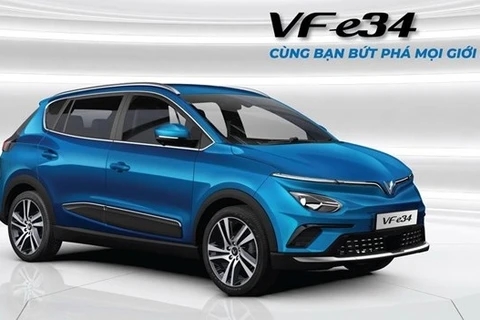
High cost, lack of infrastructure barriers to electric car market ảnh 1A VinFast electric car design. — Photo courtesy of Vingroup
Hanoi (VNS/VNA) - The Ministry of Industry and Trade has just released a listof factors that are undermining the development of the electric car industry inVietnam.

Citing data from the Vietnam Register, the Ministry of Industry and Trade(MoIT) said that the number of electric cars in Vietnam is currently quitesmall with only 140 cars in 2019, 900 last year and 600 by the end of the firstquarter of this year.

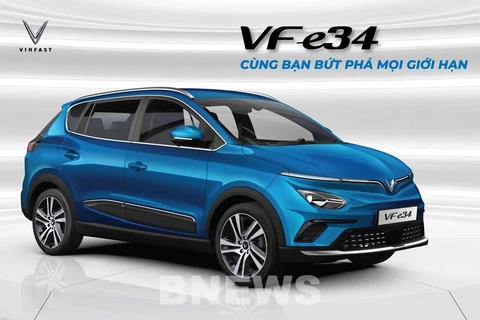
Currently in Vietnam, there is no enterprise other than Vinfast Trading andProduction Limited Liability Company engaged in the production and assembly ofelectric cars.

First is the low average income. GDP per capita in Vietnam in 2020 is estimatedat 2,750 USD, still too low for consumers to own a regular four-wheeledpersonal car, without considering the higher cost of electric cars over theirfossil-fuel burning rivals.

There is also a lack of charging station infrastructure. Currently almost nocharging stations are available for electric cars in the country. There is alsoa lack of road traffic infrastructure, stationary parking spots, and land setaside to build charging stations for electric cars.

At the same time, the range of electric cars is still limited. Although recentelectric car models have significantly improved their range they still cannotmeet the travel needs of customers compared to fuel cars.

Moreover, a policy to encourage the development of electric cars in Vietnam isalmost nonexistent. Electric cars have so far only received special consumptiontax incentives, which are lower than petrol cars.

Power production is also an issue. For developing countries, hydroelectricityand thermal power account for a large proportion of the power generationinfrastructure. However, thermal power is one of the least clean types of powergeneration.

In this context, experts suggest that the first step to take is to deploy cleanenergy production and prepare the necessary infrastructure when considering thelarge-scale deployment of electric cars.

At the same time, electric cars also have an environmental impact at the pointof production. Because the battery pack is heavy, manufacturers have to lightenthe rest of the cars, resulting in electric cars components often using a lotof lightweight materials that require a lot of energy to manufacture and handle.

The materials used in the battery can also be harmful to the environment andrecycling of lithium-ion batteries is rarely done even in developed countries.

The MoIT said that the strategy for the development of Vietnam’s automobileindustry by 2025, with a vision to 2035, is determined to encourage theproduction of environmentally friendly cars, meeting the requirements ofemission standards according to a roadmap approved by the Prime Minister.

To develop effective mechanisms and policies to encourage the production anduse of electric cars in Vietnam, the Ministry of Industry and Trade stated thatthe electric cars industry needed to integrate and take advantage of theexisting capacity of traditional automobile manufacturers.

At the same time, the development of the electric car industry must beconsistent with the development of transport infrastructure and electriccharging station systems.

The MoIT has proposed developing electric car technology in Vietnam through theapplication of special consumption tax rates for electric cars on the basis oftheir carbon dioxide (CO2) emissions into the environment.

In addition, the MoIT is also coordinating with the Ministry of Finance tostudy and propose amendments to the Law on the Special Consumption Tax in thedirection of preferential excise tax rates applied within a certain period oftime (five years) to encourage the development of electric cars in Vietnam./.
VNA
See more

A road in Ho Chi Minh City. (Photo: VNA)

Ho Chi Minh City to integrate IoT into smart transport infrastructure

To promote IoT application in smart transport, the Ho Chi Minh City People's Committee Chairman has assigned the Department of Construction to lead the deployment of IoT in the construction, management, operation and maintenance of transport infrastructure. The department will also review and propose integrating IoT sensors and smart monitoring devices into transport construction, renovation and upgrading projects across the city.

Online promotion of lychee and other key agricultural and OCOP products from Bac Ninh province. (Photo: VNA)

Vietnam tightening e-commerce management

Amid the rapid expansion of online commerce, closely linked to consumption, exports, logistics, electronic payments and the digital economy, the legislation is expected to shape the sector’s sustainable future while ensuring a balance between State management, consumer rights and business interests.

At the 19th Ho Chi Minh City International Travel Expo (ITE HCMC 2025) (Photo: VNA)

ITE HCMC 2026 to connect Vietnam's tourism with the world

From its early editions in 2005-2010, which attracted around 210 exhibitors and 120 international buyers from 18 countries, ITE HCMC has grown significantly. This year's event is expected to feature more than 520 exhibitors and brands, 260 international buyers from over 40 countries and territories, and more than 21,000 pre-arranged B2B appointments.

Checking tickets before passengers board the train at Hai Phong Station. (Photo: VNA)

Vietnam-China rail link prioritised to boost trade

The Ministry of Construction said it has tasked the Vietnam Railway Authority with working alongside relevant Chinese agencies to develop detailed plans for the Hai Phong–Ha Long–Mong Cai railway, which is slated for completion in 2026.

Australian Treasurer Jim Chalmers (right) and Vietnamese Minister of Finance Ngo Van Tuan at their meeting in Sydney on August 11 (Photo: Ministry of Finance)

Vietnam, Australia strengthen all-round financial cooperation

Minister of Finance Ngo Van Tuan called on the Australian Government to continue providing official development assistance (ODA), particularly for climate-resilient infrastructure projects, share experience, and provide technical assistance in public financial management reforms.

Delegates press the button to launch the project. (Photo: VNA)

Ca Mau launches 96 million USD wind power project

The project which has a designed capacity of 50MW, will cover around 600ha of sea and land areas, with total investment estimated at 2.5 trillion VND (96 million USD). It comprises a 13km 110kV transmission line, a 63MVA step-up substation, medium-voltage underground cable systems, and wind turbines and their foundations.

A Vietnam Airlines aircraft. (Photo: VNA)

Vietnam Airlines marks 35,000th flight to Australia

Over 35 years of operations, Vietnam Airlines has operated 35,000 flights and carried 7.5 million passengers between Vietnam and Australia, reflecting steady market growth and rising demand for connectivity between the two countries.

A view of the press conference. (Photo: VNA)

2026 Banking Sector Digital Transformation to open in Hanoi

The annual event, which will be held on August 18-19, 2026, at the ICE International Exhibition Centre, 91 Tran Hung Dao Street, Hanoi, is expected to attract around 324 delegates and feature 21 booths representing credit institutions, payment intermediary service providers, and technology companies.

SME products livestreamed on the digital platform of Ca Mau Radio and Television Station.( Photo: VNA)

Digital transformation key to unlocking SME growth in Vietnam

Science, technology, innovation and digital transformation have become strategic imperatives directly linked to labour productivity, competitiveness, growth quality and the economy's self-reliance, with sci-tech application and innovation by small and medium-sized enterprises (SMEs) playing an important role.