VNA
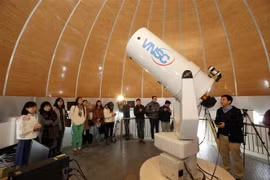



Addressing the event, experts and business representatives stressed that harnessing digital technologies requires businesses to adopt a new mindset, use data in decision-making, and maintain brand identity and consumer trust.
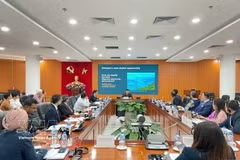
The Asia-Africa International Forum 2026, themed “Promoting Digital Connectivity among Global South Countries,” was held in Hanoi to discuss opportunities to strengthen digital cooperation among developing countries.
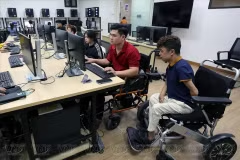
Amid the rapid development of the Fourth Industrial Revolution, artificial intelligence (AI) is changing the way people learn, work and communicate. For persons with disabilities (PwDs), AI is opening up new opportunities to overcome barriers once considered insurmountable, narrow the digital divide, and promote an inclusive society where no one is left behind.
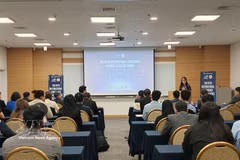
Focusing on the Intelligence of Things, artificial intelligence (AI), intelligent interconnected systems and cybersecurity, ICIT 2026 aims to advance technological innovation, comprehensive digital transformation and sustainable development.

Vietnamese young people are hoped to build not only successful businesses but also competitive, large-scale enterprises that create jobs, contribute to national development and expand into regional and global markets.
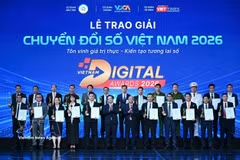
The 2026 awards place greater emphasis on practical effectiveness, applicability and the ability of digital transformation models to generate wider impact. They recognise not only technological innovations but also the benefits these technologies bring to people and society. Beyond acknowledging achievements, the awards also encourage initiatives capable of shaping the future.

The Southern Women’s Museum has so far digitised 1,113 artefacts, but only 113 are currently accessible to the public. According to deputy director of the museum Pham Thi Dieu, thousands of other artefacts are awaiting an exhibition system under an expansion project. The museum hopes to complete the system in 2027, enabling online visitors to explore the digitised collections.

Over the next three to five years, Vietnam could develop products and services, including post-quantum cryptography migration services, quantum random number generator (QRNG) devices and, potentially, subsurface surveys of transport infrastructure using quantum sensors.
As Vietnam-Canada relations enter a new phase under their strategic partnership, mobilising this resource is consistent with the orientation of Politburo Resolution No. 23-NQ/TW on overseas Vietnamese affairs, particularly the goal of harnessing knowledge, science and technology for national development.
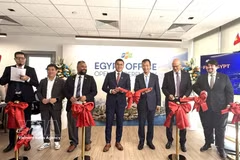
FPT Egypt is the Vietnamese tech giant’s first office in Africa and its 100th in 31 countries worldwide. It currently employs around 60 local staff, aiming to increase the workforce to 100 by year-end and 300–500 over the next three to five years.

According to Ookla's August 2026 Speedtest Global Index, the capital city recorded a median mobile internet download speed of 493.37 Mbps.
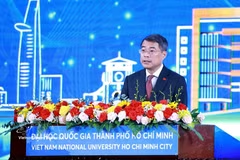
VNU-HCM should become a leading national hub for education - training, scientific research, science -technology, innovation and digital transformation, striving to rank among Asia’s top 100 higher education establishments by 2030 and one of the region’s leading research university systems by 2045, with at least four disciplines in the global top 50.
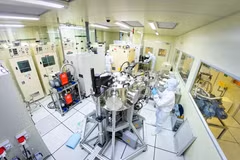
Professor Shigeki Takeuchi of Japan's Kyoto University said quantum sensing could be a suitable starting point for cooperation with Vietnam, given its wide range of civilian applications and generally lower investment requirements than quantum computing.

With the digital economy accounting for a leading share of gross regional domestic product (GRDP) nationwide, the northern city of Bac Ninh is accelerating cashless payments in public services, online shopping and the marketing of products on digital platforms.

By combining its established electronics manufacturing base with growing capabilities in semiconductor design, AI research, cloud computing and data centres, Vietnam can become a strategic link in the regional AI ecosystem.
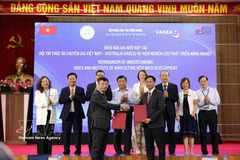
An Australian diplomat said Australian businesses are keen to engage in Vietnam’s digital development, particularly in semiconductors, AI and cybersecurity. They also hope to share expertise and support Vietnamese companies in technology and investment.
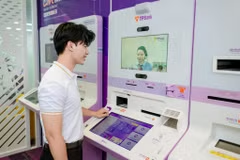
Banks are increasingly applying AI in data analysis, personalised services, fraud detection and risk management. In August, the Joint Stock Commercial Bank for Foreign Trade of Vietnam (Vietcombank) launched its One Data Platform (ODP) project to support advanced analytics and lay the groundwork for AI and machine learning applications.

The contributions of overseas Vietnamese intellectuals should be assessed not only by the number of research publications they produce but also by their ability to develop solutions that meet the country's development needs, said a Vietnamese scientist in Canada.

Under the licence, Saigontel can resell telecommunications services on public networks, including leased-line services for mobile base stations, Internet access via fixed satellite public telecommunications networks nationwide, and Internet access via mobile satellite public telecommunications networks for maritime connectivity.

The main challenge is how to match overseas Vietnamese experts with domestic needs and utilise their expertise to generate practical results in support of the nation.