HCM City (VNS/VNA) - Vietnam's data centre market is attracting foreign investors due to high demand, according to JLL's comprehensive market report on Vietnam’s data centre sector.
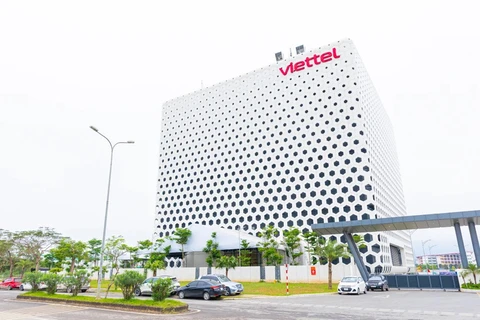
The report released recently by JLL, stated that the Vietnamese data centre market is currently dominated by local telecom players such as VNPT, Viettel IDC, FPT Telecom, and CMC Telecom, with significant growth noted in cloud service demands and big data analytics.
However, international developers and operators are beginning to enter the market, including notable projects like the 20MW facility by Gaw Capital in Saigon Hi-Tech Park, a 30MW project by Singapore-based Worldwide DC Solution, and a partnership between Japanese telecom giant NTT with DQ Tek, the report noted.
Notably, Alibaba has announced its plans to establish a data centre in Vietnam, indicating a trend where more global cloud services providers, particularly from the US, are expected to follow, thereby enhancing market competition and diversifying offerings.
Celina Chua, Data Centre Client Solutions Director (APAC) at JLL, emphasised, “Vietnam has recently climbed the priority list of countries investors and operators are looking to understand as they work out their market entry."
"This interest is driven by Vietnam’s strategic geographical location, dynamic economic policies, a young tech-savvy population, and the need for data localisation, positioning it as an important hub for data centres in Asia."
"Our report illustrates the readiness of Vietnam to capitalise on these opportunities, with increasing support from the government and an ever-growing demand for digital services shaping a promising future for the sector here,” she said.
According to the JLL report, development costs for data centres in Vietnam typically span from 6 million USD to 13 million USD per megawatt, a range that reflects the bespoke agreements that characterise data centre constructions and the variable local construction expenses.
This variance is also reflective of the broader Asia-Pacific region where countries like Japan, Singapore, and the Republic of Korea are experiencing escalating build costs, in contrast to China and India, which continue to present more cost-effective alternatives for data centre developments.
The Telecommunications Law 2023, which will take effect in January 2025, is set to provide a more structured regulatory framework with clearer definitions and guidelines for data centre and cloud computing services as telecommunications services.
This legislation, with a light-touch governance approach, is expected to provide a conducive regulatory framework for the sector's development, potentially attracting more foreign investment due to the liberalisation of market access conditions.
The Telecommunications Law 2023 allows 100% foreign investment in data centre services.
Vietnam's recently ratified Power Development Plan VIII sets forth an aggressive strategy to boost the nation’s total power generation capacity from approximately 80 GW to 155 GW by diversifying the energy mix away from coal toward more sustainable sources.
This transition is critical for ensuring a reliable and stable energy supply to meet the escalating demands of the rapidly growing, energy-intensive data centre sector in Vietnam, the report added./.