HOSE continues trading halts on January 24

The Ho Chi Minh Stock Exchange (HOSE), one of Vietnam’s two main bourses, continues halting stock trading services on January 24 to test-run the market after technical breakdown occurred two days ago.
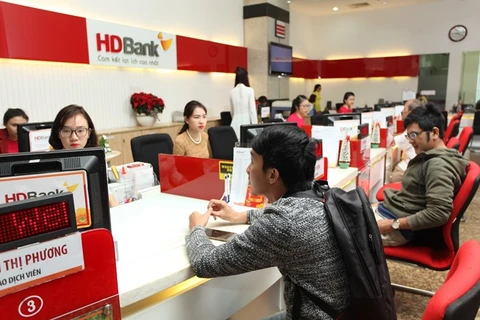
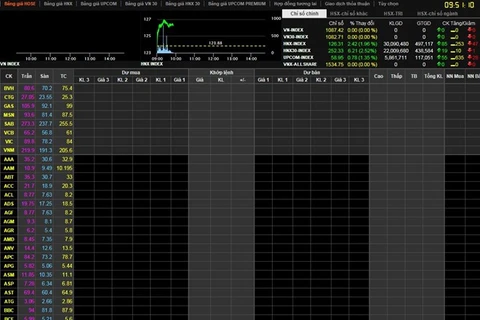
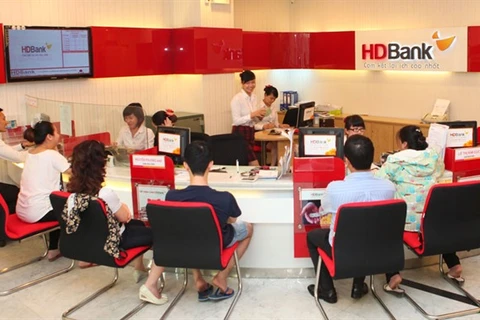
HOSE continues trading halts on January 24 ảnh 1HOSE continues trading halts on January 24. Illustrative image. (Photo: HOSE)

Hanoi (VNA) – The Ho ChiMinh Stock Exchange (HOSE), one of Vietnam’s two main bourses, continueshalting stock trading services on January 24 to test-run the market aftertechnical breakdown occurred two days ago.

According to an announcement onJanuary 23 evening, the HOSE said it had examined and fixed the technicalerrors on January 22 which forced the bourse to stop trading.

With the approval of the State SecuritiesCommission (SSC), the HOSE will maintain the trading suspension today to testthe trading system with all member securities firms prior to the officialresume of the market. It is an attempt to ensure the security and accuracy ofthe system, it said.

The HOSE had to suspend trading onJanuary 23, following a breakdown reported at 14:31pm a day earlier. Accordingto SSC Chairman Tran Van Dung, the country’s stock market faced a similarincident during three consecutive days in May, 2008.

In foreign markets, the New York andTokyo bourses also faced technical faults and suspended operations in 2005. TheNasdaq stock exchanges faced the problem in 2013 while the Indonesian andIndonesian bourses had errors in 2017.-VNA
VNA
See more

The booth of the Vietnam Trade Office at a trade fair in Morocco. (Photo published VNA)

Spring Fair 2026: opportunities for trade between Vietnam and Morocco

Tran Le Dung, Head of the Vietnam Trade Office in Morocco, said Morocco has accumulated extensive experience in hosting large-scale agricultural trade fairs and exhibitions. Flagship events include the annual International Agricultural Exhibition in Morocco (SIAM), alongside specialised shows covering food and beverages, textiles, handicrafts and logistics.

Prime Minister Pham Minh Chinh delivers closing remarks at the Spring Fair 2026. Photo: VNA

Prime Minister attends Spring Fair 2026 closing ceremony

After 12 vibrant and colourful days, the first Glorious Spring Fair 2026 vividly portrayed the vitality of the nation’s economic and consumer activities at the beginning of the new year, leaving a strong impression on the public and business community.

Vu Thi Thuy, Deputy Consul General and Head of the Vietnam Trade Office in Hong Kong Special Administrative Region (China). (Photo: VNA)

Hong Kong experience offers insights for Vietnam–Hong Kong trade cooperation

At this year’s Spring Fair, the Vietnam Trade Office in Hong Kong facilitated the participation of several Hong Kong enterprises in Vietnam to conduct market surveys, seek import sources and showcase their products. Notably, a company under the Hong Kong Productivity Council presented technological solutions for smart homes and smart manufacturing at the event.

People shop for Tet at a supermarket. (Photo: VNA)

Vietnamese goods dominate Tet market in Mekong Delta

In key retail hubs such as Can Tho, Long Xuyen and My Tho, high-quality Vietnamese goods account for 85–90% of Tet market share. Surveys at major supermarket chains and traditional markets show that consumers this year are prioritising locally-processed foods, confectionery and beverages.

Prime Minister Pham Minh Chinh strikes the gong to inaugurate the Vietnam International Financial Centre in Ho Chi Minh City. (Photo: VNA)

Int’l Financial Centre – A catalyst for Vietnam’s economic breakthrough: Deputy PM

Standing Deputy Prime Minister Nguyen Hoa Binh, who chairs the IFC’s Governing Council, said that the establishment of the centre in Ho Chi Minh City and Da Nang represented the initial realisation of a major task set out in the Resolution of the 13th National Party Congress. While characterising the launch as an early milestone rather than a final achievement, he underscored that it reflected meticulous, methodical and determined preparations at multiple levels of government.

Kobayashi Yosuke, Chief Representative of JICA Vietnam. (Photo: JICA Vietnam)

JICA hails milestones in Vietnam partnership amid green, digital push

In line with Vietnam’s development priorities and its goal of becoming a high-income country by 2045, JICA will continue to work with a wide range of partners in both Vietnam and Japan to mobilise technical and financial resources for more sustainable and inclusive cooperation

Vietnam International Trade Fair for Apparel, Textiles and Textile Technologies (VIATT 2026) is expected to expand its scale by 20% compared to last year's edition. (Photo: bnews.vn)

Int’l trade fair for apparel, textiles, textile technologies to open in Ho Chi Minh City

According to Vietrade, VIATT 2026 aims to promote the development of Vietnam’s textile and garment industry by enhancing production technologies, strengthening sustainability, and expanding technical textile segments. The event is expected to create opportunities for international businesses to tap into the growth potential of Vietnam and ASEAN, while enabling domestic enterprises to connect more effectively with global buyers.

Participants at a conference on digital assets in Hanoi on December 10. (Photo: VNA)

Finance ministry seeks public feedback on minimal tax on digital assets

Under the draft, the transfer and trading of crypto assets would not be subject to value-added tax. Individual investors, regardless of residency status, would be required to pay personal income tax at a rate of 0.1% on the gross value of each transfer. This approach mirrors the current tax method applied to securities transactions.

Steel products of Hoa Phat Group. (Photo: VNA)

Vietnam aims to meet 80–85% of domestic steel demand by 2030

Vietnam aims to meet 80–85% of domestic steel demand by 2030. Crude steel production is targeted at 25–26 million tonnes per year, with annual growth of 7–8%, while finished steel output is expected to reach 32–33 million tonnes per year, growing by 5.5–6.5% annually. Per capita steel consumption is projected at 270–280 kg per year.