Thailand unveils accelerated investment plan to revive economy
Thailand’s growth potential has steadily declined from around 5% in the post-1997 period to just 2.7% at present, with actual GDP growth this year forecast at only 1.5%.
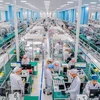
Vietnam stands out as a representative example. The article cites US technology group Intel as a case in point. Since establishing its testing and assembly facility at the Saigon Hi-Tech Park in 2010, Intel has expanded operations through total investments of 1.5 billion USD.
Vietnam’s digital technology industry exceeded all major targets in 2025, reinforcing its role as a key economic driver, according to the Ministry of Science and Technology.
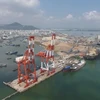
Hai Phong’s investment appeal is underpinned by a rapidly expanding development space, including the Southern Coastal Economic Zone covering more than 20,000 hectares, a planned free trade zone, deep-water ports at Lach Huyen, and 12 industrial parks newly established in 2025.
2025 was an incredibly significant year for Vietnam-US relations, marked by a series of major anniversaries and substantive advances across multiple areas of cooperation, US Ambassador to Vietnam Marc E. Knapper said in a recent interview with the Vietnam News Agency.
According to Professor Vu Minh Khuong of the Lee Kuan Yew School of Public Policy in Singapore, the 8% growth rate represents Vietnam's extraordinary effort and has created a strong impression among international investors and economic partners.
The performance of the Malaysian economy partly reflects sound economic management, as the government has maintained prudent macroeconomic and fiscal policies, said an IMF official.
The capacity of Vietnam’s supporting industries directly reflects the economy’s level of autonomy. In recent years, the sector has made notable progress, yet challenges remain, particularly technological bottlenecks.
The Indonesian government said about 14.7 million informal micro enterprises entered the formal sector in 2025, driven by policies to boost productivity, competitiveness and integration into the national economy.
Indonesia's rice production in 2025 is projected to reach 34.77 million tonnes, up 13.54% year on year, driven by favourable weather and farmer support policies under President Prabowo Subianto’s administration.
Laos is Thailand’s 7th largest trading partner in ASEAN and 18th globally. From January to October 2025, two-way trade grew by 18.65% to 8.18 billion USD, with Thai exports increasing by 16.90% to 4.81 billion USD and imports rising by 21.23% to 3.60 billion USD.
The city’s total GRDP value for 2025 is estimated at 2.74 quadrillion VND (103.93 billion USD), accounting for 23.5% of national GDP. GRDP per capita is projected to reach 8,066 USD. Foreign direct investment inflows are expected to total 8.16 billion USD, representing a 21.1% increase year-on-year.
The MIT-PV economies are quickly becoming the mainstay of ASEAN’s next growth supercycle, supported by booming populations, rising wealth, structural reforms, and stategic convergence of human resources development, infrastructure modernisation, and resources.
Vietnam’s export-driven economy is entering a new era where competitiveness hinges not on low costs but on the efficiency and sustainability of supply chains. Green logistics is emerging as a decisive competitive lever.
GDP growth of Thailand is forecast at 2.1% in 2025 and 1.6% in 2026, according to the IMF.
Kuroiwa Yuji, Governor of Kanagawa prefecture, affirmed Kanagawa’s commitment to further strengthening cooperation with Vietnam in labour, cultural and people-to-people exchange, and in encouraging more Kanagawa enterprises to invest in Vietnam.
Singapore’s The Business Times noted that the Vietnamese Government is intensifying investment efforts to advance ambitious reform agendas and realise its growth objectives for 2026.
Thailand's economic growth is expected to slow to 2% next year, primarily owing to accelerated exports in 2025, a measure taken to mitigate the impact of US tariffs.
Key sectors such as textiles and garments, wood and furniture, electronics, food processing, seafood, and industrial equipment have become internationally competitive, contributing to a dynamic and diversified industrial ecosystem.
Experts at the World Bank (WB) say that amid regional volatility, Vietnam has emerged as a bright spot of stability, buoyed by a strong recovery in manufacturing and domestic consumption.