Hospitality industry sees rosy signs after freeze due to COVID-19

Apart from preparations for the pilot vaccine passport programme, the hospitality industry has worked to ensure safety for tourists in line with instructions of the Ministry of Health.
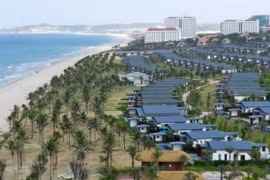
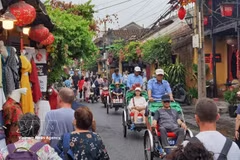
Hospitality industry sees rosy signs after freeze due to COVID-19 ảnh 1The domestic hospitality sector had been affected by the COVID-19 pandemic. (Photo: VietnamPlus)

Hanoi (VNA) – Apart from preparations for the pilot vaccine passport programme, the hospitality industry has worked to ensure safety for tourists in line with instructions of the Ministry of Health.  

The COVID-19 pandemic had forced nearly 90 percent of international travel companies, and thousands of others in Vietnam to close down, putting freeze on the hospitality sector.

However, rosy signs are now seen in the industry as the pandemic has been put under control in Vietnam, and the vaccination rollout is underway. Vaccine passports would allow Vietnam to welcome foreign holidaymakers back.

Accepting losses to maintain operations

Chairwoman of the Vietnam Hotel Association (VHA) Do Hong Xoan said over the past year, most of hotels, including six-star ones, have shut as Vietnam has maintained entry restrictions of foreign visitors.

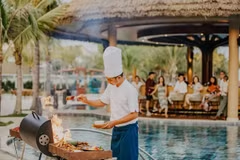
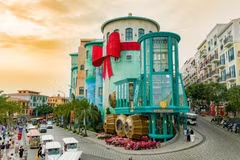
Hospitality industry sees rosy signs after freeze due to COVID-19 ảnh 2Lodging facilities in Vietnam are seeking ways to overcome difficulties caused by the pandemic. (Photo: VietnamPlus)

To stimulate domestic tourism, the VHA and relevant associations have launched promotion programmes at major tourism centres across the country by improving service quality and reducing prices, even gaining no profits, she said.

According to Xoan, the VHA has secured jobs for more than 5,000 labourers in big cities.

Hotels have also upgraded their equipment and improved the quality of their staff in terms of professional skills, foreign languages and management, in preparation for the return of international arrivals.

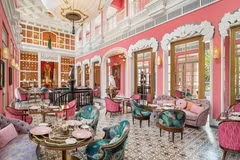
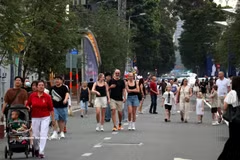
Hospitality industry sees rosy signs after freeze due to COVID-19 ảnh 3Occupancy rate of hotels drops to only 10-15 percent due to impacts of the COVID-19 pandemic. (Photo: VietnamPlus)

To support lodging facilities, the VHA has raised proposals to the Vietnam Tourism Association (VITA) and the Vietnam National Administration of Tourism that will forward the proposals to the Government.

However, hotels are now struggling to stay afloat only as Vietnam has yet to open its borders to international tourists.

She suggested stepping up the implementation of the Politburo’s Resolution No. 08 on turning tourism into an economic spearhead, issued in 2018, to reboot the hospitality sector and tourism industry at large.

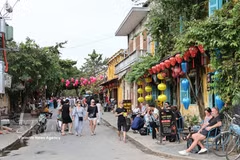
Hospitality industry sees rosy signs after freeze due to COVID-19 ảnh 4Domestic tourism has been seen as the lifebuoy of the whole industry (Photo: VietnamPlus)

Ready to ensure safety for tourists

Xoan said since the COVID-19 pandemic broke out, a working group in charge of tourism promotions has been established, bringing together representatives from the VHA, VITA, the Vietnam Society of Travel Agents (VISTA), air carriers and concerned agencies.

The promotion programmes have helped to ease difficulties for lodging facilities and travel companies, she added.

Xoan informed that there will be a forum in the northern province of Ninh Binh on April 14-15, where representatives from hotels and travel firms will seek ways to boost domestic tourism.

Hospitality industry sees rosy signs after freeze due to COVID-19 ảnh 5The hospitality sector will revive soon. (Photo: VietnamPlus)

Xoan affirmed that the tourism industry has prepared plans as well as human resources to ensure safety for holidaymakers in accordance with instructions of the  Ministry of Health.

As the country has closed its borders to nearly all foreign arrivals since late March last year to contain the pandemic and implemented strict quarantine protocols, the number of visitors arriving by air, land, and sea has fallen substantially.

In 2020, the number of international tourists fell nearly 80 percent compared to 2019, while domestic travellers halved and the number of outbound tourists plunged 90 percent.

Most arrivals have been foreign experts, diplomats, and technical workers working for Vietnamese projects or drivers bringing goods through border gates, according to the General Statistics Office (GSO).

The sector’s total revenue was 312.2 trillion VND (13.5 billion USD), down nearly 60 percent.

During the year, 338 foreign travel agents asked that their business licenses be withdrawn, a three-fold rise against 2019, while 201 businesses applied for new licenses, down by one-third./.

Hospitality industry sees rosy signs after freeze due to COVID-19 ảnh 6Chairwoman of the Vietnam Hotel Association (VHA) Do Hong Xoan (Photo: VietnamPlus)

VNA

See more

For leisure travellers, a dining venue worth experiencing can be a decisive factor in choosing a destination. (Photo: New World Phu Quoc)

From APEC to Michelin: New opportunities for Phu Quoc to extend stays, boost spending

Gwendal Poullennec, International Director of the Michelin Guide, has observed that Phu Quoc’s culinary identity is shaped by the interplay between fishing-village food culture and restaurants with an international character. This provides a foundation for the island to develop itineraries offering a variety of experiences and price points.

Pu Luong community-based ecotourism site in Thanh Hoa province attracts visitors during National Day holiday. (Photo published by VNA)

Travel firms drive tourist flows, boost tourism value

Travel companies should play a key role in directing tourist flows and linking the tourism value chain, thus enhancing the competitiveness of the tourism sector. They should go beyond selling tours to understand market demand, design products, connect services, organise tourist flows, manage risks and contribute to shaping destination images.

The picturesque scenery outside Phong Nha Cave (Phong Nha-Ke Bang National Park) (Photo published by VNA)

Vietnam steps up tourism promotion on global markets

Experts say that to turn advantages into high-value tourist arrivals, tourism promotion needs to move beyond fragmented activities towards large-scale, long-term campaigns tailored to target markets and closely linked to actual visitor experiences.

Visitors tour Hoi An Ancient Town in Da Nang city. (Photo: VNA)

Vietnam’s tourism targets 12% of GDP by 2030

Resolution 26-NQ/TW targets a direct GDP contribution of 10–12% by 2030, 45–50 million foreign arrivals, 160 million domestic visitors, and total revenue of 80–90 billion USD.

Located on Apollo Square in the heart of Sunset Town, Phu Quoc, Apollo Cafe is a distinctive venue designed by renowned architect Bill Bensley.

Coffee beneath an “upside-down” town: A surreal stop in Phu Quoc

With an entire town recreated on its ceiling, sweeping sunset views and a vantage point for watching fireworks after dark, Apollo Cafe in Phu Quoc offers more than a photogenic backdrop. Designed by Bill Bensley, the venue shows how a café can become an experience travellers deliberately build into their itinerary.

Vietnam is named Asia's Leading Destination for the eighth time and Asia's Leading Heritage Destination for the fourth time at the 2026 World Travel Awards. (Photo: VNA)

Vietnam strengthens tourism profile with WTA 2026 honours

The awards demonstrate that Vietnam's tourism appeal is being recognised across a broad range of areas, from national, urban and heritage destinations to nature-based attractions and tourism products and services, further strengthening the country's presence on the regional and international tourism map

Terraced fields shimmering with water create a picturesque scene in Lang Sang Village, Ta Xua Commune. (Photo: VNA)

Ta Xua named Asia’s leading emerging tourism destination 2026

In recent years, Ta Xua, dubbed "the paradise of clouds", has emerged as one of the mountainous destinations attracting strong interest from young travellers, particularly for its spectacular sea of clouds stretching across the mountains in the northwestern region.

AirAsia highlights Kem Beach as a family-friendly destination, where children can play on the sand while parents enjoy a little more time relaxing by the sea. (Photo: VNA)

AirAsia recommends Phu Quoc as ideal destination for family travel

A familiar low-cost airline among Southeast Asian travellers, AirAsia describes Phu Quoc in its blog guide to travelling with young children as a destination that feels almost tailor-made for families, with beaches for relaxation, leisure attractions and a wide range of activities to engage children of different ages.

Ho Chi Minh City Central Post Office remains a popular attraction for domestic and international tourists. (Photo: VNA)

Ho Chi Minh City wins three top Asian tourism awards in 2026

The 2026 honours add to the city’s impressive streak at international tourism awards. In the 2025 WTA, the southern metropolis took home four titles, including business travel and festival and event destination awards, which it had won for four years from 2022 to 2025.

Phu Quoc is building its capacity to host MICE tourism, with international resorts, event venues, world-class shows and an expanding flight network. (Photo: Sunset Town)

Why does Travel + Leisure call Phu Quoc Asia’s next MICE hotspot?

According to the magazine, Phu Quoc was once known primarily for its beaches and relaxed holiday atmosphere. Over the past two years, alongside that appeal, the island has gradually developed its capacity to serve the MICE market, with international resorts, event venues, world-class shows and an expanding flight network.