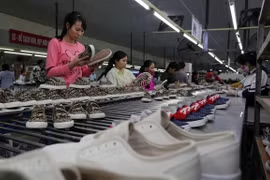
How apparel sector responds to order canceled due to COVID-19 crisis?

The EU, the US, the Republic of Korea (RoK), China and Japan account for 90 percent of Vietnam’s garment and textile export turnover. The decrease in demand from these markets due to the COVID-19 epidemic will greatly affect Vietnamese businesses.

Hanoi (VNA) - The EU, the US, the Republic of Korea (RoK), China and Japan account for 90 percent of Vietnam’s garment and textile export turnover. The decrease in demand from these markets due to the COVID-19 epidemic will greatly affect Vietnamese businesses.

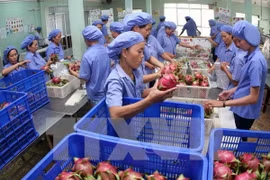
How apparel sector responds to order canceled due to COVID-19 crisis? ảnh 1The apparel sector will be suffered by order cancellation due to COVID-19 crisis (Photo: Vietnam+)

The US and EU markets account for more than 60 percent of Vietnam's total textile and apparel export turnover. Therefore, if some US and EU customers suspend, delay or cancel orders, it will greatly affect the export of the industry.

Le Tien Truong, General Director of the Vietnam National Textile and Garment Group (Vinatex) and Vice Chairman of the Vietnam Textile and Apparel Association shares more information about the issue in an interview with the Vietnam News Agency reporters.

-  There is some information that enterprises from the EU and US are canceling textile and garment orders of Vietnam. Is this true?

Mr. Le Tien Truong:  Since March 16-19, several EU and US customers began to suspend, delay or cancel orders. There are special cases the customers canceled the orders which are scheduled to ship in April if the production has not started yet.

This is also the similar response from the US, EU importers due to travel restriction, shopping malls closure or limited operations due to COVID-19.

Besides, difficulty in distribution and reduction in consumer demand have resulted in such reaction of importers. In the immediate future, businesses will encounter more difficulties when customers cancel and postpone in orders.

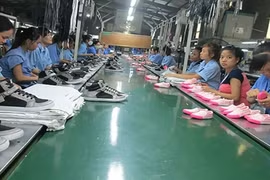
How apparel sector responds to order canceled due to COVID-19 crisis? ảnh 2Le Tien Truong, General Director of the Vietnam National Textile and Garment Group (Vinatex) and Vice Chairman of the Vietnam Textile and Apparel Association (Photo: Vietnam+)

- How will this situation affect Vietnam’s exports of garment and textile products in the coming time?

Mr. Le Tien Truong: The US and EU markets accounted for 45 percent and 18 percent of Vietnam’s total export value of apparel products in 2019. The COVID-19 will surely lead to the demand reduction. This demand will be extremely low during travel restriction. This is also the first time Vinatext has encountered such sudden cancel and long-term suspension of production.

- What are your suggestions to member enterprises?

Mr. Le Tien Truong: In the short term, enterprises should focus on pandemic prevention and promotions to develop the domestic market and ensuring salary to keep employees.

Vinatex has proposed some policies to postpone and exempt social insurance fee, trade union fee in 2020. The association also proposed the delay of 2019 corporate income tax and VAT 2020 until the year end, so that enterprises will have fund to sustain manpower.

We also asked for permission to export pandemic preventive products while ensuring sufficient supply for the domestic market.

Besides the credit package program worth 285 trillion VND (over 12.2 billion USD), we also hope that banks will adjust the lending policies to help enterprises sustain their business while waiting for the market to recover.

-  Are there other markets for Vietnamese garment products if the EU and US market still struggle COVID-19 in the coming time?

Le Tien Truong:  Vietnamese garment products are sold in over 40 countries (if EU is considered a market). However, the COVID-19 pandemic is making negative impacts on 179 countries in the world, including the RoK and Japan, which are Vietnam’s top 4 markets and China, which is the top 5.

When the total demand is down (with such markets as the EU, the US, RoK, China and Japan accounting for 90 percent of Vietnam’s apparel products, which are also world’s major markets), it is very difficult to find markets to make up for these giants.

Each enterprise can seek their single nitch markets and small countries to sustain their business. But in a larger prospect, it is very difficult to find a big market since it is impossible in this context.

- Thank you./.
VNA

See more

Panamanian President José Raúl Mulino speaks at the Panama-Vietnam Business Forum on October 7 in Hanoi. (Photo: VNA)

Vietnam, Panama seek to expand economic cooperation

In the presence of President Mulino, VCCI and the Chamber of Commerce, Industries and Agriculture of Panama signed a memorandum of understanding (MoU) to strengthen cooperation, enhance trade and investment promotion programmes, and support bilateral investment and trade.

Ministry updates on Vietnam-US reciprocal trade agreement talks

Ministry updates on Vietnam-US reciprocal trade agreement talks

The US is one of Vietnam’s major trading partners and holds paramount importance to the country’s exports. The conclusion of the bilateral trade agreement will help establish a stable and balanced trade framework toward sustainable development and open up greater opportunities for cooperation between the two countries.

MICE visitors enjoy services at Song Be Golf Resort in Ho Chi Minh City. (Photo: VNA)

Ho Chi Minh City shifts MICE tourism from venues to experiences

Ho Chi Minh City boasts significant advantages for MICE tourism, with the central area offering strengths in finance, trade and services; Binh Duong in industry, exhibitions and business connectivity; and Ba Ria-Vung Tau and Con Dao in marine tourism, resorts, ecology and distinctive experiences.

National Brand products are on display at the Vietnam National Brand International Forum. (Photo: VNA)

Vietnam's national brand value jumps 45% to over 462 bln USD

Deputy Minister of Industry and Trade Luong Hoang Thai outlined Vietnam's National Brand Programme 's achievements, the role of business community and plans for brand development in a press interview ahead of the 10th Vietnam National Brand Product recognition ceremony on October 16.

Khanh Hoa province possesses significant advantages for renewable energy projects and new energy sectors. (Photo: VNA)

New value chains from two industrial – renewable energy centres

To implement the revised Power Development Plan VIII, the Ministry of Industry and Trade has proposed establishing two inter-regional renewable energy industrial and service centres in the northern and southern regions to develop the renewable energy sector and a complete value chain.

WB Senior Environmental Specialist and Task Team Leader Stephen Ling speaks at the working session (Photo; VNA)

Ca Mau, WB cooperate in sustainable fisheries development

Scheduled to run from 2026 to 2029, the project aims to develop the local fisheries sector and deepen global integration, while adapting to climate change and protecting the environment through infrastructure upgrades, technological innovation, and better management and production capacity.

Vice President of the Vietnamese National Assembly Nguyen Hong Dien speaks at the forum. (Photo: Vietnam Trade Promotion Agency)

Tanzanian businesses seek greater cooperation, investment opportunities with Vietnam

Attending the forum during his working visit to Tanzania, Vice President of the National Assembly Nguyen Hong Dien said the two economies were highly complementary. Tanzania has strengths in natural resources, agriculture, energy, its domestic market and its strategic position in East Africa, while Vietnam has advantages in manufacturing and processing, high-tech agriculture, electronics, telecommunications and international trade.

The automatic ticketing system that uses electronic identification, authentication, biometric recognition and cashless payment for passengers on the Cat Linh-Ha Dong railway line in Hanoi. (Photo: VNA)

Cashless payments open gateway to financial inclusion

Cashless payments continued to grow rapidly in the first eight months of 2026. The number and value of cashless transactions rose 34.56% and 13.26% year-on-year, respectively, while online transactions increased 46.57% in number and 21.77% in value.