Culture, people drive Vietnam’s aspiration to rise
After 80 years since its founding and 40 years of “Doi Moi (Renewal), Vietnam is entering a new historical phase, described by Party General Secretary To Lam as the era of the nation’s rise.
As Ho Chi Minh City’s tourism sector continues to sustain growth momentum, it is shifting strongly from post-merger recovery to development acceleration, with a focus on restructuring destination spaces to offer diverse tourism models and attract more domestic and international visitors.
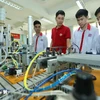
The strategy aims to build a high-quality Vietnamese intellectual workforce with a rational structure, identified as a core driving force for the rapid development of modern productive forces, as well as a leading force in digital transformation, innovation and international integration.
As the Government aims for GDP growth of at least 10% a year, science – technology, innovation, and digital transformation could contribute more than 5%.
Experts highlighted the importance of cooperation in clean energy and human resources development at a Vietnam-Russia science forum on industrial promotion, technology, and innovation, held by the Ministry of Industry and Trade on November 20 in Hanoi.
Prime Minister Pham Minh Chinh affirmed that the Party and State always regard education and training as a top national policy, noting human resources are the decisive factor for national success and sustainable development.
Many Party members and officials in the southern province of Tay Ninh have been giving their opinions on the draft documents of 14th National Party Congress, highlighting the content on development of human resources as a breakthrough in realising rapid, sustainable development goals for the 2025-2030 period.
As Vietnam enters a new stage of development, Party building and human resource development must be placed at the centre of every strategy. A strong Party is built on capable cadres; a prosperous nation is shaped by talented people.
Prime Minister Pham Minh Chinh directed ministries and agencies to step up negotiations with Russia on the construction of Ninh Thuan 1 Nuclear Power Plant. The agreement, he noted, should comply with standards of the International Atomic Energy Agency (IAEA) and the Vienna Convention on Civil Liability for Nuclear Damage, and match Vietnam’s conditions.
The Japanese Professional Skills College (JPC) held its inauguration and opening ceremony for the first academic year in the Mekong Delta province of Can Tho on October 18.
Vietnam’s population policies in recent years have mainly focused on controlling growth rates and adjusting the demographic structure. However, this approach is no longer suitable in the current context.
The Japan International Cooperation Agency (JICA) has reaffirmed its commitment to assisting Vietnam in advancing four major reform pillars, namely innovation and digital transformation, international integration, law making and enforcement, and private-sector development.
Ho Chi Minh City needs a comprehensive strategy anchored in four pillars: modern infrastructure, smart governance, high-quality human resources, and green development to become a regional mega-city in the near future.
The State will also prioritise investments in training facilities, laboratories, licensed software, common digital platforms, and other technical services to ensure universities and research institutions have the tools they need to produce a high-quality workforce.
Vietnam has maintained its position in the 2025 GII, ranking 44th out of 139 countries and economies, according to the World Intellectual Property Organisation (WIPO).
Vietnam possesses rich “soft power” assets, from a diverse system of tangible and intangible cultural heritage to traditional festivals, landscapes, and crafts.
The UN official hopes the country will hold a greater global role, contributing to peacekeeping, peacebuilding, and support for less fortunate countries.
Three in four workers in Singapore are already using artificial intelligence (AI) tools regularly at work, Singaporean Minister for Digital Development and Information Josephine Teo said on September 5.
Vietnam is regarded as having significant potential for breakthroughs, but to turn challenges into opportunities, comprehensive solutions are required, ranging from institutional reforms and resources to skilled workforce training.
The PM underscored the need to shift from viewing education and training as the responsibility of the sole education sector to a common task of the entire political system, the people, and society.