Hung Yen steps up rural tourism development

Over the recent years, many localities in the northern province of Hung Yen have been actively developing rural tourism with a focus on promoting trade-investment linked to harnessing the potential and advantages of local agriculture, craft villages, culture, and the ecological environment.
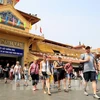
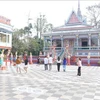
Hung Yen steps up rural tourism development ảnh 1Tourists at the Chu Dong Tu temple in Hung Yen. (Photo: baohungyen.vn)

Hanoi (VNA) - Over the recent years, many localities in the northern province of Hung Yen have been actively developing rural tourism with a focus on promoting trade-investment linked to harnessing the potential and advantages of local agriculture, craft villages, culture, and the ecological environment.

Through the ups and downs of time, the land and its people still keep intact communal and ancient houses as well as the customs and traditions deeply rooted in Vietnamese culture.

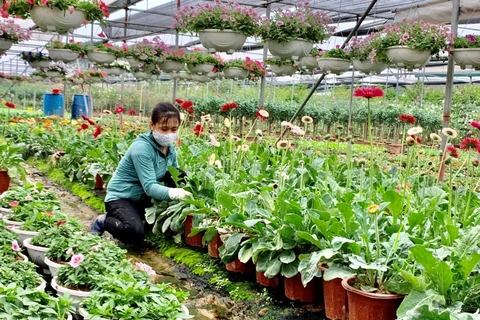
In Hung Yen, rural tourism primarily involves visiting craft villages and exploring historical and cultural relics, festivals, and more. Recently, some areas in the province have introduced models that combine farms with tourism, enabling visitors to sightsee and purchase farm produce. Notable examples include flower and ornamental tree villages in Xuan Quan, Phung Cong, Me So communes, Van Giang district; the Nam Nghia Trai medicinal herb village in Tan Quang commune, Van Lam district; and the Hong Nam longan cooperative in Hung Yen city, among other locations.

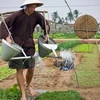
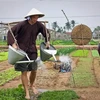
Tat Vien village in Thu Sy commune, Tien Lu district, is renowned for its traditional fish trap weaving craft that dates back over 200 years. Visitors not only learn about the process of making fish traps but also experience firsthand the art of weaving, creating their own products. They can also role-play as farmers, bringing their products to the fields to acquire skills in catching shrimp, crab, and fish.

Hung Yen steps up rural tourism development ảnh 2Tourists learn to weave fish traps in Tat Vien. (Photo: baohungyen.vn)

Currently, many tourists favour the agro-tourism model thanks to its cost-effectiveness. For a weekend, Nguyen Le Hang from Luong Bang town, Kim Dong district, brought her children to visit and experience grape-picking at the Hong Nam Green Agriculture Investment and Development Cooperative in Bao Khe commune, Hung Yen city. She said this is not just a simple outing, but also a way for the kids to learn through practical experience, getting close to nature, and thus gaining a better understanding of the lives of farmers. “It teaches them to appreciate labour,” Hang said.

However, when looking at the overall picture of the sector in the province, it's only available in a few locations with standalone, locally-developed services. These services lack comprehensive linkage to form a quality service chain that meets tourists' needs, hence limited revenue.

Pham Van Hieu, Deputy Director of the provincial Department of Culture, Sports, and Tourism, noted that in its overall tourism development plan until 2025, with a vision to 2030, the province aims to create a system of high-quality, distinctive products with high value added, which caters to tourists' demands. The focus is on developing green products, particularly involving rural and community-based tourism, as well as eco-tourism.

To reach the goals, the province needs to prioritise resource allocation for organising tourist sites and areas, and harmonising infrastructure and improving facilities to serve the industry. It is necessary to construct exhibition centres and outlets to showcase and sell agricultural, traditional craft products, and souvenirs of high quality; pay attention to human resource training; and connect tour routes and attractions within the province.

Concurrently with exploitation, the province needs appropriate policies to conserve and promote cultural spaces and historical relics, and to support the preservation, restoration, and development of traditional craft villages. This can contribute to enhancing the living standards of residents and achieving a sustainable shift in the local rural economic structure./.
VNA

See more

Karst limestone mountains in the Phong Nha - Ke Bang National Park, with large cave entrances opening amid the primeval forest, reflect a geological formation process spanning millions of years. (Photo: VNA)

Phong Nha - Ke Bang named among Vietnam’s 11 most beautiful destinations

According to the magazine, boat trips into Phong Nha Cave and strolls through Paradise Cave (both family-friendly) offer a tantalising glimpse of their astonishing scale, but the real adventure lies deeper within the park, where cavers wade through underground rivers and weave among stalagmites.

The Trang An Festival 2026 opens at Trang An Ecotourism Site in Ninh Binh province on May 3 (Photo: VNA)

Tourism seeks new growth momentum under Resolution 26

Tourism effectiveness should be measured not only by visitor numbers and revenue, but also by spending, length of stay, repeat visits, job quality, visitor satisfaction and environmental carrying capacity, said experts.

Vietnam welcomes nearly 2 million international visitors in August, up 19.7% from July and 18.4% year-on-year. (Illustrative photo: VNA)

Vietnam tourism maintains strong growth, expands international markets

The National Statistics Office under the Ministry of Finance reported that Vietnam welcomed nearly 2 million international visitors in August, up 19.7% from July and 18.4% year-on-year. The figure represented 63.6% of the tourism sector’s full-year target of 25 million arrivals.

News website news.ru reports that the number of Russian visitors to Vietnam could reach a historic record of 1.5 million in 2026. (Photo: VNA)

Russian arrivals to Vietnam forecast to reach record high

Russian arrivals to Vietnam surpassed 1 million in the first eight months of 2026, representing a remarkable 165.7% increase year-on-year. This was the highest growth rate among Vietnam’s major international tourist markets.

Secretary of the Party Central Committee and Deputy Prime Minister Pham Thi Thanh Tra speaks at the conference. (Photo: VNA)

Vietnam moves to make tourism a true new growth driver

Resolution No. 26-NQ/TW, issued on August 22, sets out a new vision, with a focus on fundamentally renewing the mindset, methods and approaches to tourism development and governance, shifting from quantity to quality and increasing the sector’s contribution to the national economy.

Tourists visit Golden Bridge in Da Nang city in the rainy season. (Photo: hanoimoi.vn)

Turning rainy season into tourism opportunity

Seasonality has long been a challenge for Vietnam’s tourism industry. In many localities, tourism peaks in summer but visitor numbers fall during the rainy months. Destinations are now seeking to restructure their tourism ecosystems and develop products that can operate year-round.

A pot of Mi Quang (Quang noodles). (Photo: VNA)

Da Nang promotes distinctive cuisine as key tourism attraction

As travellers increasingly seek authentic local experiences, the central coastal city of Da Nang is stepping up efforts to integrate cuisine into tourism itineraries, linking culinary promotion with destination branding and cultural preservation.

Flower vendors form a distinctive feature of Hanoi’s autumn. (Photo: VNA)

Hanoi builds four-season tourism appeal

Hanoi’s tourism events are increasingly designed to inspire exploration beyond individual festivals. At the Hanoi Tourism Gift Festival, for instance, visitors can make handicrafts with artisans, explore destinations through virtual reality and discover new tours and tourism stimulus programmes.

A view of the Lo Lo Chai community tourism village in Tuyen Quang province (Photo: VNA)

Vietnam taps community tourism potential for sustainable development

The tourism market is shifting from sightseeing towards living and connecting with destinations. Visitors increasingly seek authentic and locally rooted experiences, interaction with local people, culture and nature, as well as small-group and personalised trips with limited environmental impact and clear benefits for communities.

Delegates press the button to launch the “Phong Nha – Hue Ancient Capital: World Heritage Journey” tourist train. (Photo: VNA)

Tourist train linking Phong Nha and Hue heritage sites launched

The 190-km route runs between Hue, Dong Ha, My Trach, Dong Hoi and Tho Loc stations, giving travellers access to destinations including the Complex of Hue Monuments, Quang Tri Ancient Citadel, Vinh Moc Tunnels, Hien Luong–Ben Hai historical site and Phong Nha-Ke Bang National Park.