Incorporating digital heritage into Cultural Heritage Law

Experts assert that as Vietnam ventures into cultivating its cultural industry, it is imperative to incorporate the concept of digital heritage explicitly, clearly, and transparently within the draft Cultural Heritage Law (revised).
Incorporating digital heritage into Cultural Heritage Law ảnh 1A piece of digital art inspired by traditional patterns found on heritage sites stands as a testament to this innovative blend. (Photo: Minh Thu/Vietnam+)

Hanoi (VNA) - Experts assert that as Vietnam ventures into cultivating its cultural industry, it is imperative to incorporate the concept of digital heritage explicitly, clearly, and transparently within the draft Cultural Heritage Law (revised).

The draft Cultural Heritage Law (revised) is garnering significant interest from a broad spectrum of organisations and individuals. This legislation extends beyond the preservation of culture, touching upon the rights to enjoy, access, and utilize cultural heritage, as well as individual ownership rights and the freedom to conduct business.

On March 12, the Vietnam Fatherland Front Central Committee's Standing Board hosted a Social Criticism Conference on the draft Cultural Heritage Law (revised). The aim was to solicit expert feedback on the proposed legislation.

Professor Dr. Tran Ngoc Duong, head of the Democracy and Law Advisory Council of the Vietnam Fatherland Front Central Committee, highlighted a critical gap: “The merging of cultural heritage with technology is paving the way for new concepts like digital heritage and derivative heritage. However, these concepts have yet to be codified into laws that establish appropriate legal frameworks, promoting the development of digital products rooted in our heritage.”

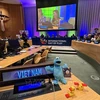
Incorporating digital heritage into Cultural Heritage Law ảnh 2At the conference. (Photo: Minh Thu/Vietnam+)

Duong noted that countries with advanced cultural industries have successfully transformed heritage values into commercial products rich in national identity. These efforts are not only culturally appealing within their originating society, but they but also project that national brand globally.

“At this juncture, as Vietnam strives to elevate its cultural industry, it is crucial to define digital heritage and the enhancement of our cultural values precisely in the forthcoming legislation,” Duong emphasized.

Duong suggested that recognising digital heritage as a formal concept within the Cultural Heritage Law, accompanied by regulations on investment and copyright policies, would motivate tech developers to produce highly applicable digital solutions.

This initiative aims to unlock the full potential of cultural heritage in contemporary life.

Incorporating digital heritage into Cultural Heritage Law ảnh 3A project focused on digitizing the image of the Nghe (a mythical lion) exemplifies this initiative. (Photo: Tam Chan)

Dr. Le Thi Minh Ly, Vice Chair of the Vietnam Cultural Heritage Association, remarked on the digitization of heritage as a pivotal initiative. The culture sector is firmly advancing this under the government's programme "Digitization of Vietnamese Cultural Heritage in the 2021-2030 period”.

The discussion at the conference also covered regulations concerning the protection and enhancement of cultural heritage values managed by both the state and private entities, alongside rights related to ownership and the trade of antiquities.

Mr. Truong Minh Tien, member of the Hanoi Vietnam Fatherland Front Central Committee's Religious Advisory Council, brought attention to the complexities of cultural heritage ownership, encompassing collective and individual rights.

Incorporating digital heritage into Cultural Heritage Law ảnh 4Experts offer their insights at the conference. (Photo: Vietnam+)

Tien also advocated for stricter management regarding the determination of ownership and the trade of antiquities, a move that could significantly reduce artifact and antique theft at heritage sites./.

VNA

See more

Prime Minister Pham Minh Chinh (left) extends New Year greetings to former State President Truong Tan Sang. (Photo: VNA)

PM extends Tet greetings to former Party, State leaders

The PM also affirmed that in line with the consistent policy of the Party and State, the Government has paid special attention to ensuring a warm and caring Tet for all, with the spirit of “leaving no one behind.”

A rest stop along the North–South expressway’s eastern section (Photo: VNA)

More expressway rest stops ready for Tet travel peak

To meet rising travel demand during the coming Lunar New Year (Tet) holiday, the VRA reported that several rest areas along segments of the North–South expressway’s eastern section have completed essential public service facilities and commenced operations.

Visitors at the photo exhibition “The Sea Within Us” (La mer en nous) at the City Hall of Châteaudun. (Photo: VNA)

Love for Vietnam’s seas and islands spreads among French friends

The exhibition in France guides visitors through the beauty of the East Sea - not only vast and rich in resources, but also deeply intertwined with the cultural and spiritual life of coastal communities. Through simple yet evocative images, everyday scenes of labour are vividly portrayed, from offshore fishing and seafood trading at the wharves to rustic bamboo boats closely associated with fishing villages.

Noi Bai International Airport activates plans to accommodate rising passenger volumes during the 2026 Tet holiday. (Photo: VietnamPlus)

Transport plans ready for Lunar New Year peak

Surveys of airlines and interprovincial coach operators show that despite added trips and expanded capacity, most services are fully booked on peak days close to Tet and the post-holiday return period.

Vice Chairwoman Nguyen Thi Thanh visits Vietnamese Heroic Mother Nguyen Thi Thom. (Photo: VNA)

NA Vice Chairwoman presents Tet gifts in Ninh Binh province

Thanh handed over 1,564 gift packages, each worth 1 million VND (about 37 USD), to policy beneficiary families, the poor and those in difficult circumstances. The gifts were distributed through the provincial Vietnam Fatherland Front Committee, socio-political organisations, relevant associations and local authorities.

Japanese Ambassador to Vietnam Ito Naoki (first row, left) and UNICEF Representative in Vietnam Silvia Danailov exchange the notes at the ceremony. (Photo: VNA)

Japan, UNICEF join hands to strengthen children’s resilience to natural disasters, climate change

Natural disasters in Vietnam have been increasing in both frequency and intensity. Typhoon No.3 in 2024 (Yagi), along with severe floods, inundation and landslides in 2025, caused significant human and material losses. This underscores the need for targeted and sustainable investments in disaster risk reduction and early warning, particularly for children and vulnerable communities.

Nguyen Thanh Tung, head of the VEPH delegation, speaks at the meeting with Cuban Vice Minister of Higher Education Reynaldo Veláquez Zaldivar. (Photo published by VNA)

Vietnam, Cuba strengthen cooperation in educational publishing

During a working session with Cuban Vice Minister of Higher Education Reynaldo Veláquez Zaldivar, the two sides discussed coordination to support Cuba in printing and distributing books in the coming period, while enhancing information exchange and sharing experience in the publishing sector.

Vietnamese Ambassador to Laos Nguyen Minh Tam (third from left) and Lao Party and State leaders at the Tet gathering (Photo: VNA)

Vietnam–Laos solidarity highlighted in Tet gathering

Regarding bilateral ties, Ambassador Nguyen Minh Tam affirmed that Vietnam–Laos relations have been elevated to a new height as a great friendship, special solidarity, comprehensive cooperation and strategic cohesion framework following the state visit to Laos by Party General Secretary To Lam in December 2025.

Illustrative image (Photo: VNA)

Resolution 71 seeks to renew teaching, learning toward effectiveness

Dr Nguyen Thi Giang from the Institute of Linguistics under the Vietnam Academy of Social Sciences said that the practical implementation of Resolution No. 71 should focus on enhancing learners’ learning capacity, viewing this as the starting point for renewing teaching and learning toward substance and effectiveness.