Indonesia: agencies calm public about tsunami threat

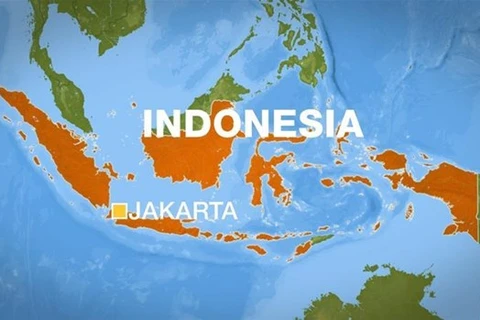
The public need not worry about a tsunami threat along Java’s southern coast if they take mitigation measures to minimise the impact of disasters, Indonesian agencies have said following rising concerns about the phenomenon.
Indonesia: agencies calm public about tsunami threat ảnh 1The southern coast of Java was more prone to these natural disasters due to the subduction zone between the Eurasian and Indo-Australian plates. (Photo: AFP/VNA)

Jakarta (VNA)
- The public need not worry about atsunami threat along Java’s southern coast if they take mitigation measures tominimise the impact of disasters, Indonesian agencies have said followingrising concerns about the phenomenon.

The National Disaster Mitigation Agency (BNPB) spokesperson Agus Wibowo urgedthe public to remain cautious, adding that several mitigation measures could betaken in the case of a potential tsunami-triggering earthquake, such as the20-20-20 principle.

If the tremors of an earthquake last 20 seconds, evacuate as soon as possiblebecause a tsunami may come in 20 minutes; take shelter at a building that it isat least 20 meters in height, The Jakarta Post quoted Agus as saying.

Another important mitigation effort is constructing anti-earthquake buildings,he added.

He also suggested downloading the InaRisk application, which is accessible onthe BNPB's website,for further information and warnings on potential natural disasters.

The Indonesian Government has established the Expedition Destana programme, inwhich teams are sent to villages located along Java’s southern coast to teachresidents about disaster mitigation.

Daryono, head of earthquake information and early tsunami warning under the Meteorology,Climatology, and Geophysics Agency (BMKG), said the southern coast of Java wasmore prone to these natural disasters due to the subduction zone between theEurasian and Indo-Australian plates.

He said there were several mitigation steps people could take, such as markingbeach space that is safe from tsunamis and developing the public’s capacity infacing disasters.

Widjo Kongko, tsunami expert from the Assessment and Application of TechnologyAgency (BPPT), said on July 17 that Java’s southern coast, particularlyYogyakarta, could experience an 8.8-magnitude earthquake and a tsunami of up to20 meters in height, the newspaper reported.

A subduction zone runs along the southern coast of Java to the east of SumbaIsland and south of the Sunda strait, he added.-VNA
VNA
See more

Delegates pose for a group photo at the workshop (Photo: VNA)

Vietnam voices concerns over future of traditional media at ASEAN workshop

In his speech, Long outlined challenges related to policy, human resources, technological gaps and platforms, economic factors, and new issues arising from AI. He also introduced the VNA's solutions to address the challenges of digital transformation and shared VietnamPlus' experience in adapting to the digital environment.

An overview of the 29th ASEAN Labour Ministers Meeting (Photo: VNA)

Vietnam reaffirms commitment to building resilient, inclusive and integrated ASEAN Labour Market

To this end, Vietnam proposed three strategic priorities for ASEAN cooperation. First, ASEAN should expand and harmonise mutual recognition mechanisms by increasing the scope and number of Mutual Recognition Arrangements (MRAs) in the region; and promote the role of the ASEAN TVET Council (ATC) in connecting national skills certification systems with regional and global standards, based on national occupational skills qualification frameworks and regional references.

British Ambassador to Vietnam Iain Frew (Photo: VNA)

UK-Vietnam cooperation deepens ASEAN-UK partnership trust: ambassador

The UK is accelerating investment in clean power across Southeast Asia. The country is working closely together through its co-leadership of the Just Energy Transition Partnership (JETP) to support Vietnam’s ambition to expand renewable energy, unlock investment in offshore wind, and build a cleaner, more resilient energy system for the future.

A discussion at the forum "Vietnam-ASEAN in Global Value Chains: From Signal to Action". (Photo: VNA)

Vietnamese firms urged to strengthen capacity as ASEAN pushes deeper digital integration

Vietnamese businesses have established leading positions in some supply chains, including seafood, wood processing, cashew and coffee processing. However, in manufacturing and electronics, many firms remain concentrated in assembly and the supply of simple components. Data transparency, traceability and effective supply-chain management are key to helping leading businesses maintain their positions.

Deputy Director Vu Thi Tu Anh of the Department of Vocational and Continuing Education under the Ministry of Education and Training speaks during the workshop’s discussion session. (Photo: IOM Vietnam)

Vietnam advances qualifications referencing to support labour mobility in ASEAN

On August 21, the International Organization for Migration (IOM), in cooperation with the Department of Vocational and Continuing Education under the Ministry of Education and Training, held a national workshop in Hanoi to discuss the implementation of the AQRF and introduce Vietnam's AQRF Referencing Report and post-referencing action plan.

A men’s volleyball match between the Vietnam People’s Army team and the Myanmar Army team (Photo: VNA)

ASEAN Armies' Open Volleyball Tournament 2026 kicks off in Hanoi

Taking place until August 26, the tournament features six teams divided into two groups. Group A comprises the army teams of Vietnam, Myanmar and Cambodia, while Group B includes Ho Chi Minh City's police team, the Lao People’s Army's team and the Singapore Armed Forces' team.

Vietnamese Ambassador Duong Hoai Nam (second, left) and ASEAN ambassadors pose for a group photo in Prague, the Czech Republic. (Photo: VNA)

ASEAN marks 59th anniversary in Czech Republic

After nearly six decades of development, ASEAN has become one of the world's important regional organisations, playing an increasingly significant role in promoting peace, stability and cooperation in Southeast Asia and the broader regional architecture.

The RoK's Finance Minister Choi Sang-mok speaks at a trilateral meeting with his Japanese and Chinese counterparts in Georgia. (Photo: Yonhap)

ASEAN+3 to create new financing facility against regional crises

The Republic of Korea (RoK), China and Japan agreed on May 3 to reinforce the regional financial safety net, along with members of the Association of Southeast Asian Nations (ASEAN), by launching a new financing facility programme meant to extend greater support in case of a financial crisis.