Indonesia, China to cooperate on human resources training

Indonesia and China have agreed to collaborate to enhance the quality of vocational training of Indonesian human resources, Minister of Manpower Ida Fauziyah has said.
Indonesia, China to cooperate on human resources training ảnh 1An automobile factory in Cangzhou city of China's Hebei province. (Photo: AFP/VNA)

Jakarta (VNA) – Indonesia andChina have agreed to collaborate to enhance the quality of vocational trainingof Indonesian human resources, Minister of Manpower Ida Fauziyah has said.

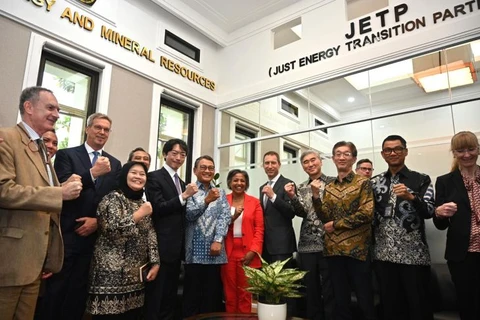
At a reception for Chinese Ambassador toIndonesia Lu Kang on February 20, Fauziyah expressed her hope for the development of atraining programme for Indonesian engineers in electric car maintenance with the help of China.

According to her, the diplomatic relations betweenIndonesia and China have been consolidated after more than 70 years. This is a solid foundation for promoting cooperation in many fields.

Currently, a number of Chinese companies havesigned cooperation agreements with Indonesia in telecommunications services andnickel ore processing, thus, facilitating collaboration with the Chinese government toexpand human resource training for Indonesia.

The minister said she wishes to receive China’s support indeveloping Vocational Training Centre and Productivity (BPVP) in Indonesia,which is expected to provide competent human resources that meet the needs ofthe industrial market standard.

The Southeast Asian country is also exploring cooperation withthe Chinese government to conduct a joint job fair involving Chinese companiesin Indonesia, she added./.

VNA

See more

KKP cuts GDP forecast, warns Thailand faces recession risk. (Photo: The Nation)

Thailand’s economy may face recession risk

In its latest report, KKP Research noted that Thailand’s vulnerability goes beyond its reliance on imported crude oil and liquefied natural gas (LNG). Disruptions to shipping routes in the Middle East could also worsen shortages of fertilisers, affecting agricultural output, as well as petrochemical feedstocks, which would impact the plastics and textile industries.

Thai Prime Minister Anutin Charnvirakul speaks before Thai Parliament in Bangkok. (Photo: Xinhua/VNA)

Thailand plans tighter, targeted fiscal 2027 budget

Thailand's fiscal 2027 budget is projected at around 3.78 trillion THB (nearly 118 billion USD), a 2% increase from the previous year, with a focus on targeted spending and cutting unnecessary expenses, according to Prime Minister Anutin Charnvirakul.

Fitch downgrades Philippines’ outlook to ‘negative’. (Illustrative photo: Reuters)

Fitch downgrades Philippines’ outlook to ‘negative’

The Outlook revision reflects rising risks to the Philippines' strong medium-term growth prospects from recent disruptions to public investment, exacerbated in the near-term by elevated exposure to the ongoing global energy shock.

The Singapore Maritime Technology & Research Roadmap is aimed at advancing the sector’s efficiency and sustainability. (Photo: businesstimes.com.sg)

Singapore unveils new roadmap to boost innovation in maritime sector

The Singapore Maritime Technology & Research Roadmap is aimed at advancing the sector’s efficiency and sustainability. It highlights priorities – including digital technologies, decarbonisation and operational integration – to boost resilience, productivity and innovation in Singapore’s maritime ecosystem. It also addresses structural issues such as manpower, land and sea space limitations.

Malaysia considers establishing strategic petroleum reserve

Malaysia considers establishing strategic petroleum reserve

Malaysia, which was previously a net exporter, has now become a net importer due to declining domestic production and rising consumption, with demand estimated at around 800,000 barrels per day compared to production of about 400,000 barrels per day.

Indonesia to halt diesel imports from July

Indonesia to halt diesel imports from July

The move is part of the Indonesian Government’s efforts to strengthen national energy independence by utilising palm oil as an alternative fuel, said Agriculture Minister Andi Amran Sulaiman.

Malaysia’s growing microplastics crisis is largely self-inflicted, driven by domestic waste, weak recycling practices and everyday plastic use, said experts. (Photo: New Straits Times)

Malaysia seeks solutions to microplastic crisis

Microplastics originating from domestic waste and wastewater are increasingly entering the food chain, posing serious threats to seafood safety and the livelihoods of coastal communities.