Indonesia kicks off election season

Indonesia officially entered election mode on October 19, with registration open for candidates keen to contest the upcoming presidential polls in February 2024.

Jakarta (VNA) - Indonesia officially entered election mode on October 19, with registration open for candidates keen to contest the upcoming presidential polls in February 2024.

​

​

Nearly 205 million Indonesians will hit the ballot booths on February 14, 2024 as the country is set to also decide on members of its national, regional and city-level parliaments.

​

​

The race is expected to be dominated by three men, including Defence Minister Prabowo Subianto, former Governor of Central Java province Ganjar Pranowo and former Jakarta Governor Anies Baswedan.

​

​

Candidates will also be confirming their running mates for the election, ending months of speculation and political manoeuvring aimed at shoring up alliances and making inroads into new voter territory.

​

​

Ganjar, the president pick of the ruling Indonesian Democratic Party-Struggle (PDI-P), will be joined on his ticket by respected former judge and current chief security minister Mahfud MD.

​

​

Anies, who is trailing in opinion polls, is running with Muhaimin Iskandar, head of the country’s biggest Islamic party, PKB. The party has ties with Nahdlatul Ulama, a moderate Islamic organisation of roughly 40 million members. Prabowa has not announced his running mate./.

​

VNA

See more

Indonesia designates 31 mln ha of waters as conservation areas

Indonesia designates 31 mln ha of waters as conservation areas

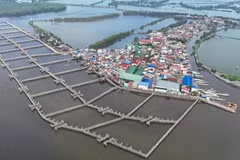
Head of the Convention and Marine Resource Balance working team at the ministry’s Directorate of Ecosystem Conservation Ahmad Sofiullah said this week that it is a strategic effort to ensure the sustainability of Indonesia’s marine ecosystems.

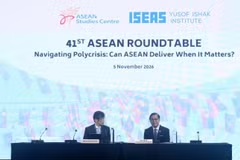
Thai Deputy Prime Minister and Minister of Foreign Affairs Sihasak Phuangketkeow (R) takes part in the Q&A session at the 41st ASEAN Roundtable. (Photo: VNA)

Thailand calls on ASEAN to proactively address polycrisis

Thai Deputy Prime Minister and Minister of Foreign Affairs Sihasak Phuangketkeow noted that no single member state could tackle challenges ranging from major-power competition and economic fragmentation to climate change and energy and food security on its own. Regional cooperation is therefore a strategic imperative, enabling ASEAN not only to overcome crises but also to sustain its development momentum.

Palm oil and palm oil-based products are among Indonesia’s promising export commodities. (Photo: VNA)

Indonesia to launch commodity export monitoring platform next year

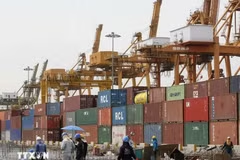
DSI will draw on data from customs authorities, trade activities and the financial system, alongside contracts and documents uploaded by exporting companies. The platform will monitor the volume, quality, prices and destination markets of various commodities, as well as transactions between related parties.

Philippines increases rice imports from Cambodia

Philippines increases rice imports from Cambodia

Cambodia has contracted to supply a further 87,344 tonnes to the Philippines between September and December. If all orders are fulfilled, its rice exports to the market could reach around 209,000 tonnes in 2026.

Students get free meals under the national school feeding programme at Hun Sen Svay Cek Primary School (Photo: khmertimeskh)

Cambodia expands school meal programme

Cambodian Prime Minister Hun Manet stressed that his Government would proactively allocate budget and strengthen management capacity, with the aim of expanding the school meal programme to more than 7,000 primary schools nationwide. The move is expected to improve students' nutrition and learning conditions.

Cambodia, EU strengthen investment cooperation

Cambodia, EU strengthen investment cooperation

In his opening remarks, Deputy Prime Minister and First Vice President of the Council for the Development of Cambodia (CDC) Sun Chanthol highlighted the Cambodian Government's efforts to improve the investment climate and facilitate trade, stressing the importance of close public-private cooperation in promoting Cambodia as an attractive investment destination.