Industrial production index rises 5.7 percent in five months

The index of industrial production index (IIP) in the first five months of this year posted a year-on-year increase of 5.7 percent, according to the General Statistics Office (GSO).
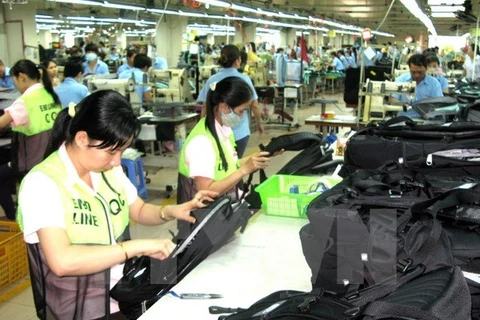
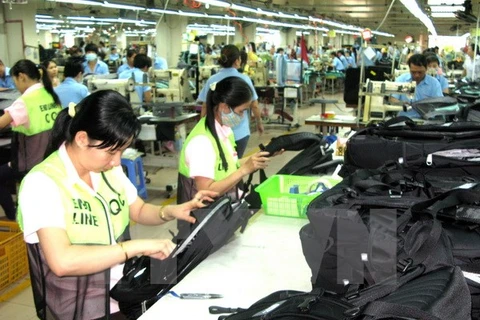
Industrial production index rises 5.7 percent in five months ảnh 1Industrial production index rises 5.7 percent in five months (Source: VNA)
Hanoi (VNA) – The index of industrialproduction index (IIP) in the first five months of this year posted ayear-on-year increase of 5.7 percent, according to the General StatisticsOffice (GSO).

In May alone, the index grew 7.2 percent againstthe same period last year.
 
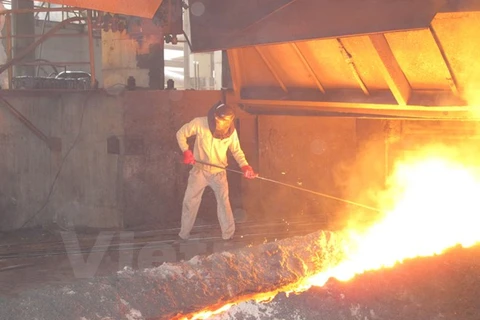
In January-May, the power production anddistribution, processing and manufacturing industry, and water supply and wasteand wastewater treatment, respectively soared 10.4 percent, 9.7 percent and 7percent. Meanwhile, the mining industry dropped by 5.5 percent. Mining dropped 9.1 percent.

A number of key industrial products that recorded high growth comparedto the same period last year included television sets (42.8 percent), raw steeland iron (29.6 percent), and urea (18.5 percent).

Some products seeing moderate rises were automobile (2.4 percent), fossil coal(1.1 percent), cigarette (0.9 percent), and refined sugar (0.7 percent). Meanwhile,mobile phones, LPG products, footwear, natural gas and crude oil saw declinesbetween 0.6 percent and 13.6 percent.

Hai Phong took the lead among localities enjoying high IIP in five months with20.5 percent. It was followed by Thai Nguyen, 17 percent, and Da Nang, 10.8percent.


As of May 1, inventory index of the processingand manufacturing sector expanded by 11 percent compared to the same periodlast year, the office revealed.

The low inventory index was seen in paper and leather sectors, vehicle production,and cigarette production.

However, the index escalated 82.4 percent in metalproduction, motored vehicles, 69.8 percent; electronic products, computers andoptical products, 50.1 percent, while electricity device and products fromnonmetallic minerals, and beverage increase between26.2 percent and 40.6 percent, reported the office.-VNA 
VNA
See more

Duong Thi Lap's garden has 200 kumquat trees ready for Tet (Photo: VNA)

Tet bloom markets: rising demand, stable prices

Across Vietnam, key farming hubs for flowers and ornamental plants are buzzing with activity as the Lunar New Year (Tet) approaches, with farmers robust plant health, eye-catching designs, surging consumer demand, and broadly stable pricing.

Retail sales of goods in January estimated at 487.4 trillion VND (Photo: VNA)

Total retail sales of goods, service revenue up 9.3% in January

Retail sales of goods in January was estimated at 487.4 trillion VND, accounting for the largest share and increasing 9.3% year-on-year. Growth was driven by many categories, including household appliances and equipment, which rose 9.4% thanks to early-year shopping demand and promotional programmes by retailers.

Fishing vessel monitoring system (VMS). (Illustrative photo: VNA)

Quang Tri backs VMS subscription fees for fishing vessels

Under a recently approved provincial resolution, the support will be disbursed once a year. Total funding for the three-year programme is estimated at more than 12.2 billion VND from the provincial budget, benefiting around 1,360 vessels across the province.

Delegates at the meeting in Hanoi on February 9, 2026. (Photo baotintuc.vn)

Vietnam to release 2026 economic census data seven months earlier

Nguyen Thi Huong, head of the Standing Group of the Steering Committee of the 2026 Economic Census and Director of the National Statistics Office (NSO), said the first phase of data collection was underway nationwide and was scheduled to conclude on March 10.

At Xa Mat international border gate (Photo: VNA)

📝OP-ED: Decree 46 - Not proof of distorted “systemic failure”

Temporary suspensions, adjustments, or revisions of newly enacted policies are never ideal and should be minimised. Yet such course corrections occur worldwide, irrespective of a country's development stage or market-economy maturity. What counts is rapid remediation to contain losses, extraction of lessons to prevent recurrence, and firm resistance to the dissemination of misleading or hostile allegations, which will help both enforcers and those subject to compliance maintain clarity and composure.

Delegates at the signing ceremony of the MoU between the Brazil–Vietnam Chamber of Commerce (BVC) and the Espirito Santo Chapter of the Brazil–Vietnam Chamber of Commerce and Industry (CCBV-ES). (Photo courtesy of the Vietnamese Embassy in Brazil)

Vietnam, Brazil step up trade promotion cooperation

The Brazil–Vietnam Chamber of Commerce (BVC) and the Espirito Santo Chapter of the Brazil–Vietnam Chamber of Commerce and Industry (CCBV-ES) recently inked the MoU to enhance cooperation and expand business opportunities for enterprises from the two countries, with support from the Vietnamese Embassy in Brazil.

Chua Ve container port in Hai Phong (Photo: nhandan.vn)

Vietnam accelerates green transition for seaports

In recent years, while expanding infrastructure and boosting operational efficiency, the country has steadily rolled out a national green port initiative to align with international standards and encourage sustainable growth in the maritime industry.

More than 4.1 million air passengers are forecast during the peak travel period of the Lunar New Year 2026. (Photo: VNA)

19 additional aircraft to be deployed to serve Lunar New Year peak period

During the pre-Tet peak, several routes from Ho Chi Minh City to destinations such as Hue, Thanh Hoa, Vinh, Pleiku, Tuy Hoa, Quy Nhon, Chu Lai and Dong Hoi have recorded booking rates above 90%, with some reaching 100%. In contrast, return flights from localities to Ho Chi Minh City remain low, with many flights reporting booking rates below 35% and several operating as ferry flights to return aircraft.

Shoppers at the first Glorious Spring Fair (Photo: VNA)

Spring Fair 2026: Opportunities for businesses to expand connections

Many businesses are doing more than presenting product functions; they are also telling the story of their raw-material regions, production processes, and social and environmental responsibility. This reflects a clear transition: companies are no longer competing solely on price, but increasingly on perceived value and consumer trust.