Insurers expect recovery in premium revenue growth

Accelerating the digital transformation process not only helps insurance businesses transform during the COVID-19 pandemic but also is considered the foundation for growth in the economic recovery.
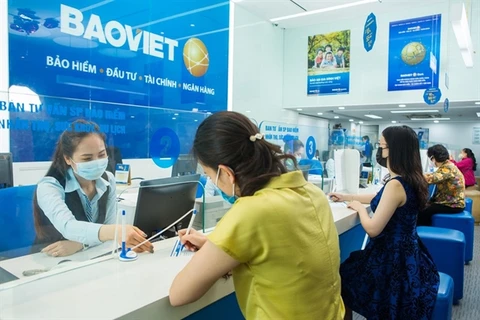
Insurers expect recovery in premium revenue growth ảnh 1A transaction office of Bao Viet Holdings (Photo: baoviet.com.vn)
Hanoi (VNS/VNA) - Accelerating the digital transformation processnot only helps insurance businesses transform during the COVID-19 pandemic butalso is considered the foundation for growth in the economic recovery.

With the current push in digital transformation, experts from SSI SecuritiesCorporation believe that E-insurance certificates will gradually be legalisedfor other insurance products, such as health insurance and property damageinsurance. Therefore, sales through online channels will also gradually grow.

Besides being a key driver of the recovery in demand, premium revenue growthcould come from partnering with fintech companies to boost innovation in dataanalysis, helping insurance companies diversify products and distributionchannels in the future.

Previously, premium revenue growth was hit hard by strict social distancingorders.

Data from SSI show that in the third quarter of 2021, gross written premium(GWP) and new business premium (NBP) of life insurance recorded the lowestgrowth rate ever, up 8.5 percent year-on-year and negative 10.5 percent,respectively.

Non-life insurance premium revenue decreased by 12 percent compared to the sameperiod of 2020.

Some stages in the life insurance sales process such as health checks andbuyers’ direct signatures have been interrupted during social distancing,affecting revenues of life insurance businesses.

For non-life insurance, the demand for auto insurance, personal accidentinsurance and travel insurance, which normally contribute about 50 percent oftotal premium revenue, was low during the period.

According to experts from SSI, the use of a common database on compulsoryinsurance of civil liability of motor vehicle owners with motor vehicleregistration information, road traffic safety violations, and traffic accidenthistories can help insurance companies better classify customers.

Meanwhile, Decree 3 also allows insurance companies to increase premiums by upto 15 percent compared to the level set by the Ministry of Finance, based onthe accident history of each motor vehicle and its risk tolerance capacity.This is likely to help insurers increase premiums on higher-risk contractsinstead of applying the same price to all contracts as before.

Changes in regulations on electronic certificates, if any, will also have apositive impact on the online sales channel, with revenues increasing while theintermediary costs for agents and brokers may gradually decline.

Previously, insurers received positive signals from the news of Statedivestment and the rise of the foreign ownership ratio in insurance companiesto a maximum level last August.

Accordingly, on the national investment portal, the Ministry of Planning andInvestment has officially updated market access conditions for foreigninvestors, which clearly states the foreign owner limit (FOL) for the insuranceindustry is 100 percent.

The move has removed difficulties for many insurance companies such as Bao MinhInsurance Corporation, Post and Telecommunication Joint Stock InsuranceCorporation, and Petrolimex Insurance Corporation, which raised their foreignownership rates in recent years.

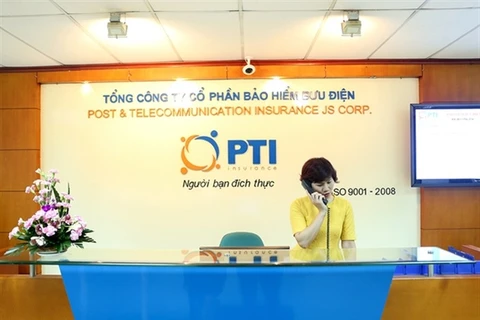
Some companies then reported to the State Securities Commission of Vietnam (SSC)the increase of FOL to 100 percent like PTI, or 49 percent like Bao VietHoldings.

The KIS Vietnam Securities Corporation said that the general insurance marketwas dominated by State-owned companies. Therefore, the change in ownershipstructure and the penetration of foreign investors make the market's outlookmore promising.

However, the securities firm warned that the low-interest-rate environmentcontinued to be a challenge for the growth of businesses in the insurancemarket./.
VNA

See more

Producing garments for export to the EU market at TDT Thai Nguyen Garment Company. (Photo: VNA)

Vietnam’s textile industry draws high-tech FDI amid green, smart shift

With export turnover rising steadily in recent years and a target of 50 billion USD by 2026, Vietnam remains among the world’s top three textile exporters. Beyond its traditional appeal as a low-cost manufacturing base, the country is now positioning itself as a strategic hub for high-value and technology-driven investment.

An FDI enterprise invests in factory facilities at Chau Duc Industrial Park, a project spanning approximately 2,290 ha. (Photo: VNA)

Ho Chi Minh City targets next-generation, high-value FDI

The southern economic hub attracted nearly 3.3 billion USD in FDI during the first four months of 2026, marking a sharp year-on-year increase of 227.1%. The total included 539 newly licensed projects with registered capital exceeding 791.8 million USD and 58 existing projects adding 259.3 million USD in supplementary investment.

The VinFast electric vehicle charging station at the CT1 apartment complex of 103 Hospital in Hanoi. (Photo: VNA)

Vietnam accelerates drive to master EV technologies

By the end of 2025, Vietnam had established 28 standards and technical regulations related to charging stations, charging equipment and batteries. The legal framework is expected to be fully completed in the third quarter of 2026.

Duyen Hai Wind Power Plant in Truong Long Hoa ward, Vinh Long province. (Photo: VNA)

Energy sector seen as key pillar for Vietnam’s green, double-digit growth ambitions

Chairman of the Vietnam National Industry-Energy Group (Petrovietnam) Le Ngoc Son said Vietnam’s energy demand will continue rising sharply, creating enormous pressure on power generation investment. To sustain GDP growth of around 10%, electricity demand is expected to increase by 12-15% annually, requiring an additional 7,000-8,000 MW of new capacity each year.

A view of the Lien Chieu Container Port construction project in Da Nang city (Photo: VNA)

Logistics set to drive Vietnam’s rise in global supply chains

Amid sweeping restructuring in global trade driven by digitalisation, green transition and geopolitical shifts, logistics is no longer a back-end function. It is increasingly a decisive factor in economic performance, especially as Vietnam deepens integration into international supply chains. The challenge now extends beyond faster delivery to building a modern and interconnected logistics ecosystem capable of organising supply chains at a regional scale.

Coupang.com, one of the Republic of Korea's leading online retail corporations, has actively cooperated with the Vietnamese Embassy in handling issues related to products and items with wrong information of Vietnam. (Screenshot of the site)

Coordinated efforts help safeguard healthy online marketplaces

As the digital environment continues to evolve rapidly, stronger coordination among authorities, platform operators and user communities is becoming increasingly important to build a healthy cyberspace that respects cultural identity while helping reinforce friendship and mutual understanding among people worldwide.

Vietnam will host the 21st Asian-Australasian Association of Animal Production Societies (AAAP) Animal Science Congress (AAAP 21) from October 28 - 31 in Hanoi. (Photo: aaap2026.org)

Vietnam to host 21st AAAP animal science congress

According to the Animal Husbandry Association of Vietnam (AHAV), the event is expected to gather between 1,300 - 1,500 delegates, including around 500 leading international scientists, experts and businesses in the livestock sector.

Yen Huong Xua company introduces solutions to combat counterfeit and imitation goods (Photo: VNA)

Fight against counterfeit goods fostered amid rising digital-era fraud

Dr. Bui Van Quyen, Director of the Anti-Commercial Fraud and Counterfeiting Institute, warned that counterfeit goods have become a global challenge, exacerbated by the rise of online platforms and digital technologies. While these innovations drive economic growth, they also create fertile ground for fraudulent activities.

The fuel storage tank area of the Nghi Son Refinery and Petrochemical Plant is located in the Nghi Son Economic Zone in Nghi Son ward, Thanh Hoa province. (Photo: VNA)

Nghi Son refinery receives over 950,000 barrels of Congo crude oil

Diversifying crude oil supply sources is considered crucial for Nghi Son Refinery and Petrochemical LLC (NSRP) in ensuring stable feedstock supplies and safeguarding domestic fuel supply, particularly as traditional crude imports from Kuwait have been affected by tensions in the Middle East.

Production of electronic components at Star Engineers Vietnam Co., Ltd. in Binh Xuyen I Industrial Park, Phu Tho province (Photo: VNA)

Vietnam looks to expand fiscal space to support double-digit growth

Experts emphasise that fiscal policy should move beyond a supportive role to actively lead growth. Continued and selectively expanded tax and fee reductions could directly ease cost pressures on businesses, enabling them to sustain operations and expand investment.

Ngo Quang Hung, representative of the Vietnam Trade Office in Malaysia, introduces Vietnamese products at the Melaka International Halal Fair, held from May 16-19, 2026. (Photo: VNA)

Vietnam, Malaysia promote smart business connectivity

Malaysia is paying close attention to Vietnam’s Doi Moi (Renewal) reforms, particularly in land policies, rice production technologies and seafood industry development, as both sides seek to expand practical cooperation.