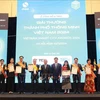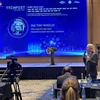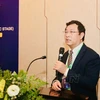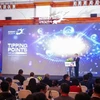
Vietnamese Ambassador to Iran Nguyen Luong Ngoc said greater understanding of each side’s strengths and potential, particularly in AI and information technology, will provide a solid foundation for expanding future cooperation.
Vietnam is pursuing a focused approach to quantum technology, rather than trying to compete head-to-head with leading technology powers across the full spectrum of quantum research.
According to the National Cybersecurity Association (NCA), cyberattacks are rising in both frequency and severity. Attackers are targeting critical infrastructure, personal data, and public services with increasingly advanced methods. This isn't just a technical glitch, but a systemic vulnerability requiring a workforce that can analyse and respond in real time.
Vietnam has identified that strategic technologies with strong spillover effects are key areas for investment and development. These technologies help enhance self-reliance, create national competitive advantages, ensure national defence and security, and promote sustainable socio-economic development
Vietnam possesses significant advantages and strong potential to emerge as a global centre for artificial intelligence (AI), according to billionaire Eric Schmidt, former Chairman and CEO of Google and former Chairman of the US National Security Commission on Artificial Intelligence (NSCAI).
The event paired a robotics showcase with an innovation networking session, spotlighting Vietnamese companies’ research, development and technological mastery in robotics, automation and artificial intelligence.
The competition offered Vietnamese students a valuable opportunity to affirm the country’s position on the global technology stage.
Vietnam and Estonia share similar approaches to digital citizenship development, placing citizens at the centre of digital transformation and using electronic identity systems and resident databases as foundations for online public services and digital transactions.
Representing Vietnam were VinRobotics and VinDynamics, two tech subsidiaries of Vingroup. They showcased "Make in Vietnam" humanoid robots, demonstrating the country’s growing capacity to integrate into the global robotics value chain.
Quantum computers are closer than ever. The year 2026 has been internationally designated the "Year of Quantum Security" -- and the window to prepare is closing fast.
Deputy PM Ho Quoc Dung pressed ministries and agencies to rapidly convert their assigned tasks into concrete action plans with clearly defined responsibilities, and effectively launch projects that create strategic technology products capable of sharpening national competitiveness.
The portal will provide technological solutions and data infrastructure, while the service centre will facilitate system integration.
Mel Shalev, a former senior Israeli technology expert, who have spent decades working, conducting research and collaborating with partners in Vietnam, noted that the rapid advancement of artificial intelligence (AI) is bringing profound changes to education worldwide, suggesting Vietnam capitalise on this trend to enhance teaching and learning effectiveness.
In Vietnam, digital transformation in the finance and banking sector is accelerating cashless payments, expanding access to financial services, improving market transparency and supporting economic growth and macroeconomic management.
Fostering the habit of using legitimate copyrighted publications, respecting authors’ rights, and promoting a healthy digital consumption culture will help create a more sustainable environment for the publishing industry in the future.
According to Dr. Le Minh Nghia, Chairman of the Vietnam Financial Consulting Association (VFCA), AI has become a key driver reshaping the global financial industry. In Vietnam, the technology is already widely used in banking and finance for credit analysis, electronic customer identification (eKYC), risk management, service personalisation and real-time transaction processing.
Since the Prime Minister issued Directive 38, which directs ministries and agencies to strengthen efforts against IP violations, 1,438 cases had been detected and processed as of May 27.
The workshop aims to achieve three key objectives providing a platform for academic exchange and strengthening collaboration between leading international scientists and young researchers, including doctoral students; promoting multidimensional scientific dialogue on major open questions in the field; and initiating new directions for international research cooperation with the active participation of Vietnam's physics community.
With the bilateral relations continuing to grow and the determination of both sides to advance innovation, cooperation in AI and high technology is expected to become one of the most dynamic pillars of Vietnam-Singapore relations in the coming time.